In the Red Rock Desert near Castle Valley, Utah, Terry Tempest Williams watched an ant carry a single magenta coyote willow blossom across half a mile of treacherous terrain—and saw in that tiny act something transcendent. For close to half an hour, she followed the determined insect as it clutched the pink flower, larger than her index finger, navigating stone paths and sandy ground. When wind threatened to topple it, attending ants appeared to steady their companion. When cracks opened in the stone, rescue ants emerged to ferry the burdened worker across. As the ant approached a patch of prickly pear, three more ants materialized to lift the blossom up, around, and over the spines. Finally, when the ant reached its colony and laid the flower at the entrance, dozens of workers rushed forward in what Williams calls "a frenzy of purpose," cutting it into pieces to carry into their chambers below.
This moment—unremarkable to most eyes, miraculous to those who look closely—is what Williams calls a "Glorian," the central concept in her 2026 book "The Glorians: Visitations from the Holy Ordinary." A Glorian is an encounter with grace, a meeting with what she calls "élan vital," the vital force of life itself. These are not grand gestures or earth-shattering revelations, but the quiet, luminous moments when we pause and truly witness the world around us. In exploring Glorians, Williams invites readers to reconsider what deserves our attention—and how the ordinary, when truly seen, becomes sacred.
The Utah desert, with its raw beauty and apparent emptiness, has been Williams's muse for decades. Her 1991 environmental classic "Refuge: An Unnatural History of Family and Place" wove together environmental crisis and her mother's battle with cancer, establishing her as a writer capable of holding beauty and devastation in the same breath. Now, after weathering the pandemic, teaching environmental studies at Harvard Divinity School, and bringing 20 students to the shores of the receding Great Salt Lake, Williams continues to look for the holy in everyday spaces.
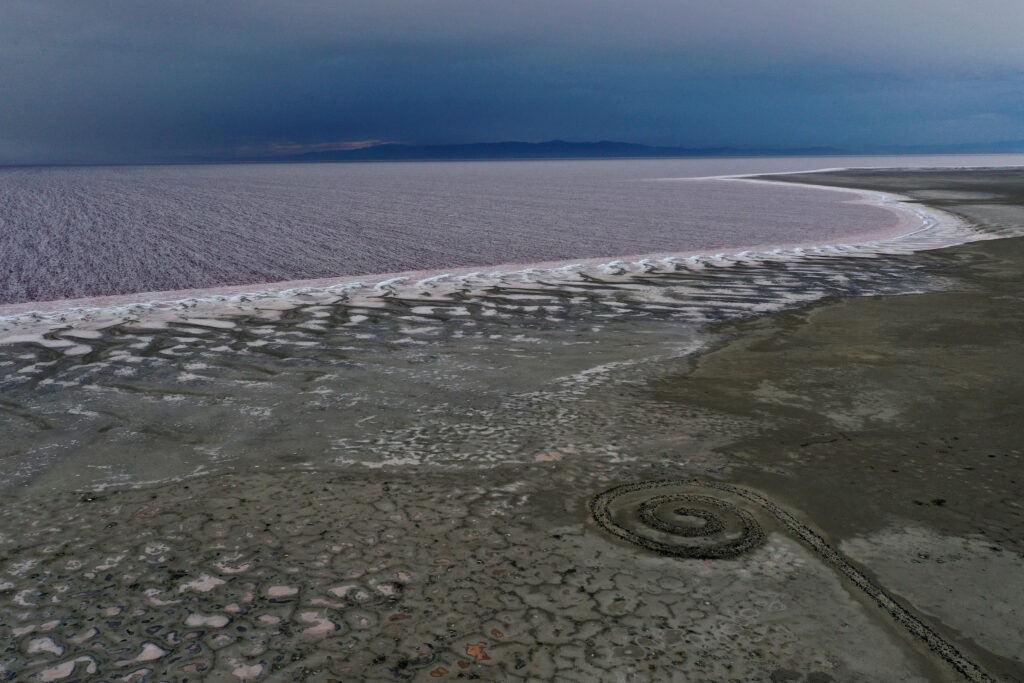
Those students from Cambridge experienced something profound during their 10 days in Utah's wild country—walking through Nancy Holt's "Sun Tunnels" and Robert Smithson's "Spiral Jetty," but also wading into the waters of Great Salt Lake, which the Ute Nation calls our sacred mother. It's the kind of education that cannot be confined to classrooms, the kind that requires you to stand in the presence of something vast and indifferent and beautiful, to feel your smallness and your belonging simultaneously.
Williams's message is timely. In a moment of profound uncertainty, where cruelty and compassion exist side by side, where political turbulence clouds our sense of steadiness, "The Glorians" offers something precious: permission to notice. Permission to follow an ant across the desert. Permission to believe that in paying attention to moments of grace—in the coyote willow, in the cooperation of insects, in the retreating waters of an ancient lake—we are standing on solid ground. We are witnessing something true.