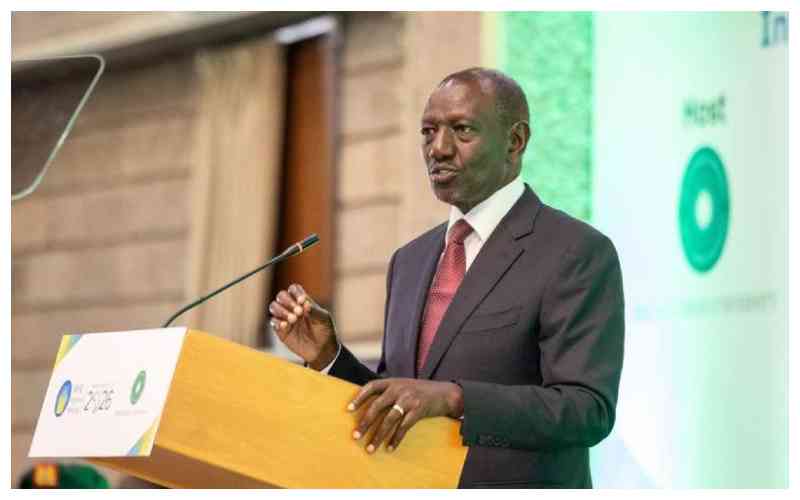
In Nairobi on April 27, President William Ruto opened a gathering that signaled a fundamental reimagining of how Africa delivers healthcare. The 2026 World Health Summit regional meeting, held under the theme "Re-imagining Africa's Health Systems," concluded with more than strategic speeches—it produced concrete institutional change. Leaders launched the African Health Leadership and Management Committee and established a Regional Coordinating Centre in Kenya, creating the infrastructure to coordinate emergency response and health innovation across 14 East African countries.
At the heart of this shift lies a straightforward but complex idea: health systems must evolve beyond buildings and beds to meet where people actually live. Dr Adelheid Onyango, the World Health Organisation's Africa Director of Health Systems and Services, articulated the challenge with clarity. The future of African healthcare depends on digital transformation—replacing paper records with integrated electronic systems that allow a patient's medical history to travel with them from rural clinics to urban hospitals. AI and digital tools can be transformative, she emphasized, but only if they rest on a foundation of digitised data and genuine local capacity.
The potential is real. Telemedicine brings specialist expertise to remote areas where physical roads may not exist, and remote surgical support allows specialists to virtually guide clinical officers through procedures. Mobile technology can connect community health promoters directly to formal health systems, reaching populations that distance once made unreachable. Yet Dr Onyango offered a crucial warning: technology deployed in areas where workers lack training doesn't bridge gaps—it creates new barriers. Rushing digital tools into peripheral regions without building workforce capacity risks widening rather than narrowing the divide between urban and rural communities.
Infrastructure itself demands reimagining. Dr Onyango pointed to a frequently overlooked necessity: energy systems, particularly solar power, to sustain the "cold chain" that keeps immunisation programmes and medical machinery operational. Providing reliable electricity to run operating equipment is as essential as the equipment itself, yet often missing from health system planning.
The human dimension remains paramount. "These apps are tools, but the essential care comes from that specialist," Dr Onyango noted. Technology can facilitate understanding and connection, but it cannot replace the clinician's judgment or the healing power of human contact. She called for international digital health compacts that harness innovation responsibly, without jeopardizing people's wellbeing.
Yet challenges persist, as Dr Theophilus Wangata, a general physician, articulated: digital health is "narrowing and it's also widening" the access gap simultaneously. Urban patients with smartphones and reliable internet can reach services more easily than ever. Rural patients without devices or connectivity face mounting barriers. Device costs and connectivity gaps mean technology can deepen inequality even as it promises to solve it.
The Nairobi summit represented something different—a turning point where African-led innovation and political will converged. The emphasis on local capacity, on building "home-made" solutions that tap Africa's young talent, and on investing in unglamorous but essential infrastructure like electricity, suggests the continent is charting its own course. The measure of success won't be the technology itself, but whether the systems built in the coming years actually reach the people furthest from care.