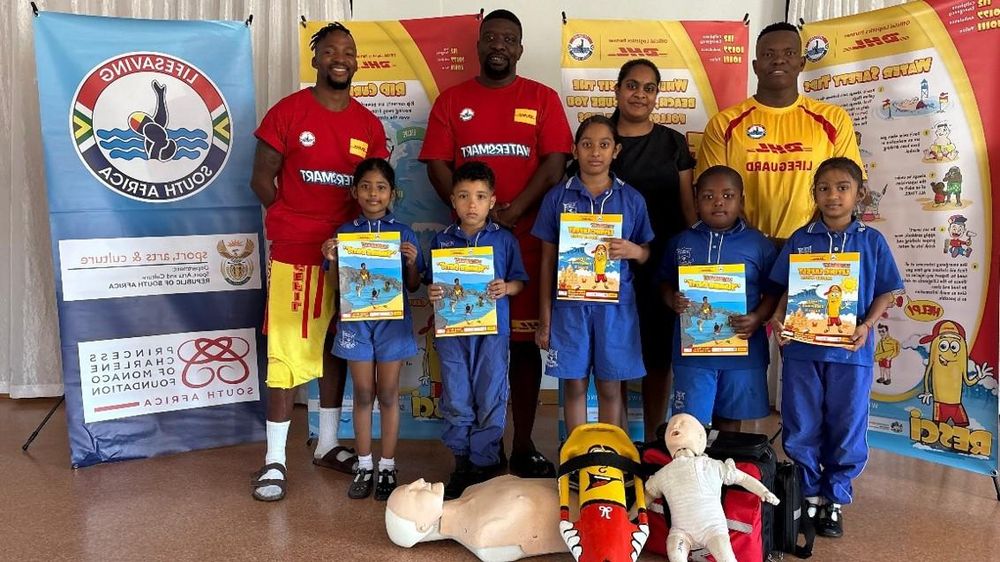
In South Africa, more than 2,700 people drown every year—and a staggering number of them are children. As June arrives with both Child Protection Week and Youth Month, Lifesaving South Africa is sounding an urgent alarm about water safety, determined to transform the continent's relationship with one of its deadliest hazards.
The statistics are sobering. The World Health Organization estimates that thousands of these annual drowning deaths involve children and young people between ages five and 17, making water safety a matter of survival for an entire generation. Yet Lifesaving South Africa has spent years proving that drowning is preventable. The organisation's long-running Nipper Training Programme has trained thousands of young people to become confident and competent swimmers in ocean and inland water environments. Many of these Nippers grow into accomplished lifesavers by age 18, while others pursue careers as professional lifeguards, emergency workers, and first responders. This pipeline of skilled youth is reshaping water safety across the continent.
Beyond the beach, Lifesaving South Africa reached millions of learners nationwide through the #WaterSmart Programme, now embedded in the Department of Basic Education's CAPS Life Skills and Life Orientation curriculum. The initiative uses interactive learning content and assessments to ensure learners gain essential water safety and drowning prevention competencies—placing life-saving knowledge into classrooms from coast to coast.
The organisation's message to parents and caregivers is direct and clear: drowning can be prevented with vigilance and simple precautions. Always supervise children in and around water. Keep children within arm's reach when near swimming pools, beaches, rivers, dams, and other water bodies. Never leave children unattended during bath time. Secure household water storage containers with lids when children are present. Teach children to swim only in areas where lifeguards are on duty. These aren't suggestions—they're the difference between life and loss.
But individual vigilance alone cannot solve a structural problem. Lifesaving South Africa is calling on government at all levels to prioritise access to safe swimming environments by constructing public swimming pools in communities that lack them and maintaining existing facilities properly. Too many children grow up in neighbourhoods with no safe place to learn to swim, no lifeguard on duty, no infrastructure to turn water safety from aspiration into reality.
What makes Lifesaving South Africa's work remarkable is its combination of immediate action—training young people to save lives—and long-term transformation. By embedding water safety into the national school curriculum, by building a generation of skilled lifesavers, and by pushing government to create safe public pools, the organisation is addressing drowning from every angle. The increasing participation in its programmes is proof that South Africans understand the stakes. Children deserve the chance to grow up near water without fear, and to do so safely. That's what Child Protection Week should mean: not just acknowledging the danger, but actively preventing it.