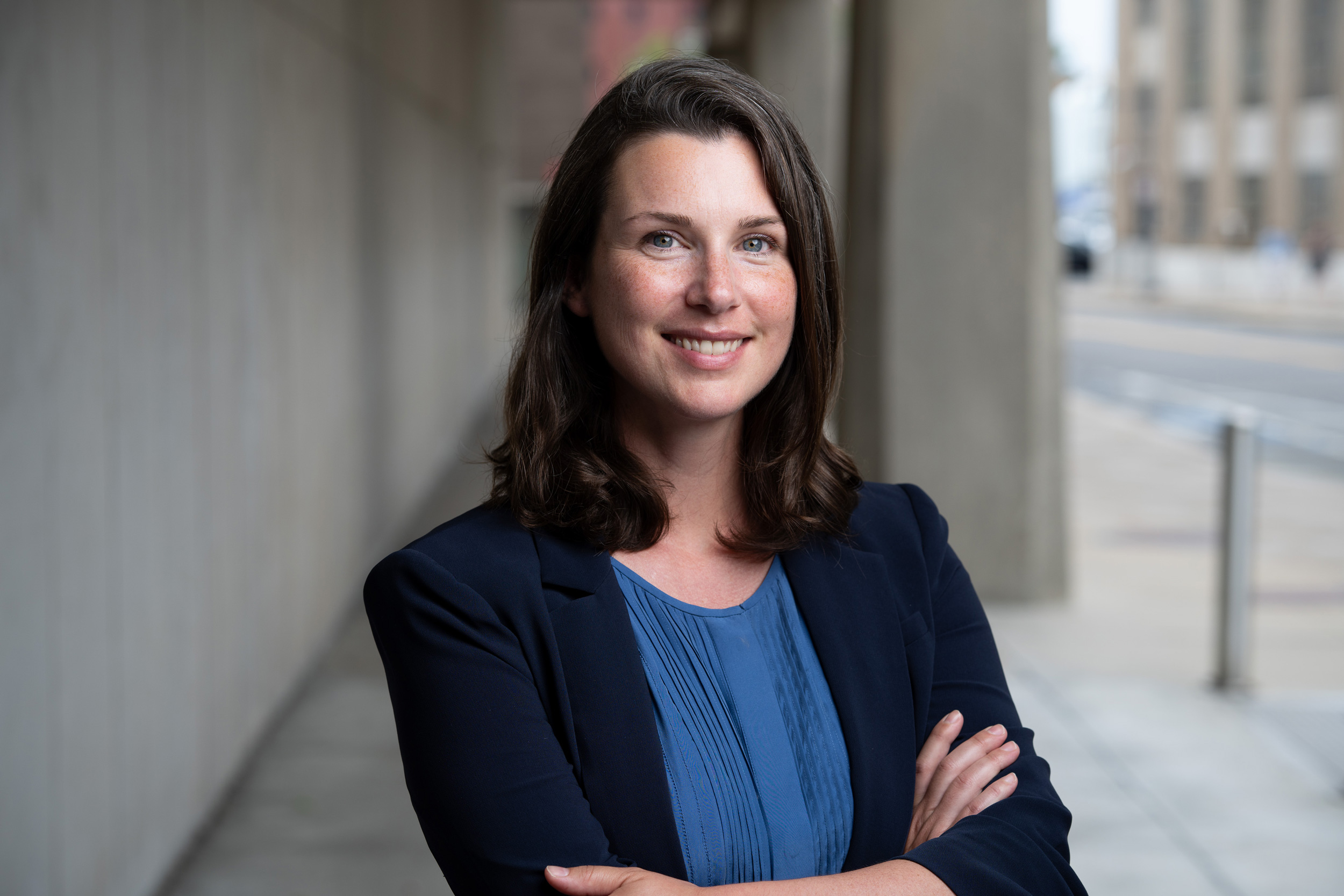
Growing up in Bethlehem, Pennsylvania, Erin Kara had a clear path ahead: follow her mother the nurse and father the doctor into medicine. That plan changed the summer she was 19, when NASA launched the Fermi Gamma-Ray Space Telescope and Kara got her first taste of the cosmos. Working with astronomer Reshmi Mukherjee at Columbia, the undergraduate was assigned to characterize two mysterious gamma-ray signals. Her analysis confirmed both were quasars — active supermassive black holes billions of light-years away. "It was a small discovery, but it felt awesome," Kara recalls. "I love that about astronomy, that there are so many unanswered questions, and even early on in your career, you can make an impact." That summer sparked a career shift from premed to physics — and a fascination with black holes that now earns her tenure at MIT.
Today, Kara leads a research group at MIT's Kavli Institute for Astrophysics and Space Research, studying the most extreme objects in the universe. Supermassive black holes — the ultradense giants anchoring every galaxy — are the engines of cosmic structure, and Kara is mapping their behavior in unprecedented detail. Recent observations have upended old assumptions. "It used to be that we didn't have eyes on systems all the time," she explains. "Now we're seeing that they can turn on and off at rates that are much faster than we ever thought possible. We see things are getting sucked in toward black holes faster than we thought, perhaps due to stars whipping around and getting trapped in a black hole's accretion disk." This work bridges the gap between the extreme physics of black holes and the larger story of how galaxies like our own Milky Way form and evolve.
Kara's journey wasn't without doubt. At Barnard College's all-women's campus, she thrived in small, supportive physics classes. But when upper-level courses moved her to co-ed Columbia, confidence faltered. "I went to Columbia and all of a sudden felt like I couldn't do this," she reflects. "All these guys were much more confident. In the end, I did well there too. And that juxtaposition helped me gain confidence and know, yeah, I belong here." That resilience now fuels her mentorship and research alike. Looking forward, Kara sees a universe of open questions — and a personal mandate to keep asking them. "It's amazing that we as humans can know anything about what's happening billions of light years away," she says. "There's a lot of new open puzzles about supermassive black holes that I'm excited about."