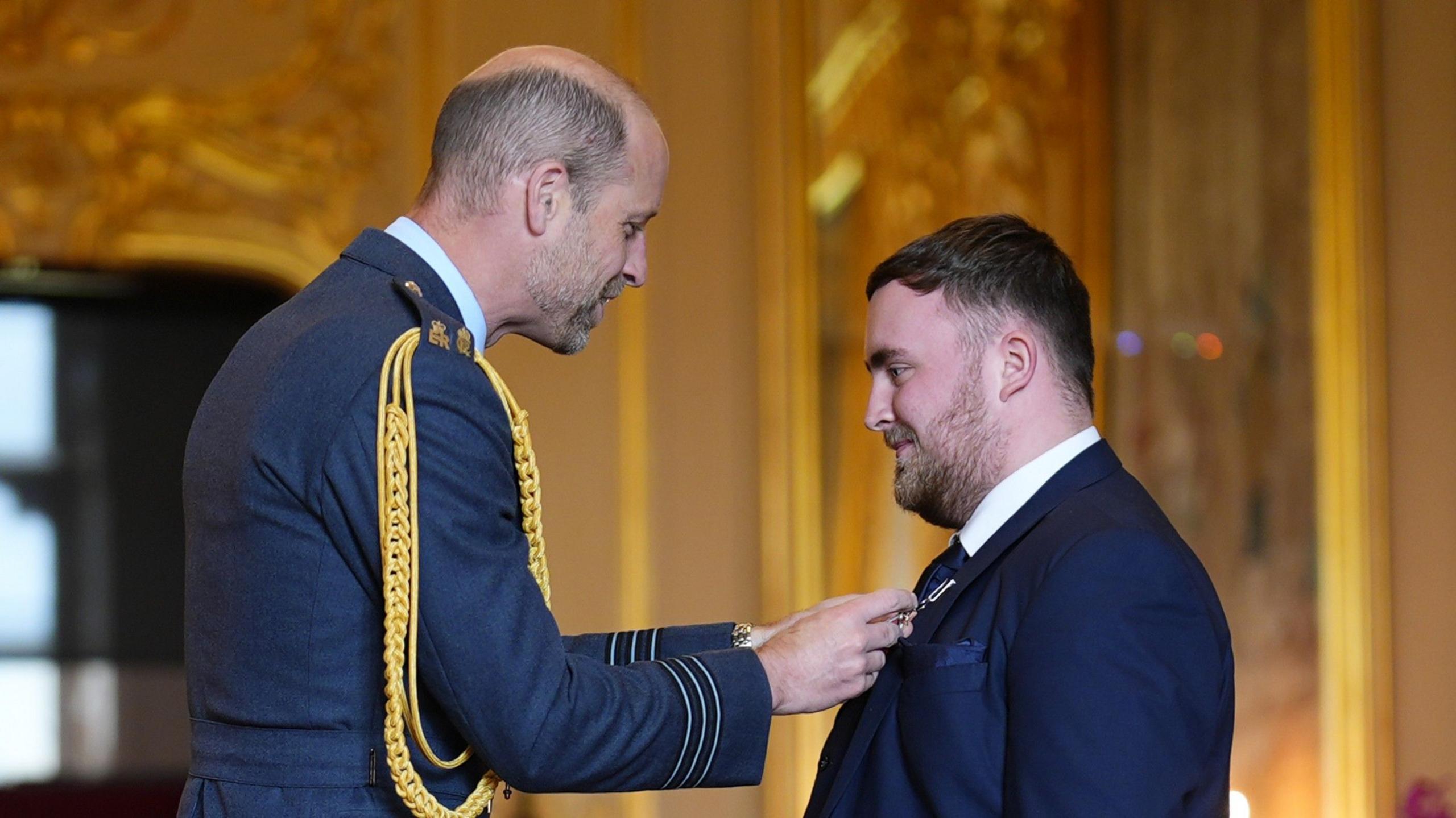
At 19, Luke Littler has already reshaped the landscape of professional darts — and now he's extending an invitation that might reshape the sport's cultural standing: a ticket to the World Championship at Alexandra Palace in London for the Prince of Wales.
The gesture emerged last week after Littler received his MBE at Windsor Castle, where Prince William told him the sport "looks like a good night out." The two discussed how darts has transformed in recent years, a conversation that revealed something remarkable: one of the world's most high-profile royals is paying attention to the meteoric rise of a teenager from north-west England.
"I didn't invite him, but if he needs a few tickets I'm sure myself or the PDC will sort some," Littler told the Press Association with characteristic humility. The offer crystallizes a broader moment for darts — a sport that was, until very recently, known mainly to dedicated fans but has suddenly captured mainstream imagination.
Littler's own trajectory explains much of this shift. He reached the PDC world final at just 16 years old in 2024, then became the youngest world champion ever at 17 in 2025, and retained his title this year. That sequence of records — each one seemingly breaking the one before — has drawn new audiences to a sport traditionally associated with pub nights and devoted regulars. Young fans now follow the sport with the intensity once reserved for football; media coverage has ballooned; sponsorship interest has surged. Littler didn't create this moment alone, but his presence at its center has been transformative.
The MBE, awarded in the King's Birthday Honours, felt incongruous to Littler himself. Standing in Windsor Castle, he said, the experience felt almost unreal: "Turning up to Windsor Castle, it was just like…'how am I here? Why am I here?'" Yet the honor also reflected something genuine. The medal recognizes not just sporting achievement but cultural impact — his effect on an entire sport's visibility and appeal.
"Obviously they don't usually come to people so young," Littler acknowledged, "but for what I've done for my sport, it's been incredible and the notice has been fantastic." It's a remarkable understatement. In the span of a few years, he has made darts fashionable among demographics that had never considered watching it. The sport has benefited enormously: viewership is up, participation among young people is growing, and players who once struggled for sponsorship now attract genuine investment.
That Prince William is apparently watching, and willing to attend the World Championship, suggests the cultural shift is real and durable. What began as the unlikely success story of a teenager with extraordinary aim has become something larger: a moment when a sport touched by tradition finds new life through a new generation. The tickets waiting at Alexandra Palace may never be claimed, or they may spark an image that further propels darts into the mainstream. Either way, the offer itself speaks volumes — not about royal interest, necessarily, but about how thoroughly Littler has changed his sport's place in the national conversation.