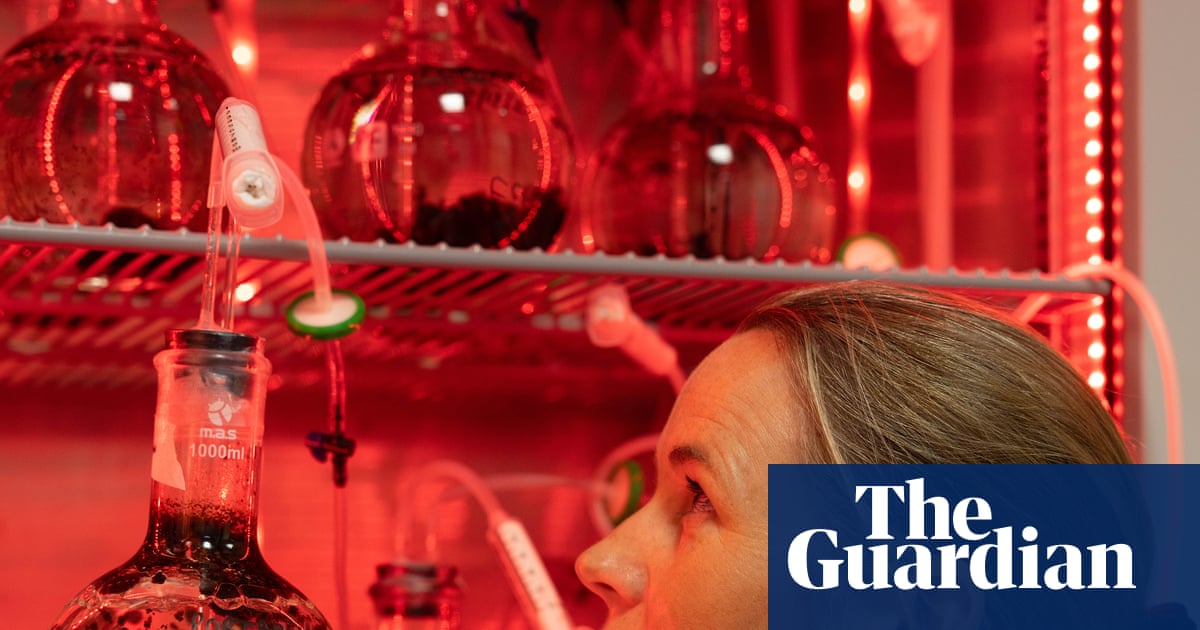
In the mudflats of Swan Bay, Victoria, beneath a grass-covered research centre at Queenscliff, associate professor Prue Francis tends to beakers of golden kelp bathed in red light—a living insurance policy against extinction. The beakers, housed in fridges equipped with sensors and backup generators, keep the kelp in an eternal state of early growth, suspended between survival and dormancy. This is Australia's "living library": a biobank where at-risk marine species are preserved through cryogenic freezing and perpetual cultivation, a last line of defence as ocean ecosystems collapse at unprecedented speed.
The urgency is real. Golden kelp—a foundation species that anchors eight thousand kilometres of interconnected ecosystems known as Australia's Great Southern Reef—is dying as oceans warm. When an intense marine heatwave off Western Australia devastated golden kelp populations years ago, scientists made a critical choice: rather than watch species disappear, they would preserve them. "Restoration has become quite an urgent need for not just our coastline but for coastlines all across Australia and the world," Francis explains. Deakin University's living library is one of several biobanks across the country storing everything from native plant seeds to cryogenically frozen tissue samples of threatened wildlife.
The scale of these preservation efforts is extraordinary. The Australian National Botanic Gardens in Canberra collects seeds from across the continent—the ACT region, the Australian Alps, Uluru, Kakadu, and remote island territories—storing them in -20°C vaults. Melbourne Museum operates a different kind of archive, maintaining tissue samples, DNA and living cells from Australian wildlife at -196°C, a temperature at which all biological activity ceases. These vials hold ear snips from mammals and tail tips from reptiles, even the potential for embryos from species teetering on extinction's edge.
The work moves beyond preservation into active restoration. In Port Phillip Bay's Jawbone and Ricketts Point marine sanctuaries, Francis and her team tackled a specific crisis: golden kelp had been overgrazed by purple sea urchins. Rather than simply hoping for recovery, they methodically reduced the urchin population to densities compatible with kelp survival, then grew the kelp in the laboratory on cotton twine and green gravel before sending scuba divers to "plant" it underwater in 2022. The results vindicate the approach. When a Nature Conservancy partner recently sent Francis photos of the restoration sites, she was stunned. "They just look absolutely fantastic. Some of those kelp have gone beyond 30cm in length and are showing reproductive signs as well."
The challenge extends beyond kelp. At the same Queenscliff facility, Dr. Kathy Overton manages tanks of native flat oysters—species that once formed vast, complex reefs across Australia's temperate coastline. Less than one per cent of those historical reefs remain, making flat oysters among the country's most imperilled marine ecosystems. Last year, Overton began collecting samples from the remnant populations that survive, building a living archive for a species pushed to the edge of survival.
These biobanks represent more than nostalgia or academic curiosity. They are functioning laboratories where scientists study species genetics, growth and resilience in an age of environmental crisis. They are also seeds of hope—tangible proof that even as ecosystems collapse, humans are racing to preserve the blueprints needed to rebuild them. The mudflats of Swan Bay continue their ancient rhythms, royal spoonbills sweeping through shallow water, while beneath the grass-covered roof at Queenscliff, brown beakers glow under red light, keeping species alive one generation at a time.