Deep inside a man's body, a single chromosome can quietly disappear long before any tumor shows up. And that tiny loss, scientists now say, could be one of the earliest red flags that cancer is on its way.
Dr. Dan Theodorescu, a physician-scientist at the University of Arizona Cancer Center in Tucson, led a study that tracked this vanishing act across 11 major human organs. The findings, published in JCI Insight, point to something researchers had only glimpsed before: losing the Y chromosome — a change so common in men that it happens to many as they age — creates what they call a "preneoplastic field effect," a hidden zone of genetic fragility in otherwise normal tissue that gives cancer fertile ground to grow.
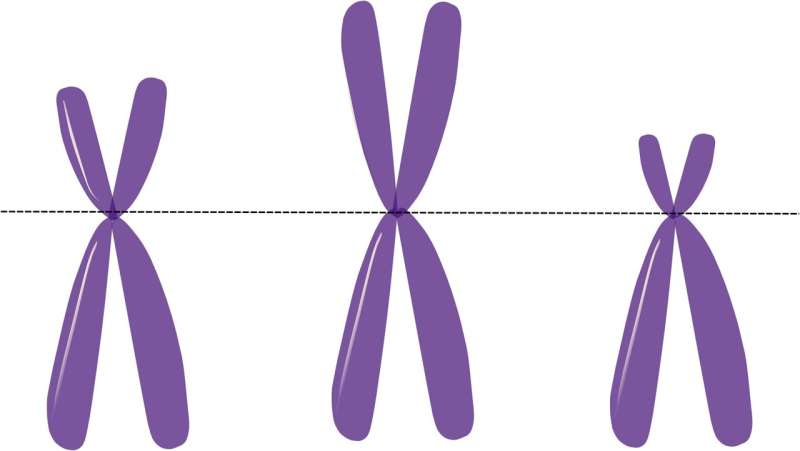
Here's the simple biology. Almost every cell in a man's body carries one X chromosome and one Y chromosome. "Loss of Y" happens when an immune cell in the blood drops its Y. Past studies linked that loss in blood cells to higher disease risk, but no one had mapped exactly where it happens across the body — until now.
The team analyzed 1,000 tissue samples from 405 men, using an automated fluorescent imaging system to peer at more than 4.3 million individual cell nuclei and measure the ratio of Y to X chromosomes. What they found was striking: the loss of Y shows up in normal-looking tissue sitting right next to a tumor.
"We were able to show that the loss of the Y chromosome is found in normal-appearing tissues adjacent to a tumor," said Theodorescu, who is the Cancer Center's director and the Nancy C. and Craig M. Berge endowed chair. "That finding is what makes this discovery so exciting. It suggests we may be looking at one of the earliest signposts of cancer forming."
In one part of the study, researchers built detailed maps of bladder tissue removed during cancer surgery. Those maps revealed a slow, steady climb — from healthy tissue, through early abnormal cells, into full-blown cancer. The loss of Y in normal-appearing tissue was highest in colon, rectum, esophagus, pancreas, and lung cancers.
Theodorescu describes it as a gradient, "similar to a hillside that slowly gets steeper." The closer the tissue sits to a cancer, the more Y loss they see. That gradient could one day help doctors suspect trouble in a biopsy that happens to miss a smaller cancer hiding nearby.
His earlier research showed something else: when cancer cells lose the Y chromosome, they get better at dodging the immune system. That may explain why Y loss has been linked to higher death rates from certain carcinomas.
This isn't a test doctors can run yet, but the map is now drawn. By knowing exactly where and how this quiet loss unfolds, researchers hope to spot trouble far earlier — before a tumor ever takes hold — and give men a head start they didn't have before.