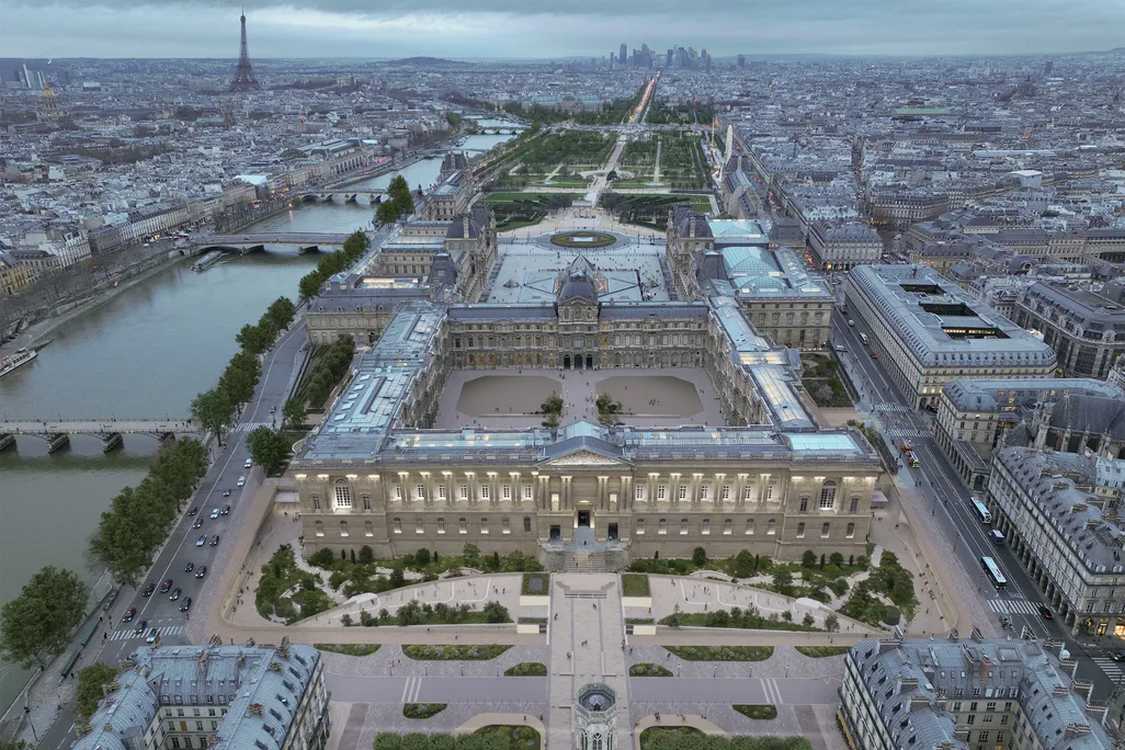
The Mona Lisa will finally have room to breathe—and so will everyone else at the Louvre. The world's most visited museum has announced a sweeping $1 billion redesign that will give Leonardo da Vinci's masterpiece its own 33,000-square-foot exhibition space, fundamentally reshaping how visitors move through Paris's cultural heart.
The problem is almost comically specific: roughly 20,000 people arrive at the Louvre each day with a single mission—to stand before the modest-sized portrait of Lisa Gherardini and snap a selfie. In the resulting crush, visitors describe feeling claustrophobic and uneasy, packed shoulder-to-shoulder in what museum director Laurence des Cars succinctly called "a scene of intense agitation." The bottleneck doesn't just affect Mona Lisa pilgrims; it forces art lovers who came for the 38,000 other works in the collection to wade through the crowds just to move through the galleries.
The solution is elegant: separate the seekers from the seekers of serenity. Those who want only the Mona Lisa can enter through their own dedicated entrance, view the painting, and leave without ever stepping foot in the rest of the museum. Those hunting for Vermeer or Egyptian antiquities can explore freely, unburdened by the daily stampede. It's a win for both camps—efficiency for the selfie-takers, breathing room for everyone else.
The redesign extends far beyond isolating a single painting. Selldorf Architects, a New York-based firm selected from 100 applicants, will collaborate with Studios Architecture Paris to overhaul the museum's eastern facade, the 17th-century Grande Colonnade. The project includes two new underground entrances that will distribute visitor flow more evenly, separate dining areas and gift shops that eliminate more chokepoints, and expanded gallery space throughout the complex. New pathways and greenery will connect the museum more naturally to the surrounding city, turning what has been a fortress into an inviting gateway.
The scale of the ambition is worth pausing on: the Louvre is already the world's most visited museum, yet this redesign aims to accommodate an estimated three million additional visitors per year. That's not a tweak; it's a fundamental rethinking of how one of humanity's greatest art repositories can welcome the world while remaining a place for contemplation and discovery.
The Louvre has weathered institutional challenges before—a high-profile theft of the French crown jewels, a water leak that damaged around 400 artworks. This renovation suggests the museum is intent on evolving beyond crisis management. By the time the Grande Colonnade project concludes, the Louvre won't just be a place where you go to see the Mona Lisa; it will be a place where you can actually see the Louvre.