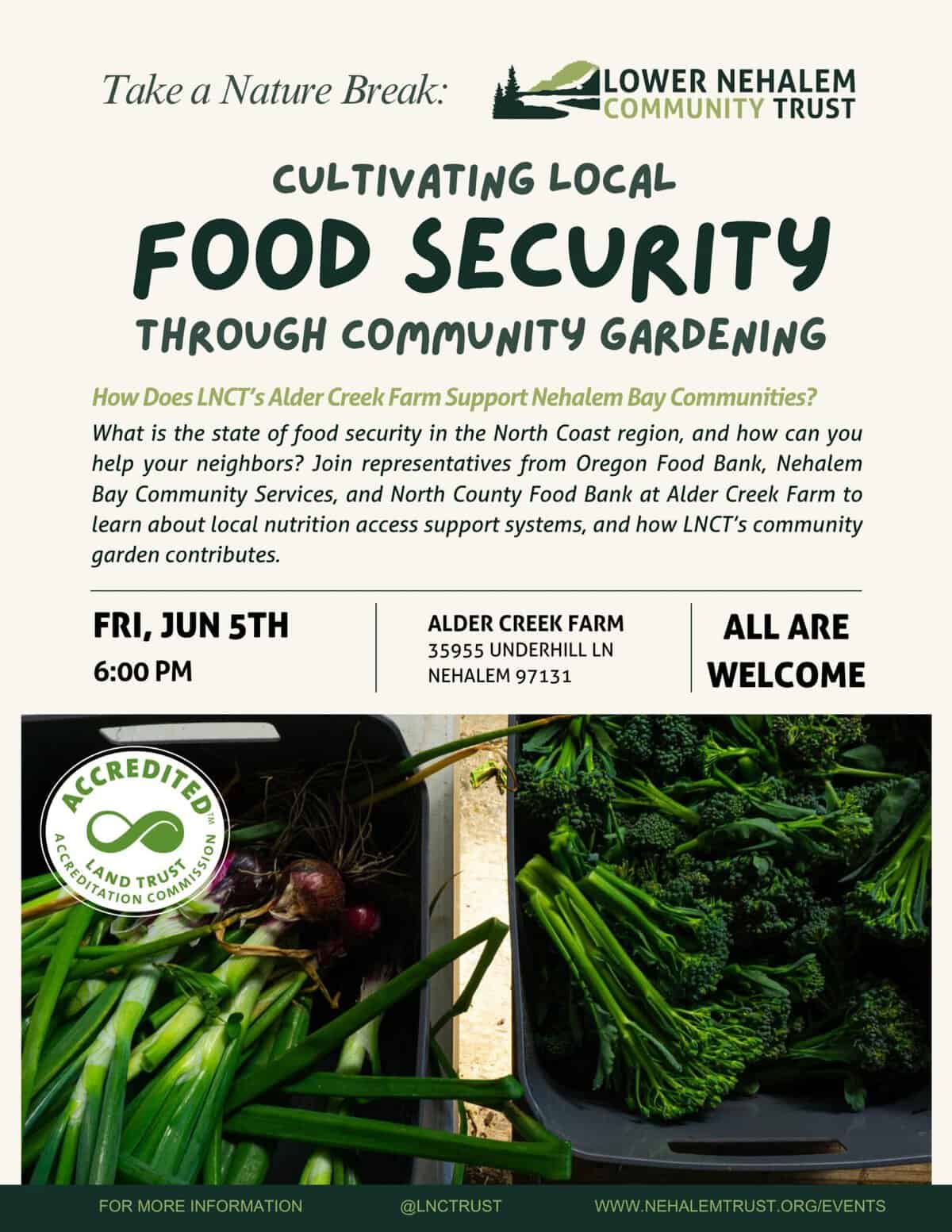
On a June evening in North Tillamook County, neighbors gathered at Alder Creek Farm to ask a question that many rural communities are wrestling with: how do we make sure everyone has access to nutritious food? The Lower Nehalem Community Trust launched a public conversation about food security at 6:00 PM in the garden itself, bringing together representatives from Oregon Food Bank, Nehalem Bay Community Services, and North County Food Bank to speak directly with residents about the systems that sustain their region.
Food security isn't an abstract issue in the North Coast. Access to fresh, affordable produce can mean the difference between thriving and struggling for families in rural Oregon, where food deserts are real and transportation to distant stores is a burden many can't afford. This event at Alder Creek Farm existed to illuminate that reality and to show a tangible solution already taking root—literally—in the community garden itself.
The speakers that evening represented three organizations working from different angles on the same problem. Oregon Food Bank distributes food statewide through partner agencies and nutrition programs. Nehalem Bay Community Services provides direct support to residents of the North Coast. North County Food Bank serves the region with locally focused resources. Together, they explained the networks that deliver food assistance, the challenges they face, and how community-driven initiatives like Alder Creek Farm's garden fit into the larger puzzle of nutrition access.
But the event was more than a lecture. Organizers made space for meaningful conversation through a Q&A session where residents could ask the food bank representatives directly how to access services, how to help neighbors in need, and what barriers exist to food security in their area. That kind of dialogue—where community members aren't passive recipients but active participants in problem-solving—signals a different approach to food access: one rooted in local knowledge and mutual aid.
Alder Creek Farm's community garden exemplifies this philosophy in action. By producing food that feeds the neighborhood, it addresses immediate nutrition needs while building a culture where food abundance comes from the land families live on. Community gardens do more than yield vegetables; they create connection, transfer knowledge about growing food, and signal that food security is something a community can influence rather than something that happens to them.
The Lower Nehalem Community Trust brought these three organizations together for a reason: because food security requires systems thinking. Individual gardens matter. Food banks matter. Community services that connect people to resources matter. The health of a region emerges from all these pieces working in concert, and June 5th offered North Tillamook County residents a chance to see how.
For anyone wondering how to strengthen food security in their own community, that evening offered a roadmap: listen to the organizations already doing the work, understand what resources exist, learn how farms and gardens fit in, and ask what your neighbors need. Food security isn't solved in a single event, but it begins with people willing to show up and figure it out together.