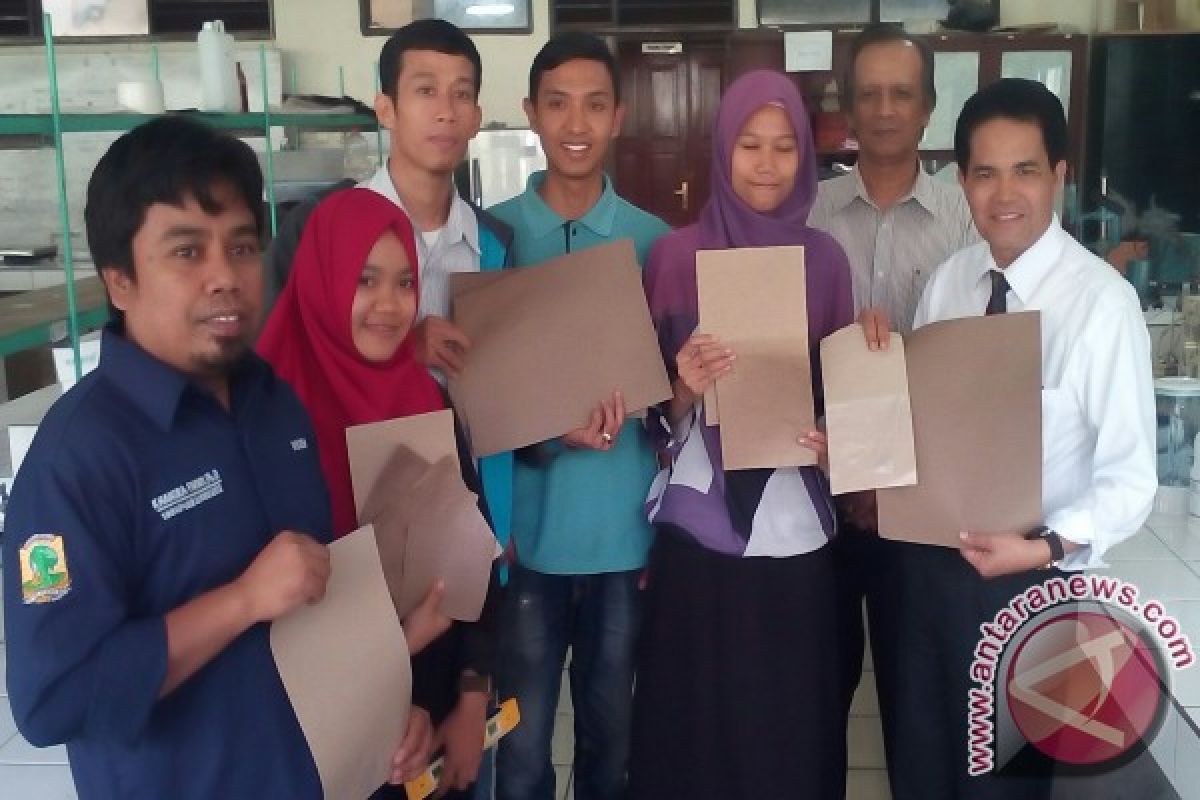
Tika Apriliany and her four teammates at Andalas University in Padang, Indonesia, didn’t set out to revolutionize food packaging—they just wanted to finish a student project. But what began as a requirement for the Student Creativity Program has grown into something far more promising: a biodegradable food wrap made from oil palm waste and tapioca bioplastic, a material that could one day replace the plastic-lined paper dominating Indonesian markets. In a country where palm oil production generates millions of tons of waste annually, and plastic pollution clogs rivers and coastlines, this innovation offers a quiet but powerful solution. The team’s creation, named Kertas Ramah Lingkungan Dari Tandan Kelapa Sawit Berlapis Bioplastik Untuk Makanan—or “Kelas Bistik” for short—starts with empty oil palm bunches, a ubiquitous byproduct of Sumatra’s vast plantations. These are cleaned, cut, and processed into fiber, then turned into pulp using sodium hydroxide in a machine called a pulper. The pulp is pressed into sheets, air-dried, and finally coated with a bioplastic made from tapioca starch, water, and glycerol. The result? A sturdy, food-safe wrap that decomposes within weeks, not centuries. What sets it apart isn’t just its eco-friendly breakdown—it’s also safe if accidentally eaten. “Tidak akan masalah bila saat digunakan membungkus nasi atau lauk, ikut termakan dan masuk ke dalam tubuh,” Tika explains, highlighting a stark contrast to conventional plastic-coated food paper, which can leach harmful chemicals when heated or ingested. The team, including Fakhrur Rozi Oktafi, Oktaviandi, Nurmala Sari, and Febiola Edga, invested around Rp7.5 million (about $500) to develop the prototype, still at lab scale. While they estimate a single sheet might cost Rp800—eight times the price of a standard plastic wrap—their cost reflects small-batch production. Mass production, they argue, could narrow the gap. And the environmental math is compelling: unlike polyethylene-lined paper, which can take hundreds of years to degrade, Kelas Bistik breaks down naturally, turning back into the earth it came from. Prof. Hermansah, Vice Rector III of Unand, has praised the project as both innovative and socially valuable, noting its use of cheap, abundant waste. For Tika and her team, the dream is no longer just academic. They hope to see their wraps in warungs and supermarkets, protecting food—and the planet—one meal at a time.
← News
Pollution Wins Pollution Wins Planet
Mahasiswa Unand Ciptakan Pembungkus Makanan Berbahan TKKS-Bioplastik - ANTARA Sumbar
Rp7.5 Million Research cost
800 Price per sheet
100 vs plastic wrap
8x Price premium
7.5 Million research-cost