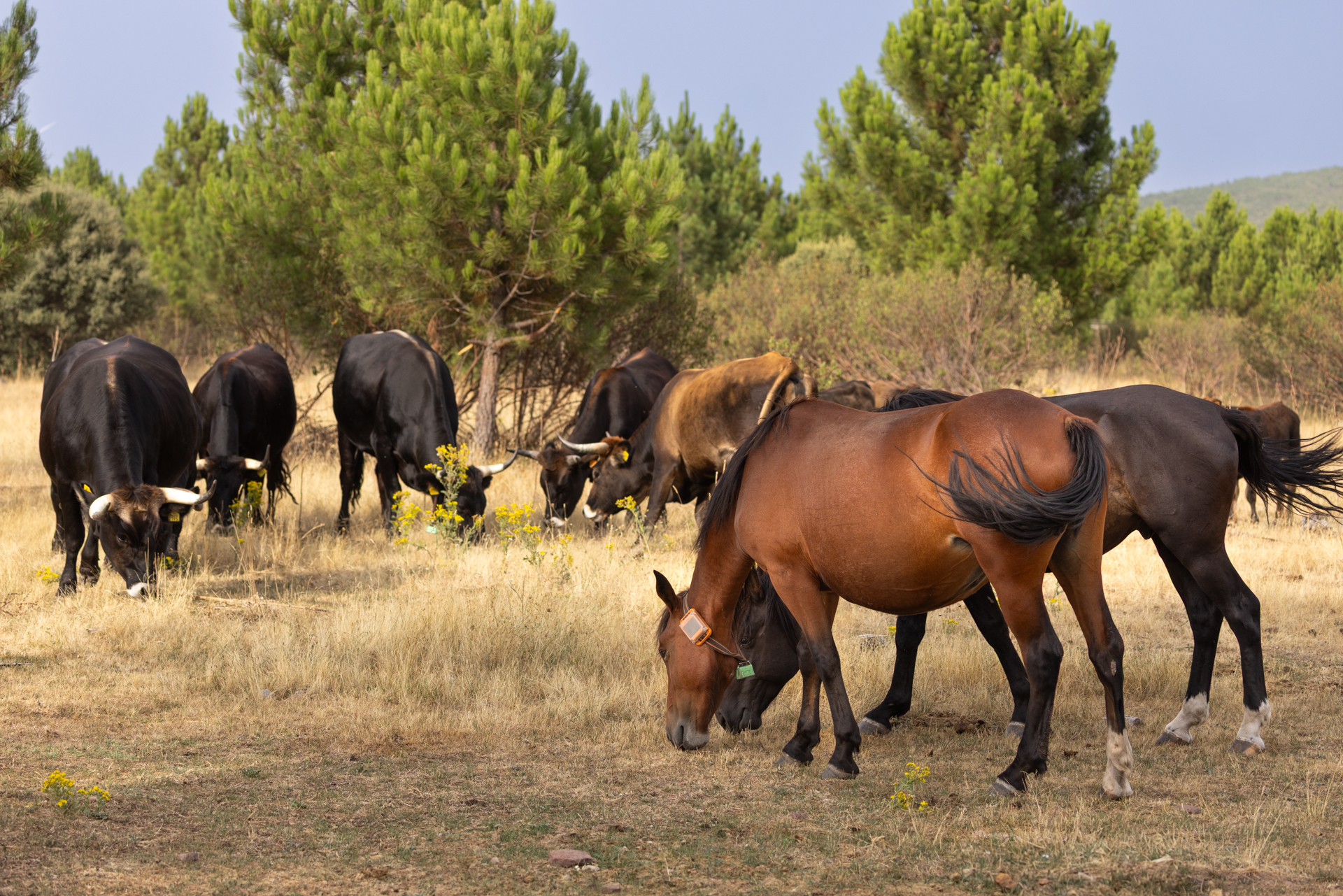
In the rolling hills of Spain's Iberian Highlands, 120 horses are finally getting the freedom they were meant to have. In May 2026, the regional government of Castilla-La Mancha officially recognized these horses as living in wild or semi-wild conditions — the first designation of its kind in the region. It sounds like a small bureaucratic step, but for nature lovers, it marks a turning point in how Europe thinks about its animal neighbors.
The horses belong to Rewilding Spain, an organization that manages free-ranging herds across the landscape alongside other large grazers like Tauros (a type of wild cattle bred to resemble the extinct aurochs) and European bison. These animals do important work. When they graze, trample, and roam, they shape the land in ways that help other species thrive. They create gaps in thick forests where new plants can grow, spread seeds through their waste, and boost carbon storage in the soil. Scientists call them "landscape engineers" — creatures that build homes for insects, birds, and smaller animals just by living their lives.
The problem? Across much of Europe, the law treated these wild grazers the same as farm animals. They needed constant identification tags, passports, and routine health checks — rules designed for cows and sheep raised to become food. For animals meant to roam freely with minimal human help, these requirements created stress, added costs, and limited their ability to do their ecological jobs.
So The Lifescape Project, Rewilding Europe, and Rewilding Spain joined forces to find a better way. Their goal was simple: figure out whether existing European laws could accommodate animals living naturally, and where changes were still needed. The process began in September 2024, and after nearly two years of work, the teams secured recognition for the four horse herds in the Iberian Highlands.
The legal shift does not make the horses wildlife in the eyes of the law. But it does mean officials can remove or relax certain requirements — like routine microchipping, some fencing rules, and infrastructure obligations — so the herds can live with less interference. "This recognition is about much more than reducing paperwork," said Mara Zamora, general manager of Rewilding Spain. "It allows the herds to live and behave in a far more natural way, enabling them to fulfil their ecological role."
The breakthrough matters beyond Spain, too. The legal pathway used in Castilla-La Mancha draws on rules already written into EU and national law. That means rewilding projects across Europe could potentially follow the same steps — applying for recognition, proving their animals genuinely live wild or semi-wild, and anchoring their requests in existing legislation. For a continent that has lost species like the aurochs and tarpan, having a practical roadmap to bring back nature's grazers offers real hope.