Deep in the heart of Kuala Lumpur, a Proton e.MAS 5 sits in a showroom, its dashboard glowing softly. By late June, the national automaker's newest electric vehicle will have something it hasn't had before: breathing room. That's because on July 1, 2026, Malaysia begins enforcing a sweeping new tariff structure that will reshape what kinds of electric vehicles can be sold—and at what price—in Southeast Asia's most ambitious EV market yet.
The Ministry of Investment, Trade and Industry announced that fully imported or completely built-up electric vehicles must now carry a minimum CIF value of RM200,000 (roughly $47,000). When excise taxes, import duties, and sales taxes are layered on, the policy effectively sets a retail floor of around RM300,000 (about $70,000) for any imported EV. There's also a performance gate: imported vehicles must produce at least 180 kilowatts—roughly 241 horsepower—to clear the category. No more repositioning lesser models as premium solely by virtue of a mandated price tag.
The timing could hardly be sweeter for Proton and its sibling Perodua, Malaysia's two national automakers. Both have been building toward the electric era, and now the market landscape has tilted in their favor. The BYD Dolphin, the GWM Ora Good Cat, and other affordable Chinese imports that once threatened to flood the mass-market segment will now face a far more formidable barrier to entry. "This policy shift is designed to protect national automakers Proton and Perodua and their domination of the lower-priced mass-market EV segment," the ministry noted.
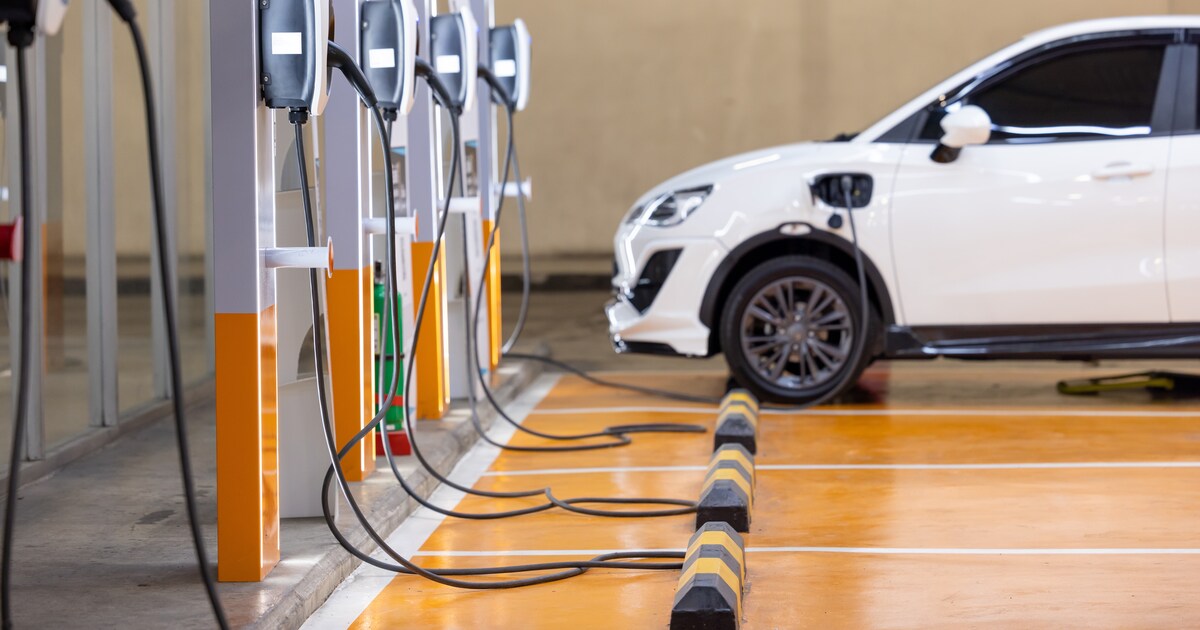
Yet Malaysia isn't closing itself to the electric future—quite the opposite. The country's charging infrastructure is expanding at a remarkable pace. As of May 2026, more than 11,000 public charging points now dot highways, shopping malls, and urban corridors nationwide. Gentari, the clean energy arm of state oil company Petronas, has established a commanding lead in DC fast charging along the North-South Expressway, deploying solar-powered hubs at highway rest stops. In urban centers, chargEV has quietly become the invisible backbone of Malaysia's EV ecosystem, holding roughly 60 percent of charging contracts in shopping malls, hotels, and mixed-use developments. Tesla, meanwhile, operates the country's largest proprietary Supercharger network in the Klang Valley, setting benchmarks for charging speed and reliability.
The longer-term bet is subtler than it might appear. While the higher pricing floor will slow mass-market EV adoption in the near term—entry-level models suddenly becoming inaccessible to middle-income buyers—the policy may also accelerate local assembly investments. VinFast, the Vietnamese automaker, is already studying whether to establish completely knocked-down assembly operations in Malaysia to bypass the import restrictions. Chinese and regional manufacturers are likely to follow suit. In time, Malaysia could emerge with something rarer than a protected market: a domestic EV manufacturing base built on local assembly, not just local sales.
For now, the Proton e.MAS 5 has the showroom to itself. And Malaysia has signaled, clearly and unmistakably, that the electric transition it wants is one it intends to build itself.