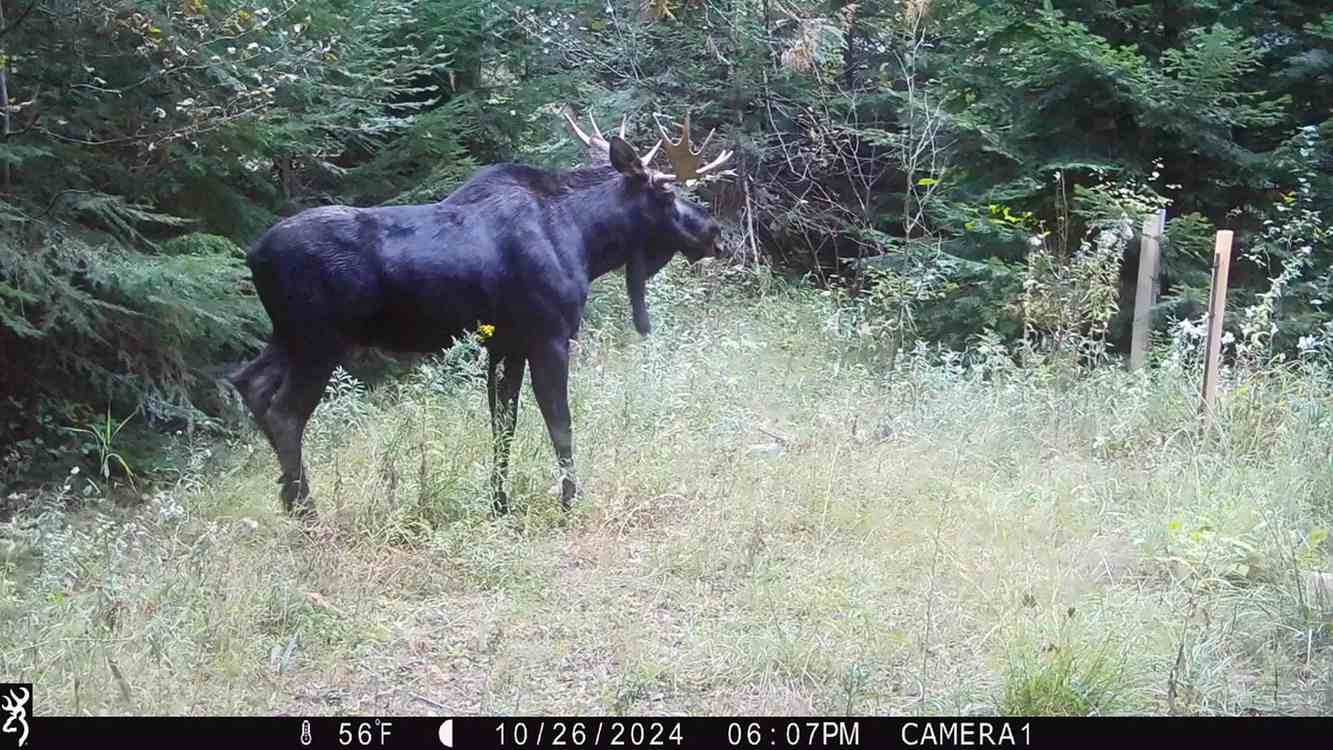
Gary Verbrugge watched a bull moose wander through his yard one May morning, paused on the forest floor as if the 72-year-old's home were simply another waypoint in its territory. For Verbrugge, who spent three decades in cubicles at the Social Security Administration before retiring to reclaim his family's land in Washington state, moments like these represent something far larger than a wildlife sighting—they represent a covenant kept.
After his grandparents migrated from Iowa to Washington in the early 20th century, Verbrugge grew up surrounded by forest managed by his father and uncles. When he returned decades later to see what had become of that woodland, he discovered their trusted forester had prioritized timber sales over the forest's long-term health. Rather than accept that trajectory, Verbrugge chose a different path. In 2007, he partnered with the Inland Northwest Land Conservancy to establish a conservation easement on 605 acres of his own land, legally binding it to remain in its natural state in perpetuity. Then, in 2025, he purchased an additional 280 acres directly adjoining his property from his nieces and nephews, adding them to the protected landscape. That single decision brought his total contribution to 885 acres—woodland that now belongs irrevocably to the Kalispel Indian Tribe.
The Kalispel, who responded with what they called "profound gratitude," will steward the land forward. Michael Crabtree, conservation director for the Inland Northwest Land Conservancy, explained how conservation easements function as a safeguard: the organization acts "kind of like the third party that makes sure the rules are being followed," monitoring that the land remains undeveloped and ecologically whole. For Verbrugge, who has no heirs, the arrangement provided clarity. His forest would not be subdivided, sold off, or stripped for profit. It would endure.
The landscape he's preserved is extraordinary. The Little Spokane River flows through the property alongside several creeks that harbor bull trout, a species sensitive to habitat disruption. The woodland itself has become a refuge for wildlife that roams with the easy confidence of creatures at home: elk, deer, moose, wolves, cougars, bobcats, and eagles. Verbrugge, who lives alone in his cabin, has documented these encounters through trail cameras, turning quiet moments into small celebrations. "To see the wildlife, where they're not aggressive, they're not scared, they're just at home, is the reward," he told the Spokesman-Review. In a region increasingly fragmented by development, his 885 acres represent a rare and unbroken sanctuary.
Verbrugge's gift arrives as part of a larger global movement toward private land conservation. Earlier in May, the Good News Network reported that citizens across Australia and the USA have already assembled 85 million acres specifically for conservation purposes. With his donation, that collective tally now reaches 85,000,885 acres—a number that might seem small against the vastness, yet carries profound significance. One man's refusal to treat the forest as a commodity has secured a landscape where moose pass through yards unharmed, where rivers run clean, and where the next generation—whether of the Kalispel Tribe or the wildlife itself—will inherit something whole.