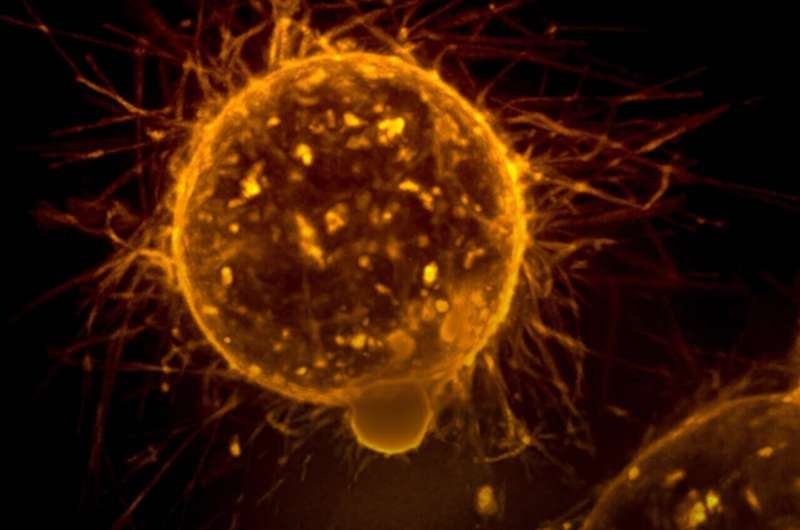
In a quiet lab in Houston, a single cancer cell—no larger than a speck of dust—holds the key to understanding how tumors take root and spread. At The University of Texas MD Anderson Cancer Center, Dr. Nicholas Navin and his team have uncovered a startling truth about cancer’s origins: nearly every tumor begins with just one rogue cell. By analyzing 94 tumors across seven cancer types—bladder, breast, colon, glioblastoma, kidney, lung, and ovarian—the researchers traced the genetic lineage of more than 62,000 aneuploid cells and found they all shared the same core mutations, pointing to a single ancestral source. This discovery, published in Cancer Discovery, reshapes how we see cancer—not as a slow, steady march of mutations, but as a story of sudden, explosive genetic upheaval.
For decades, scientists relied on bulk sequencing, which averages genetic signals across thousands of cells and often misses rare but dangerous subpopulations. But Navin’s team used single-cell sequencing to reveal something hidden: tumors don’t evolve gradually. Instead, they grow through punctuated bursts—rapid, massive changes in chromosome structure known as copy number alterations (CNAs). These bursts create distinct subpopulations within a tumor, fueling diversity that can lead to treatment resistance, metastasis, and aggressive disease. The team even developed a Punctuated Evolution Index (PEI) to measure how abruptly these changes occur. Tumors with high PEI scores—those that underwent sudden genetic explosions—were linked to poorer outcomes and more advanced disease stages.
Among the most revealing findings was the role of early genetic events like TP53 mutations and whole-genome doubling, which appeared consistently across cancer types and acted as catalysts for later diversity. These shared features, present in the original cancer cell, become the foundation upon which entire tumor ecosystems are built. Because of this, a single biopsy might miss critical subpopulations, leading to incomplete or ineffective treatments. But now, with a clearer map of tumor evolution, clinicians may one day predict which patients are at higher risk for aggressive disease based on the genetic diversity within their tumors.
This work doesn’t just rewrite the textbook on cancer biology—it opens a path toward smarter, more personalized care. By identifying the earliest drivers of tumor growth, doctors could design therapies that target not just the dominant cancer cells, but the hidden branches of the tumor’s family tree. As Navin puts it, “We now have a roadmap for developing smarter clinical diagnostic and treatment strategies to improve patient outcomes.” The future of cancer care may not lie in stronger drugs, but in deeper understanding—one cell at a time.