When 50,000 humpback whales returned to the eastern Australian coast in 2024—surpassing pre-whaling population levels—it wasn’t just a sign of recovery. It was proof that when political will, Indigenous knowledge, and innovative finance align, the ocean can heal. As of April 2026, more than 10.01% of the world’s oceans are now officially protected, a leap from 8.6% just two years prior and the fastest expansion in marine conservation history. This threshold marks more than a symbolic victory; it reflects a global transformation in how we govern the high seas, long treated as a lawless frontier.
The turning point came in January 2026 with the enforcement of the High Seas Treaty, two decades in the making. For the first time, 64% of the ocean that lies beyond national jurisdiction—the open ocean—is now subject to binding legal protection. This framework empowers the creation of marine protected areas (MPAs) in international waters, where no single country has authority but where biodiversity is vast and vulnerable. Nations are already acting: French Polynesia established the Tainui Atea MPA, spanning 4.5 million square kilometers—the largest protected marine area on Earth—while Colombia now safeguards 47.4% of its marine and coastal zones and Australia leads globally with 52% of its ocean territory protected.
Fisheries, once depleted, are rebounding with remarkable speed. In the United States, 94% of tracked fish stocks are no longer overfished—the highest recovery rate since federal monitoring began. Off California’s Mendocino Coast, more than 30,000 coho salmon returned last season, a tenfold increase from a decade ago. Even species long absent are reappearing: sei whales, unseen in Argentine waters for nearly 100 years, have been spotted again. Green sea turtles have been removed from the IUCN endangered list for the first time in decades, a milestone of global significance.
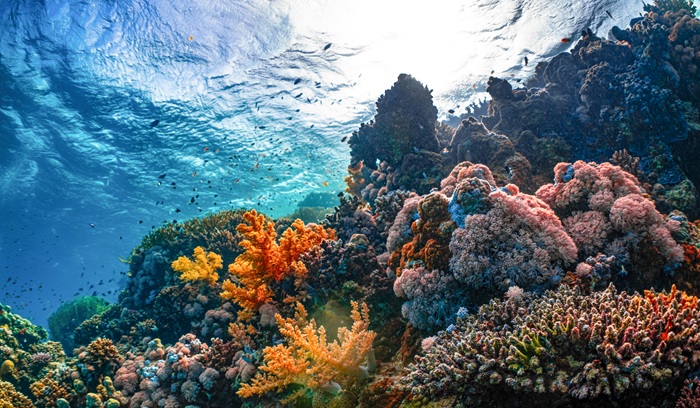
Innovation is accelerating restoration. In Mauritius, scientists transplanted heat-conditioned corals with a 98% survival rate—offering hope for reefs battered by warming seas. Ecuador unlocked $450 million through the largest debt-for-nature swap in history, directing funds to protect the Galápagos. Dominica created the world’s first protected area designed specifically for sperm whales, recognizing the cultural and ecological value of deep-diving cetaceans. Meanwhile, the Biden administration permanently safeguarded 625 million acres of U.S. coastal waters from offshore drilling, one of the largest conservation acts by area.
These victories are not isolated. They signal a new era—one where legal rights for nature, climate accountability, and Indigenous stewardship converge. With over 40 nations pledging $12 billion by 2030 for coral reef protection, and the EU committing €3.5 billion at the Our Ocean Conference, the momentum is financial as well as moral. The ocean isn’t just bouncing back—it’s being reimagined as a shared trust, governed not for extraction, but for life.