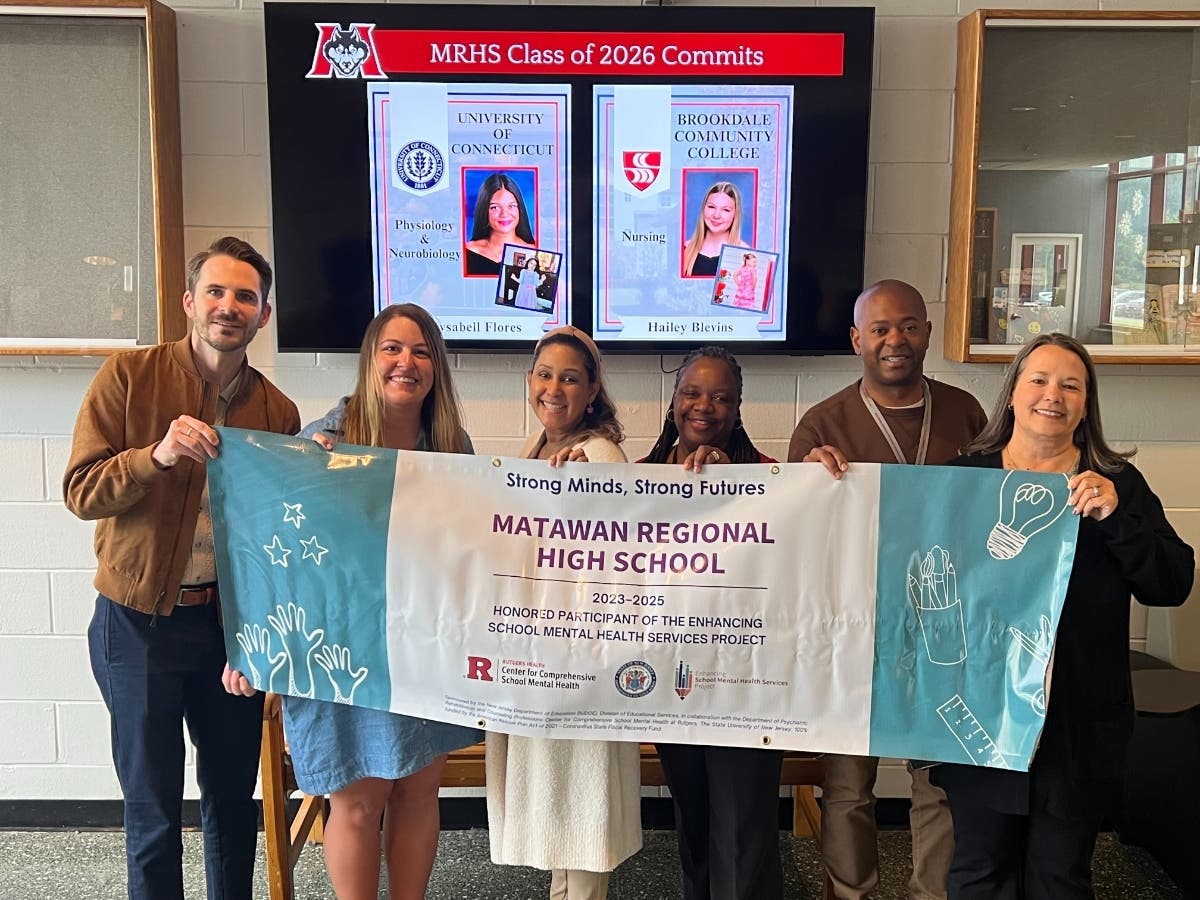
Sheryl Kish, a special education and math teacher who has spent nearly 30 years at Matawan Regional High School, noticed something shift in the hallways. Students started looking out for each other more. Staff members began having deeper, more meaningful conversations with students. The source of this quiet transformation was the Enhancing School Mental Health Services Project, a rigorous, multi-year statewide initiative that Matawan became the first and only school in Monmouth County to complete.
Teen mental health has emerged as one of the most pressing challenges facing schools across America. Between academic pressure, social media, and the lingering effects of the pandemic, students are struggling in ways that traditional support systems often miss. The Enhancing School Mental Health Services Project, led by the New Jersey Department of Education in partnership with Rutgers University's Center for Comprehensive School Mental Health, was designed to change that by transforming how schools identify and support students in crisis.
The work required intense collaboration. Educators, counselors, school psychologists, social workers, and administrators met monthly for training sessions that taught evidence-based mental health practices. Rather than implementing feel-good programs in isolation, the team took a methodical approach: they assessed student needs, evaluated existing support systems, and identified gaps that could be filled with research-backed strategies. One of the most significant changes was revamping how the school identified struggling students. Using a universal behavior screener administered to all freshmen with parental consent, Matawan Regional was able to spot students in need of additional support before crises developed. The screener is confidential, and the surveys continue each year, providing ongoing data to track progress and adjust interventions.
The school also launched a health resources website for families, connecting them with counseling and crisis support services—making help just a click away. Internally, the PACK Bucks program became a vehicle for cultural change. The acronym stands for Preparedness, Accountability, Communication, and Kindness. Staff members distribute PACK Bucks to students who demonstrate these traits, with rewards entered into raffles for prizes. It sounds simple, but it reorients school culture toward recognizing and reinforcing positive behavior rather than only addressing problems.
Principal Michael Wells described the initiative as creating a school environment based on "gold-standard for data-driven, evidence-based best practices for mental health support services." That language matters. This is not an experiment or a pilot program—it is the result of rigorous training, careful implementation, and measurable results. Over two years, the partnership strengthened how the school supports students academically, socially, and emotionally.
Kish's observation about the shift in school culture—"there's a greater sense of connection and belonging throughout the building"—reflects what the research confirms: when schools treat mental health as a core function rather than an add-on, students thrive. Matawan Regional High School's success in completing this initiative, and its willingness to share lessons learned, offers a roadmap for other schools facing the same crisis. The question now is whether other districts in New Jersey and beyond will follow their example, and how quickly.