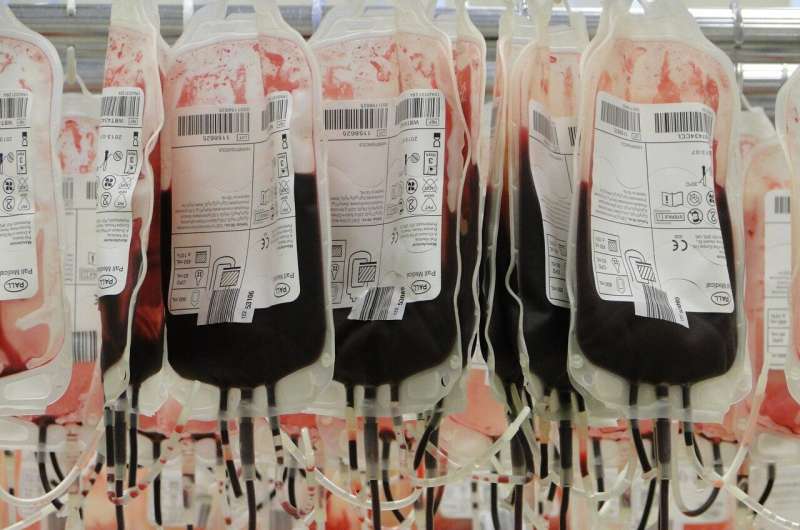
When a patient needs blood in a rural British Columbia hospital, every minute counts—and every unit counts too. Researchers at Simon Fraser University have now developed a mathematical simulation model that could transform how these life-saving supplies are managed across the province's sprawling geography, ensuring that remote communities have the same reliable access to blood products as patients near major trauma centers.
The challenge is urgent and real. In a province as large and geographically challenging as British Columbia, blood distribution isn't simply a matter of logistics—it's a matter of equity and survival. The province's hospitals rely on a "hub-and-spoke" network managed by Canadian Blood Services in Vancouver and the largest hospitals within BC's five regional health authorities. Smaller spoke hospitals order blood from these hubs or directly from CBS, then return units ten days before expiry so they can reach patients who need them more urgently. While this system has dramatically reduced wastage, it has an unintended consequence: each hospital's isolated ordering decisions can ripple across the entire network, sometimes leaving critical blood types unavailable where they're most needed.
The research team, led by Jas Dhahan, a model developer at SFU, worked closely with health authorities and laboratory technologists across BC to understand the real-world constraints. They focused particularly on O-negative blood—the universal donor type that can be transfused into anyone, making it the only safe choice in true emergencies when there's no time to determine a patient's blood type. The statistics underscore the tension: only about 7% of Canadians are O-negative, yet this blood type accounts for roughly 12.5% of all transfusions nationwide. With a shelf life of just 42 days, O-negative is what Douglas Morrison, medical director of the BC Provincial Blood Coordinating Office, calls "a particularly precious resource."
The team interviewed technologists responsible for ordering blood at hospitals across the province and built a digital twin—a computer simulation of BC's entire hub-and-spoke network. This simulation allows hospitals to test different ordering policies and see how those decisions play out across the system, identifying the optimal inventory targets that meet local demand while supporting a more equitable distribution overall.
Dhahan framed the work in terms that honor the human reality behind every unit: "Each unit of blood represents a volunteer who took time out of their day to save a life. We have a responsibility to safeguard that altruistic resource and ensure patients in rural or remote communities have the same access to life-saving blood products as those who live close to major trauma centers." Sandy Rutherford, scientific director at SFU's Centre for Operations Research and Decision Sciences, added that in a province where moving blood or patients quickly isn't always possible, a data-driven approach to ordering could eliminate the ripple effects that leave some hospitals oversupplied while others run short.
The research, published in the journal Transfusion Medicine, represents a shift toward evidence-based inventory management in rural healthcare. As BC's hospitals begin implementing these insights, they're not just optimizing numbers on a spreadsheet—they're working to ensure that geography and distance no longer determine who gets the blood they need, when they need it.