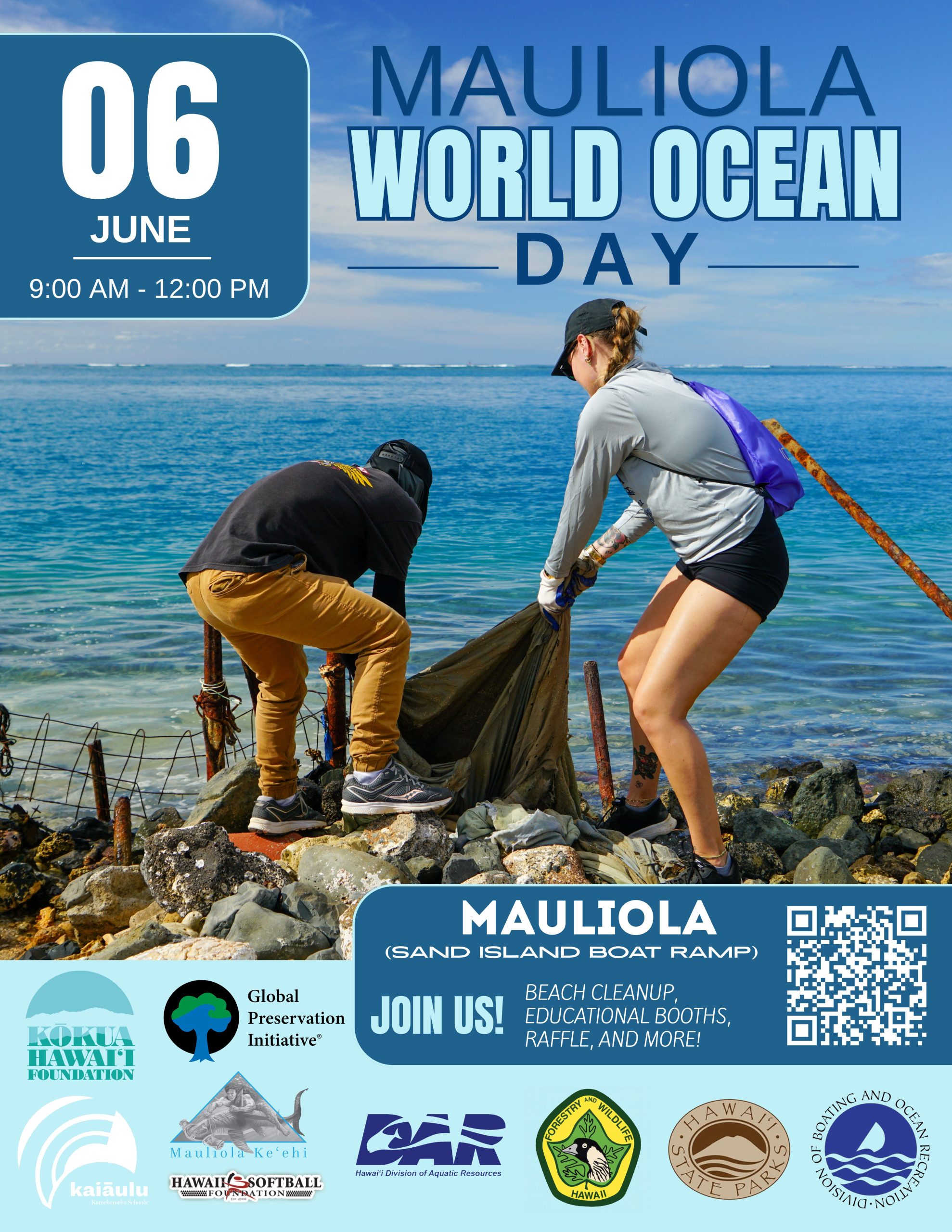
On Saturday, June 6, Hawaiian community leaders are gathering at Mauliola—the historic Sand Island—for a three-hour beach cleanup that brings together an unusually broad coalition of organizations united around a single mission: protecting the ocean while honoring the place itself.
Mauliola holds deep cultural significance in Hawaiʻi, and this World Ocean Day event recognizes that history while addressing a pressing environmental challenge. Land-based rubbish—debris washed into the ocean from surrounding coasts—threatens marine ecosystems and the communities that depend on them. By removing what doesn't belong on the shoreline, participants are taking a direct hand in ocean preservation.
The cleanup, running from 9am to 12pm at the Mauliola Sand Island Boat Ramp, brings together an impressive network of partners. Mauliola Keʻehi, the Division of Land and Natural Resources—including its Divisions of State Parks (DSP), Forestry and Wildlife (DOFAW), Aquatic Resources (DAR), and Boating and Ocean Recreation (DOBOR)—are collaborating with the Kōkua Hawaiʻi Foundation and the Hawaiʻi Softball Foundation. This kind of cross-sector partnership, spanning government agencies, environmental nonprofits, and community sports organizations, reflects a growing recognition that ocean health is everyone's responsibility.
The event is designed to be more than just cleanup work. Educational booths will be on hand to deepen participants' understanding of marine conservation issues, while a dedicated segment will explore the history and cultural significance of Mauliola itself. A raffle will offer prizes to volunteers, adding a festive element to the day's work. The organizers are calling participants to join in a spirit of "pilina"—a Hawaiian word meaning kinship and interconnection—suggesting this is as much about building community bonds as it is about removing debris.
What makes this cleanup particularly meaningful is its timing on World Ocean Day, a global observance that falls on June 8 each year. By centering their event on this date, the Hawaiian organizers are positioning their local action within an international movement for ocean advocacy. Every piece of trash removed from Mauliola's shores becomes part of a larger story of human responsibility toward the seas.
For those interested in joining, advance registration is required. The three-hour window is accessible for volunteers of varying ages and abilities, and the educational components mean participants will leave with concrete knowledge about what threatens Hawaiian waters and what works to protect them.
This event embodies a simple but powerful principle: protecting the ocean starts with caring for the places where land meets water. By bringing together government agencies, nonprofits, and community members—united not by mandate but by shared commitment—Hawaiʻi is demonstrating what coordinated ocean stewardship looks like in practice.