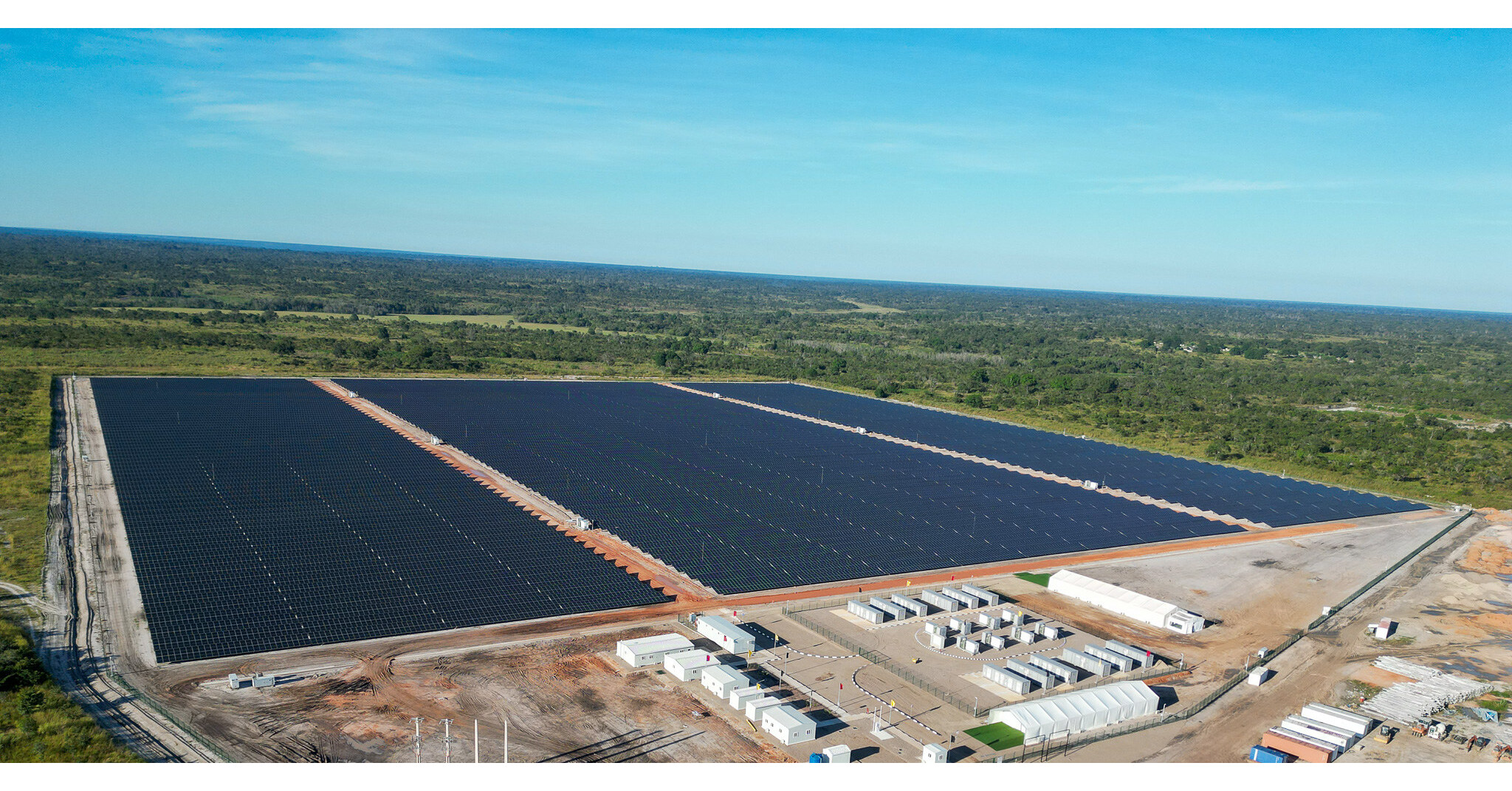
In May, as solar panels caught the African sun over the village of Luau in Angola, President João Lourenço and his energy minister stood witness to a milestone: the inauguration of Africa's largest off-grid solar park, a gleaming complex of 54,912 panels designed to do what grid extension could never do—bring reliable electricity to remote communities where geography and economics had left them in darkness for decades.
The Luau Photovoltaic Park represents a fundamental shift in how the continent addresses energy poverty. With a generation capacity of 31.85 MWp and battery storage of 75.26 MWh, the facility will supply clean electricity to over 90,000 people directly, while preventing the emission of 47 tonnes of CO2 annually. It is the second system of its kind in Angola, but the first on the continental scale—surpassing the previous record held by the Cazombo Solar Photovoltaic Park, which MCA completed in 2025 with 25.3 MWp of capacity.
What makes this achievement significant is not just its size, but what it signals about possibility. Across Africa, millions of people in isolated communities have no access to electricity because extending the national grid is technically impossible or prohibitively expensive. Off-grid solar parks with battery storage solve this problem by combining generation with storage, ensuring reliable power even after sunset, without burning a single litre of fossil fuel. The Luau park alone will save Angola approximately 18 million litres of fuel annually—fuel that would have been needed for diesel generators in those communities.
The project is part of the Rural Electrification Project, an ambitious programme that will eventually implement 46 autonomous mini-grids across 60 communes in Angola, with an estimated direct impact on more than one million people. The Luau facility, budgeted at over €87 million, created more than 200 local jobs during construction. This matters because rural electrification isn't just about lighting homes; it's about enabling healthcare clinics to refrigerate medicines, schools to use computers, and local businesses to operate modern equipment. It's about equality—ensuring that geography doesn't determine destiny.
The project has caught the attention of the European Union, which recognized it as part of its Global Gateway strategy for sustainable infrastructure investment in partner countries. This recognition opens doors for further expansion and financing, signaling that Europe sees value in what Angola is building.
Manuel Couto Alves, Chairman of MCA, the Portuguese firm that designed and built the park, captured the deeper meaning: "This is a project that goes far beyond the technical aspect. It represents a commitment to communities that, for decades, have lived without access to energy." The completion of Cazombo in 2025, now followed by Luau's inauguration, marks what Alves called "just the beginning" of this expansion drive, which will continue intensifying through 2027.
What unfolds across Angola now is a model for the continent. As more mini-grids go live, more villages will discover what reliable electricity enables: students studying after dark, clinics saving lives, entrepreneurs building businesses. The largest off-grid solar park in Africa isn't just an infrastructure record—it's proof that even the most remote communities don't have to wait for the grid to reach them.