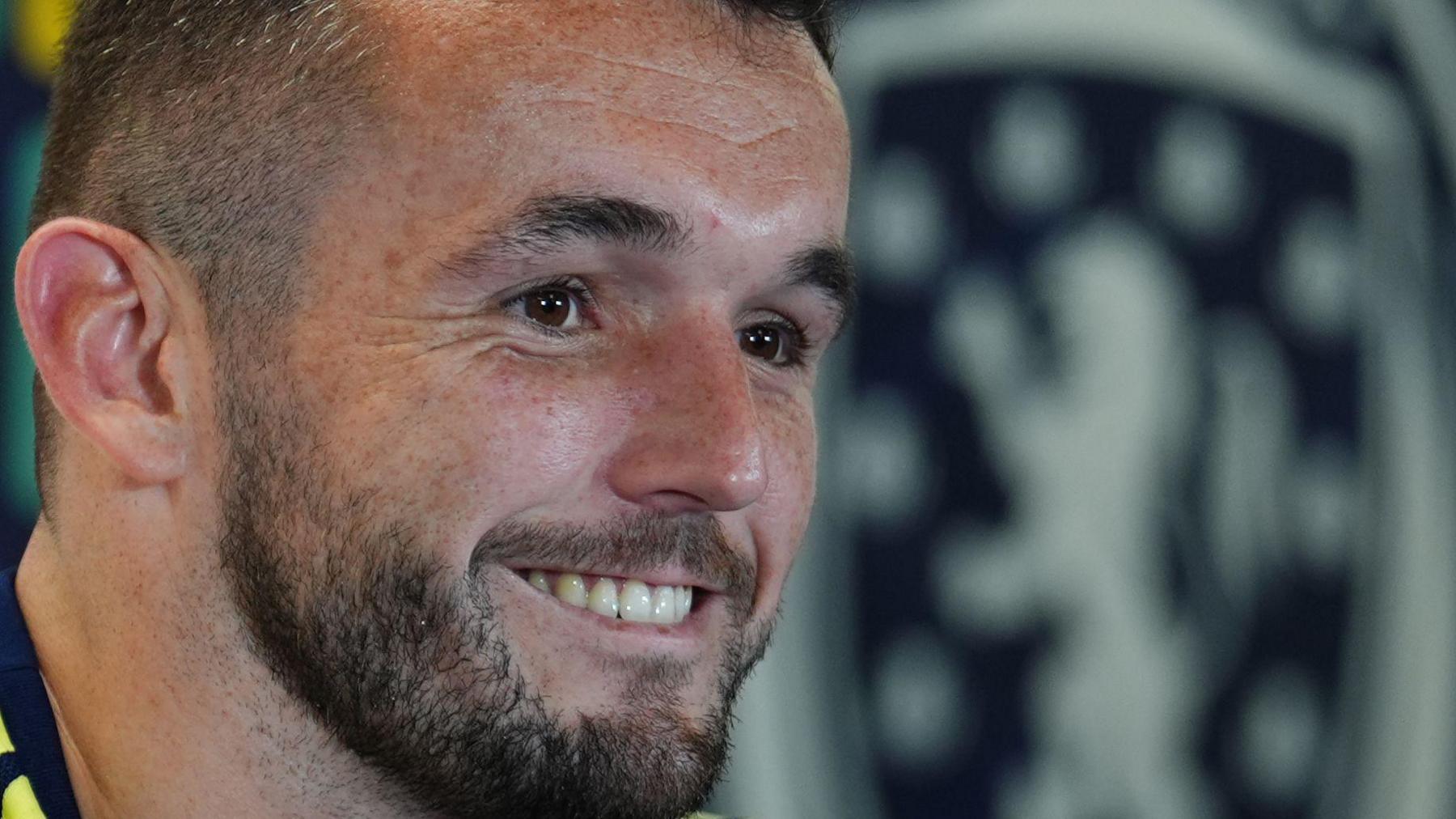
John McGinn fielded questions from Norwegian reporters with the kind of calm composure you'd expect from a seasoned diplomat, not a footballer preparing for the World Cup. The Scottish midfielder's response to Norway's angry complaints about a cancelled training match—complaints that their head coach Stale Solbakken had branded "unprofessional" and their team manager Brede Hangeland had called "embarrassing" and "weak"—was measured, thoughtful, and just slightly amused. McGinn explained that Scotland had cancelled the fixture because Billy Gilmour, a crucial squad member, had been lost to injury just before camp, and the team needed to protect what remained of their group.
This moment, captured outside Scotland's Charlotte base camp ahead of the World Cup, crystallises something larger: McGinn has arrived at this tournament in the finest form of his life, carrying not just the hopes of his nation but the emotional investment of an entire community. A 25-foot mural has been painted on a house in his hometown of Clydebank—only the third tribute to a Scottish player on such a scale—a gesture that filled him with pride and purpose.
McGinn is fifth on Scotland's all-time scoring list with 20 international goals, just ten behind the legends Denis Law and Kenny Dalglish, three behind the 1928 Wembley Wizard Hughie Gallacher. Yet his significance runs deeper than statistics. He is the Tartan Army's darling, the player fans feel they know, the superstar with his feet firmly on the ground. At 31, he arrives in North Carolina as a Europa League winner with Champions League football secured for next season—the childhood dream of a boy who was three years old the last time Scotland qualified for a World Cup.
But McGinn has learned harder lessons too. Two years ago at the Euros, he arrived at Scotland's training centre in Garmisch-Partenkirchen and performed the schuhplattler, a Bavarian folk dance, Tyrolean hat on his head, oompah music playing. It was knockabout fun—until Scotland failed to play well, and the moment looked ridiculous in retrospect. "Do I regret that? Maybe," he reflected, with the kind of honest self-assessment that sets him apart. "But at that point I'm not thinking we wouldn't be successful."
What has changed is not his spirit but his wisdom. He no longer confuses the occasion with the performance. "I didn't play at my best in the last two major tournaments," he acknowledged, understanding that big players must deliver big moments when it matters most. He has learned through experience—at club level and international level—what works and what doesn't. "The more big experiences and big games you're involved in, you certainly adapt," he said. "I feel as if I'm more ready."
There was humour in his handling of the Norwegian brouhaha too. When asked about the squad's reaction to the complaints, he smiled: "I would say 75% of the squad haven't seen it." He then offered the kind of pragmatic observation that shows why his teammates trust him: if Norway had lost Erling Haaland or Martin Odegaard, they would cancel the game too. It's the perspective of someone who has learned that looking after yourself is not weakness—it's professionalism.
As Scotland prepares for their group-stage campaign, McGinn embodies something the nation desperately wants: a player in his absolute prime, grounded in his origins, wise enough to learn from mistakes, and ready to deliver when it counts.