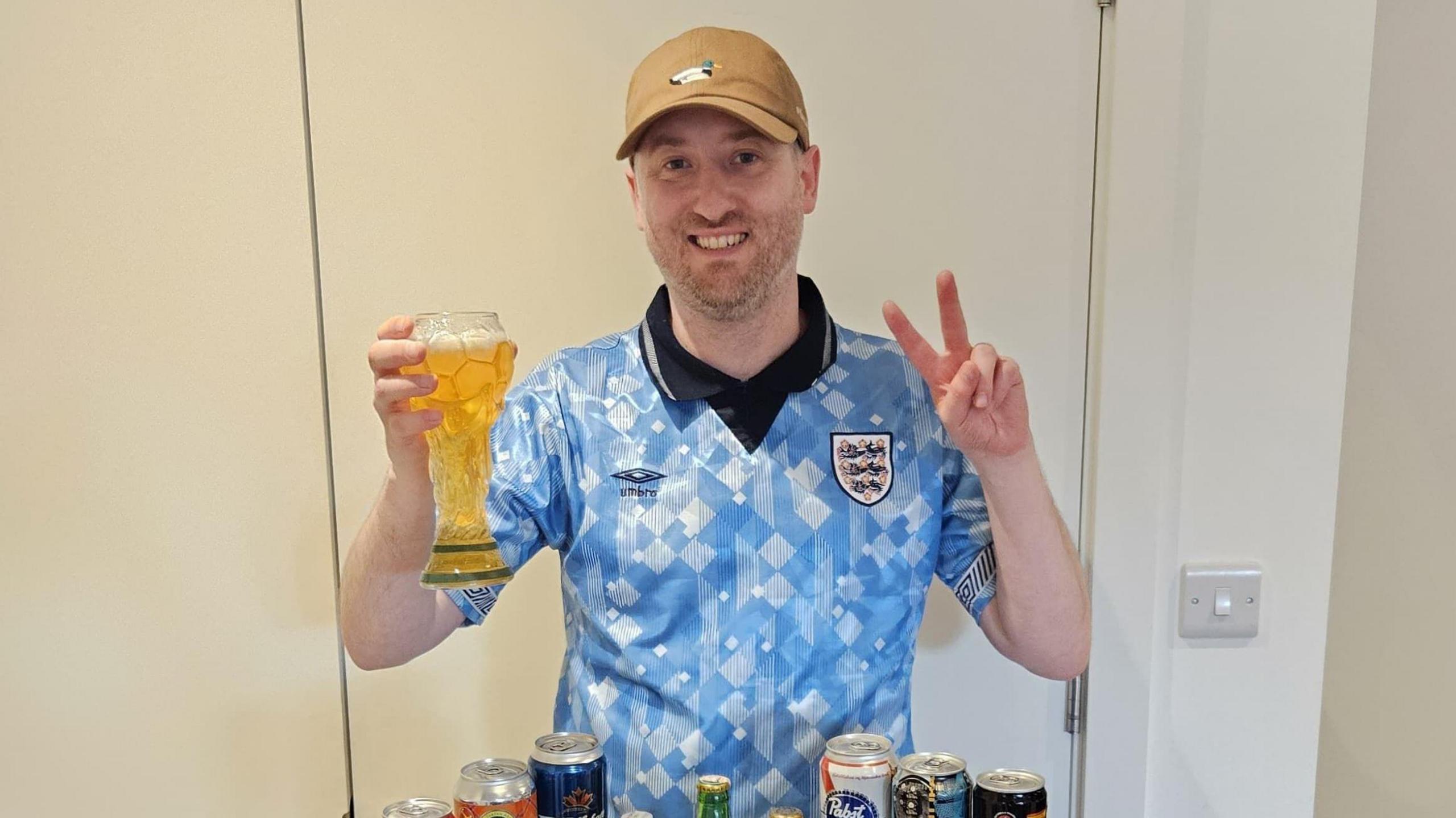
Gus Hully has spent the last several months hunting for beer from every corner of the globe—and now, with a pineapple-flavoured non-alcoholic malt drink from Iraq arriving just two weeks ago, his quest is complete. The London-based music industry analyst has managed to source one beer from each of the 48 nations competing at this summer's World Cup in the United States, Mexico, and Canada, turning what sounds like a casual pub challenge into a months-long mission that required international travel, strategic trades, and no small amount of detective work.
The collection matters because it speaks to how far dedicated fans will go to create something meaningful. In a year when the World Cup itself has become prohibitively expensive for many supporters—flights, hotels, and ticket prices keep fans like Gus at home—this project transforms watching from afar into an act of global participation. Every beer represents a nation, a story, and a personal investment in the tournament.
Gus, a Cheltenham Town fan, didn't stumble into this hobby by accident. Inspired by another beer enthusiast's unsuccessful attempt to collect every beer at World Cup 2010 and Euro 2012, he failed at his first try in 2014 but has since succeeded at every men's and women's major international tournament since Euro 2016, plus the 2022 and 2024 editions of the Eurovision Song Contest. When the 48-team World Cup format was confirmed, he knew he had to attempt it again—but warned that the expanded field made it far more challenging than before.
His research began in early 2025 when Uzbekistan emerged as a contender in the AFC Asian qualifiers. From that moment, Gus was constantly checking results and tables, tracking which nations would qualify and which beers he still needed to source. The easy ones came first. Then he got creative. For Panama, he got lucky during a Florida holiday and found a bottle from craft brewery Casa Bruja. Iraq cost him £30 when he bought a bottle from a man in Poland who had brought it back as a souvenir years earlier. For countries where alcohol isn't part of the culture—Qatar and Saudi Arabia—Gus sourced non-alcoholic malt beverages instead, the closest legal alternatives brewed with barley malt.
The hard part was the trading. He swapped rare English beers with a collector from Finland for a can of Fizzin from Qatar. A Panamanian beer went to another collector in exchange for a bottle of Moussy from Saudi Arabia. The Iranian community in Finchley, north London, helped him track down his Iranian selection. Friends returned from Curacao, Jordan, and Algeria with bottles in their luggage. Half his collection was sourced overseas, cobbled together at a total cost of about £250.
Now that his beers have arrived—all 48 of them—Gus has a clear drinking plan. "I'll be drinking each beer once that team has been eliminated from the competition, basically as a toast to their participation and failure at winning the tournament," he explained. It's equal parts celebration and gentle mockery, a fan's way of staying connected to every nation's journey, even if he can't be there in person. He doubts he'll repeat this for the next World Cup, calling it "too much hassle," but Euro 2028, with only 24 teams, might tempt him back—particularly if underdog nations like Andorra or San Marino qualify and justify a continental adventure.