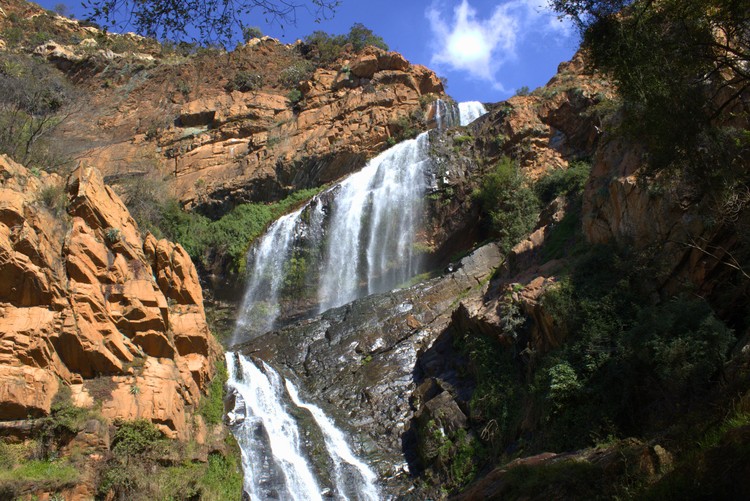
On a stretch of river in South Africa that flows through the iconic Witpoortjie Waterfall and is home to endangered orchids and soaring black eagles, a neighbourhood watch has spent nearly a decade doing work most would consider far beyond their usual brief: patrolling a sewage-plagued waterway to keep it alive.
For ten years, the Roodekrans Neighbourhood Watch has been walking the banks of Muldersdrift se Loop, a perennial stream that runs through their community in Johannesburg's outskirts. Andreas Oberlechner, the group's chairperson, saw the work not as a departure from neighbourhood protection, but as an extension of it. "Water resources deserve as much security as people and property," he believes. The stream originates near Krugersdorp, flows north through the Walter Sisulu National Botanical Garden where it forms the waterfall, and ultimately feeds into the upper Crocodile River network—a path that makes it crucial to ecosystems and human communities alike.
But Muldersdrift se Loop runs parallel to aging sewer lines from two municipalities: the City of Johannesburg and Mogale City Local Municipality. The result has been relentless contamination. A Mogale City research report describes the stream as "a victim of infrastructure failures and a public health risk." Ten years ago, the botanical garden faced a persistent sewage crisis, with water quality so sporadic that leaks reported upstream would take months—sometimes never—to be fixed, simply because they fell outside the garden's property boundaries.
The turning point came when the botanical garden partnered with Oberlechner's team. What began as urgent patrols became something more systematic. The neighbourhood watch GPS-mapped every manhole along the stream to eliminate confusion about which municipality was responsible for each leak, cutting through the jurisdictional disputes that had left problems unresolved. Oberlechner and other members began regular patrols, identifying leaks and reporting them to water authorities with rigor and precision. Once a leak is spotted—usually from an overflowing manhole—Oberlechner locates it, logs it, and shares the data.
The impact has been striking. Response times have improved dramatically. Repairs that once took months now happen within hours or, on average, a single day. The botanical garden began conducting daily dissolved oxygen readings in the river to detect upstream pollution immediately, alerting Oberlechner's team the moment water quality dips.
The health of the river has transformed visibly. Andrew Hankey, principal horticulturist at the Walter Sisulu National Botanical Garden, noted that aquatic monitoring now shows Marico barb fish thriving across the entire stretch of river—a dramatic shift from earlier surveys that found them only in the garden's plunge pool. Because fish are highly susceptible to water quality deterioration, their resurgence is a living barometer of success. Camera traps have confirmed the return of honey badgers, servals, caracals, jackals, porcupines, clawless otters, and the endangered southern mountain reedbuck.
The stream is also home to the Albertina Sisulu Orchid, a critically endangered plant endemic to the Sugarbush Ridges above the garden, and black eagles nest in the area. The work has required more than pollution monitoring. The neighbourhood watch conducts regular boundary checks to prevent unauthorised access through damaged fences and has removed thousands of snares.
Yet Oberlechner is clear-eyed about what comes next. "Sewage leaks are endemic in the country," he said. The real solution lies not in reactive patrols but in proactive maintenance—in municipalities finally repairing and maintaining the aging sewage network itself. Until then, the Roodekrans Neighbourhood Watch will keep walking their river, proving that ordinary people willing to pay attention can be the difference between a waterway that thrives and one that dies.