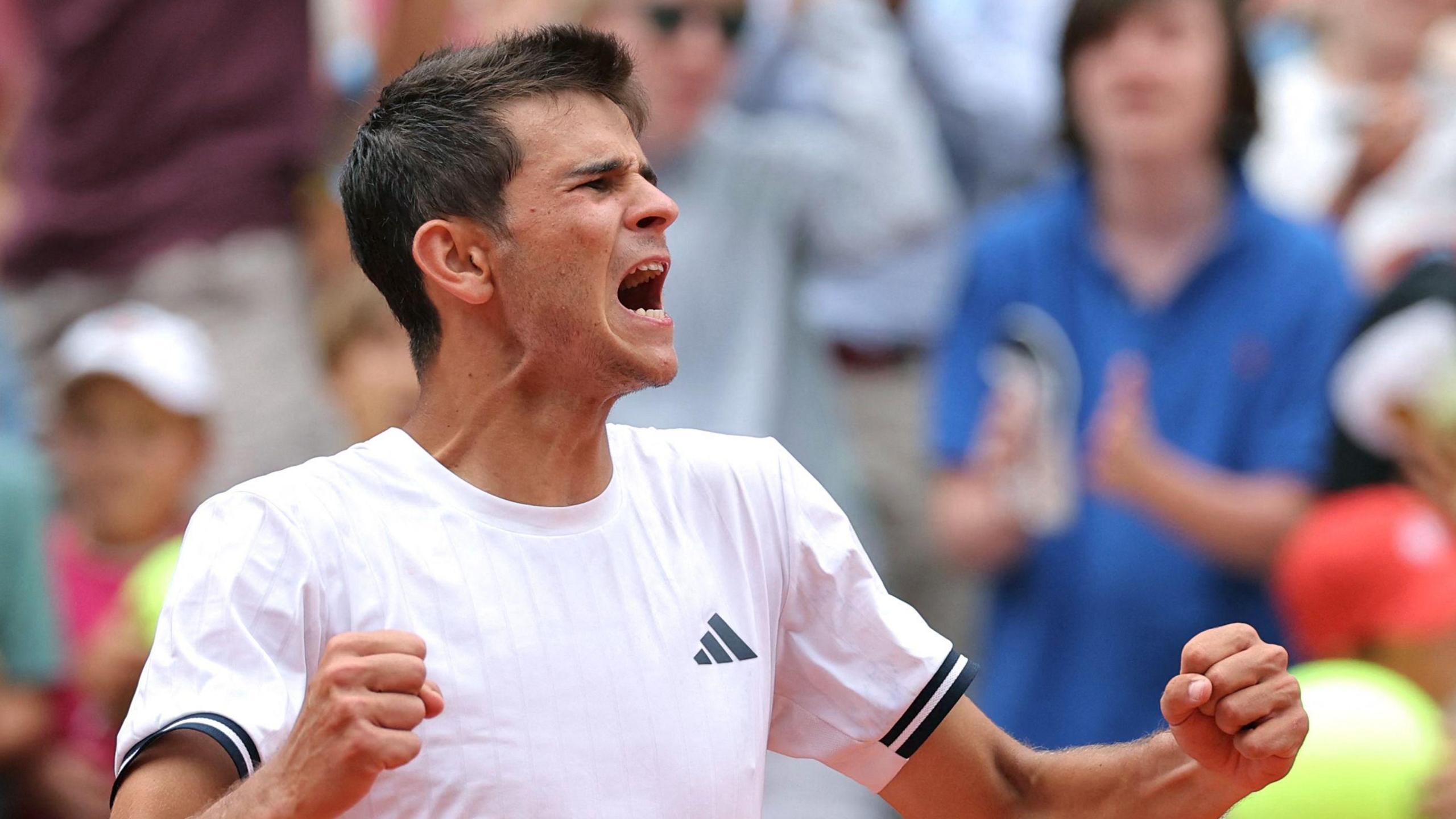
When Rafael Jodar walked onto the Paris clay this spring as a complete unknown, few could have imagined the Spanish teenager would still be standing in the quarter-finals of Roland Garros. Just a year ago, the 19-year-old was a university freshman ranked 707th in the world, spending his evenings at the University of Virginia while other aspiring professionals grinded through the lower circuits. Now, as the 27th seed and only the fifth man this century to reach the quarter-finals on his Grand Slam main-draw debut, Jodar represents something rare in modern sport: a talent whose rise has been so sudden it still feels almost unreal.
His emergence carries particular weight in Paris, the city where Rafael Nadal—the 14-time French Open champion and Jodar's childhood idol—had taken his final bow just months before. But this is no homage or accident of naming. Jodar shares his first name through family tradition; his father and grandfather were also Rafaels, a lineage the teenager carries with quiet dignity. What connects him to Nadal is not nomenclature but something deeper: the Spanish production line that has now yielded 18 French Open men's titles in the past 24 years, a tradition Jodar now threatens to extend.
His path began at a modest club in Chamartin, an upmarket Madrid suburb, before exploding into view when he won the 2024 US Open boys' title. Days later, he was summoned as a hitting partner to the Spanish Davis Cup team in Valencia, where he instantly impressed the nation's established stars. Pablo Carreno Busta, a two-time US Open semi-finalist who would later face Jodar across the net here in Paris, was struck by what he saw: "He was a skinny kid, obviously, but you could already see he played very well, even on an indoor court. With those levers, the big hitting, hogging the baseline, he was already showing real promise."
The momentum has only accelerated. In 2025, Jodar began threading together college tennis with ATP Challenger events, combining education with professional competition before eventually forfeiting his college status entirely to turn pro. His time in America sharpened his maturity and discipline, qualities now visible in every match he plays. Pre-French Open, he reached the Barcelona semi-finals, the Madrid Open quarter-finals—where home fans embraced him—and the Italian Open's last eight, each run a building block toward Paris.
Even Toni Nadal, the man who coached Rafael to 16 major titles, saw something exceptional. "In a very short period of time he has become, in my opinion, the best player of this new generation and the one with the greatest potential," Nadal wrote in his El País column, predicting that within "a few months"—not years—Jodar would rank among the world's elite. The French Open has only amplified that conviction. After a routine first-round win, Jodar has survived increasingly dramatic tests: five sets against James Duckworth, five sets against Alex Michelsen despite winning the first, and a stunning comeback from two sets down against Carreno Busta in the fourth round. Now, with Alexander Zverev standing between him and Sunday's final, Jodar has one match to complete an improbable journey from university student to Coupe des Mousquetaires contender.