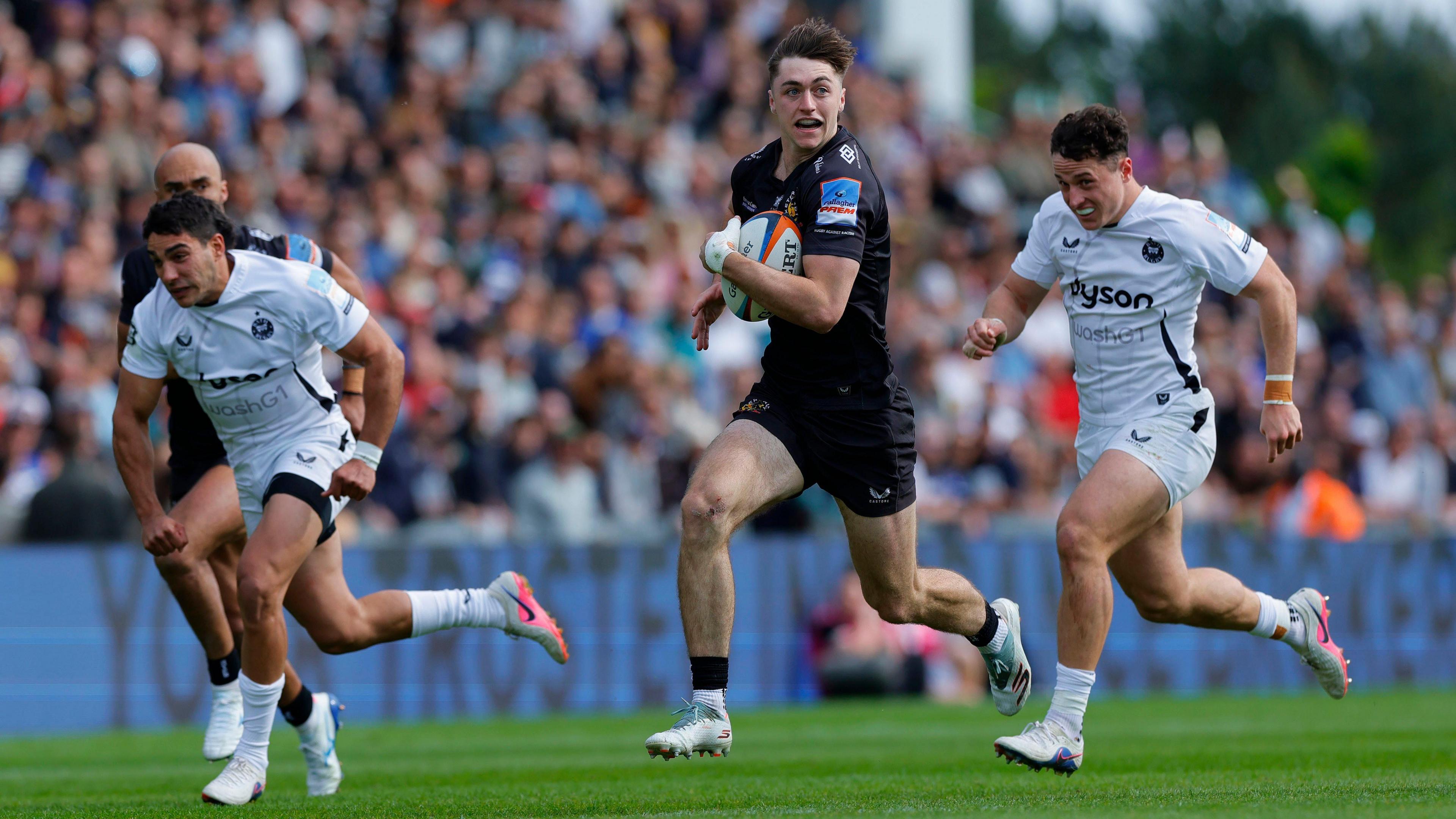
Campbell Ridl wrote down modest goals last summer—a first-team cap for Exeter Chiefs, perhaps a place on the matchday squad within a few years. The 21-year-old wing, fresh from university rugby, knew the competition ahead was fierce. Immanuel Feyi-Waboso, England's best wing, owned the position. Paul Brown-Bampoe was one of the country's most promising prospects. Olly Woodburn, 34 and in his 11th season at Sandy Park, was second on the club's all-time try-scoring list. Ridl's ambitions were grounded in reality—or so he thought.
Nine months into the 2024–25 season, Ridl has redefined what's possible in a breakout campaign. The lanky winger from Cape Town has scored 16 tries in just 22 matches, a torrent of production that has reshaped Exeter's attacking shape. Injuries to Feyi-Waboso and Brown-Bampoe opened the door, but Ridl hasn't merely stepped through it; he's torn it off its hinges. His form has been so incandescent that Woodburn, the veteran mentor, reinvented himself as a full-back to make space in the back three. Brown-Bampoe has been consigned to the bench. When Ridl was asked if his early goals seem modest now, he could only laugh—an incredulous, grateful chuckle.
Standing 6ft 5in with long strides and exceptional speed, Ridl earned a nickname from Woodburn and hooker Jack Yeandle: "the Ostrich." The name works on multiple levels. There's the physical comedy of his height and lankiness, the quickness that belies his frame. But there's also biography. Ridl was born in south London in 2005, but three months later his South African parents returned to Cape Town to be closer to family. He grew up there, came through the same school system as his younger brother Will, who recently signed for the Durban-based Sharks. "The guys in the club have seen a few videos of him and say they ended up with the worse brother," Ridl says with quiet humor.
The journey from Cape Town to Exeter's Sandy Park has been disorienting. Ridl admits he arrived in 2024 as "a really quiet, reserved guy" who struggled through his first few weeks. The physical step up from university rugby was brutal—he's had to keep weight on deliberately, consuming everything his nutritionist recommends. The mental shift was harder still. University rugby had allowed a casual mindset; professional rugby demanded absolute clarity, lock-in focus, mental discipline. "It is mentally draining," he says, "but I've stuck to it."
That mental fortitude was tested in January at the Rec, Exeter's lowest moment against Bath. Three minutes in, chasing a box kick with his eyes on the ball, Ridl collided with Henry Arundell mid-air. Arundell went down. Ridl was sent off with a red card. In his third Premiership game, in front of a capacity crowd and against elite opposition, the young winger had hit rock bottom. But the Chiefs wrapped around him, rebuilding his confidence and teaching him a lesson about the mental steel these moments demand. "After that red card, the Chiefs guys helped grow my confidence back," he reflects.
Now Ridl starts Saturday's Premiership semi-final against reigning champions Bath, a match that could send Exeter to its first final in five years. His ascent has already sparked whispers about selection at higher levels—the kind of chatter that follows a player who has done the improbable and made it look inevitable. At 21, with 16 tries behind him and a mentor in Woodburn guiding his every step, Ridl has proven that sometimes the door doesn't need to open very wide. You just need the hunger to run through it.