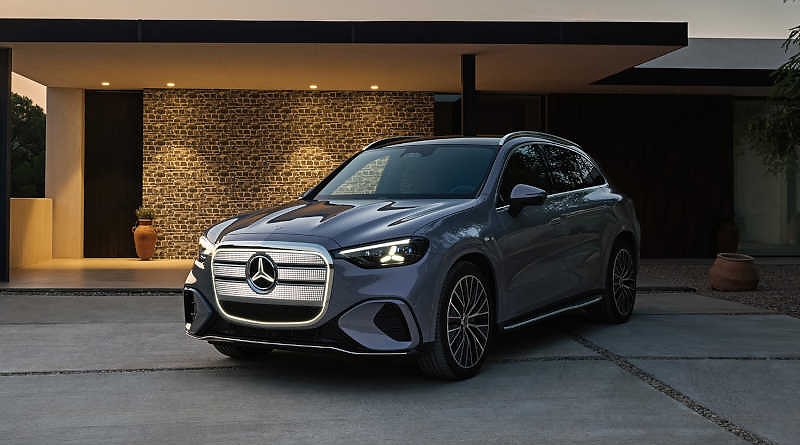
Matt McDermott stood in the gleaming showroom of Mercedes-Benz of Scottsdale and made a bold claim: the 2027 GLC electric SUV would represent "a monumental shift for premium transportation in our region." It's a statement that signals Mercedes-Benz's confidence that luxury EVs aren't just for early adopters anymore — they're ready for everyday Arizona drivers juggling congested freeways, scorching desert heat, and the simple desire to save money on gas.
The automaker has chosen Scottsdale's high-income market as the global stage for unveiling the long-awaited vehicle, marking a turning point in how premium automakers are positioning electric mobility. After a decade of pushing electrification on its GLC line, Mercedes-Benz appears determined to prove that EVs can outperform traditional gas vehicles on the metrics that matter most to city drivers: performance in stop-and-go traffic, reliability in extreme climates, and the quiet sophistication that luxury buyers expect.
The engineering solutions speak directly to Arizona's unique challenges. A robust liquid-cooled battery thermal management system actively shields internal cells against the state's intense summer heat — a critical feature when traditional EVs lose efficiency in high temperatures. Equally important, an advanced climate control system keeps passengers comfortable without draining driving range, a problem that has long plagued electric vehicles in hot climates. Mercedes-Benz paired these innovations with regenerative braking hardware that continuously recaptures energy during those inevitable valley traffic stops, turning daily commutes into cost-effective, stress-free journeys.
The 2027 GLC SUV punches impressive specifications. At its core sits a 94 kWh lithium-ion battery delivering 483 horsepower through a permanently excited synchronous motor. Charging capabilities reached 330 kW DC fast-charging speed — enough to add 188 miles of range in just 10 minutes, or charge from 10 to 80 percent in 22 minutes. Preliminary estimates suggest over 400 miles of total driving range, making weekend excursions across Arizona entirely feasible.
But the vehicle's appeal extends beyond raw performance numbers. The 39.1-inch multimedia screen integrates navigation, instrumentation, and entertainment across what Mercedes-Benz calls its "Hyperscreen," catering to luxury buyers who expect maximum technological integration. Advanced 4.5-degree rear-axle steering dramatically sharpens parking maneuvers in tight urban environments. An optional 4MATIC all-wheel drive system delivers confident traction across changing desert road conditions.
Perhaps most tellingly, McDermott emphasized that clients "demand the absolute peak of automotive sophistication combined with sustainable performance." That phrase captures the central promise of Mercedes-Benz's new direction: electrification doesn't require compromise. The quiet ride through heavy metropolitan traffic appeals to those seeking a stress-free daily commute, while the extended range supports the aspirational weekend drive into Arizona's scenic landscapes.
The vehicle's debut in Scottsdale reflects a broader industry shift. After years of skepticism about EVs' viability — what one headline famously called "the war on EVs" — the market is decisively crossing from early adopters into mainstream households. Mercedes-Benz's confidence in a luxury positioning suggests the company sees the future clearly: electric powertrains aren't a concession but an advantage, especially when engineered with the resources and precision that define the brand.