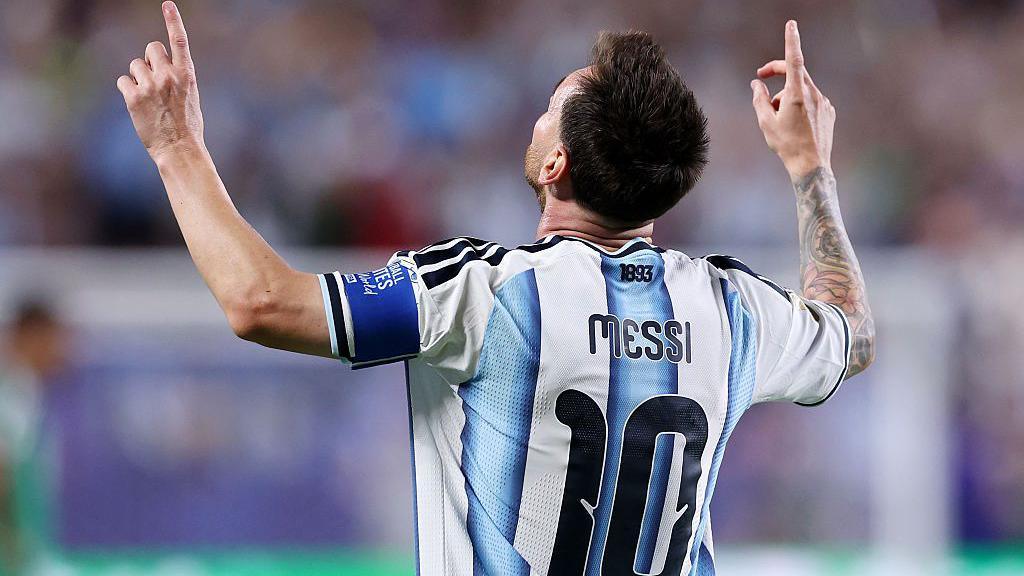
When Lionel Messi curled a left-footed shot past Austria’s goalkeeper in the 12th minute of Argentina’s second World Cup match, the Allianz Arena erupted—not just in celebration, but in witness to history. At 38 years old, Messi had just become the all-time leading scorer in World Cup history, a milestone made even more remarkable by the fact that he has now scored in six consecutive World Cup matches. Only two other players—France’s Just Fontaine and Brazil’s Jairzinho—have ever matched that feat, and no one has ever reached seven. As he calmly slotted in his second goal of the night to seal a 2-0 win, Messi wasn’t just defending Argentina’s title; he was redefining what’s possible at the highest level of football.
This tournament has been a masterclass in longevity and excellence. After a hat-trick in the opening match against Canada and two more against Austria, Messi now stands on the brink of another record: he is one assist away from becoming the all-time leader in chances created at the World Cup, a statistic tracked since 1966. He currently shares that honor with his childhood idol, Diego Maradona—a poetic symmetry that underscores his journey from Rosario prodigy to global legend. With Argentina’s third group match against Jordan approaching, Messi is also emerging as the frontrunner for the Golden Boot, a personal accolade he has never claimed despite seven goals in the 2022 triumph.
What makes Messi’s sustained brilliance so extraordinary is not just the numbers, but the context. At an age when most players have long retired, he continues to outperform a new generation of stars—Kylian Mbappe, Erling Haaland, Vinicius Jr.—many of whom were still in youth academies when Messi made his World Cup debut in 2006. His secret, according to those who know the game intimately, lies in an almost monastic discipline. Olivier Giroud, his 39-year-old French counterpart still active in Ligue 1, puts it simply: “It’s clear just how passionate Messi still is for football. It’s in his DNA to always be a competitor, and to try and outdo himself more than anyone else.”
Sports psychologist Michael Caulfield, who has worked in professional football for over two decades, emphasizes the mental fortitude required: “They have to be willing to spend the whole year working hard on the same things, and if you’ve been doing that for 25 years, that takes huge self-discipline.” Messi’s regimen—meticulous sleep, precision nutrition, relentless rehab—mirrors the advances in sports science, but it’s his intrinsic love for the game that fuels his return, year after year.
When he steps onto the pitch, says former teammate Cesc Fàbregas, “he is a very different person. He wants to win at any cost.” That fire, that hunger, isn’t about trophies anymore. It’s about the joy of mastery, the thrill of the game, and the quiet defiance of time. As Messi turns 39, the world watches not just a player, but a phenomenon—still evolving, still scoring, still inspiring.