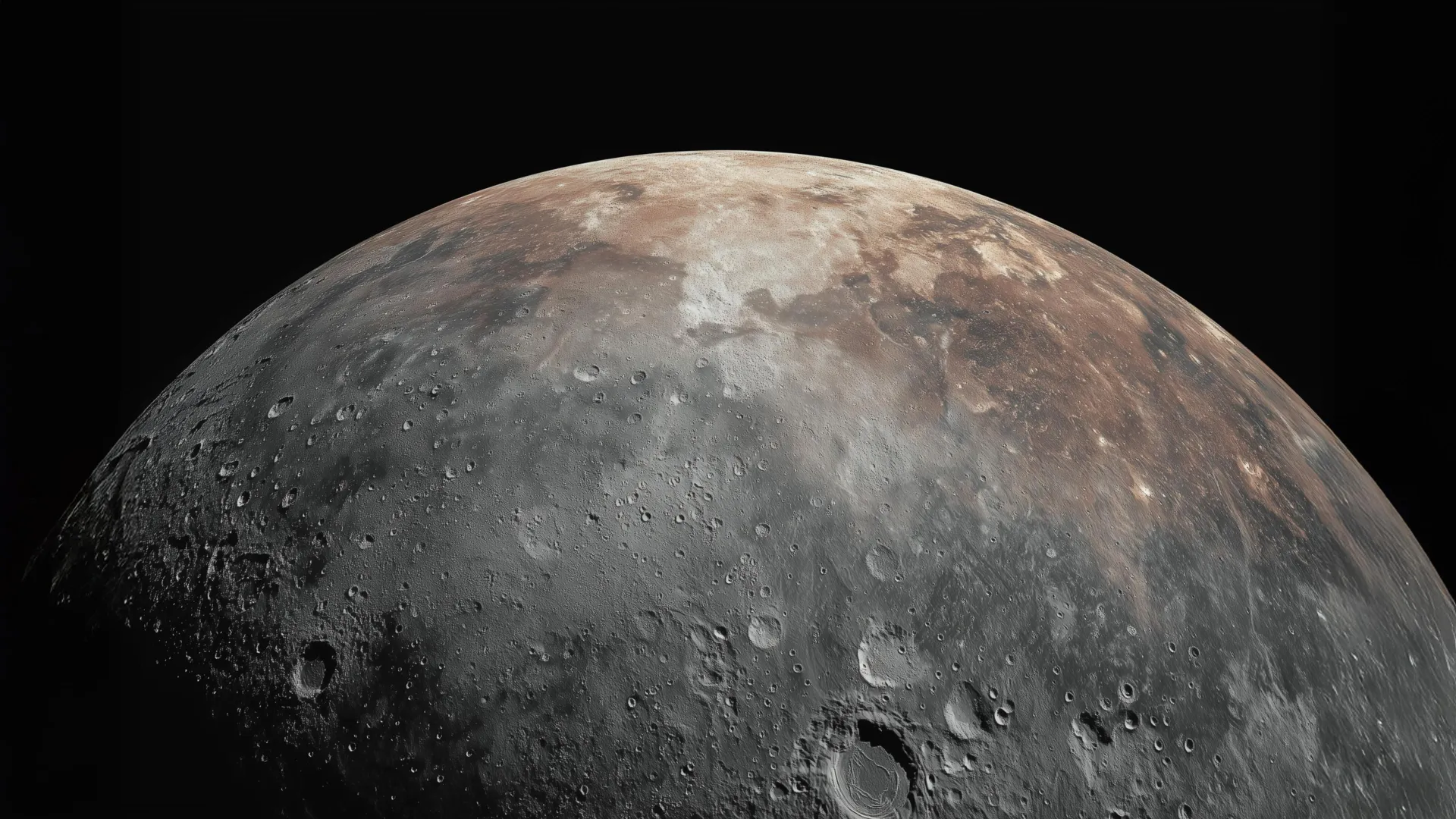
When geologist Aaron Bell first examined the craggy surface of the meteorite known as Northwest Africa (NWA) 12774, he was holding a piece of a world that no longer exists—a moon-sized protoplanet that orbited the infant Sun over 4.5 billion years ago. Found in the vast sands of the Sahara Desert, this rare angrite meteorite is now rewriting our understanding of how planets formed in the solar system’s earliest days. Only 68 angrites have ever been identified among more than 80,000 meteorites discovered on Earth, making each one a precious window into a time when planetary building blocks were still colliding, merging, and shattering across space.
What makes NWA 12774 so extraordinary is the mineral clinopyroxene embedded within it—rich in aluminum, a signature of formation under crushing pressure. Calculations by Bell and his team at the University of Colorado Boulder revealed that this mineral could only have formed under at least 17.5 kilobars of pressure, more than 17 times the crushing depth of the Mariana Trench. Such conditions don’t exist in small asteroids, which were long assumed to be the source of angrites. Instead, the parent body must have been massive—large enough to generate the internal pressures of a true protoplanet.
The implications are staggering. The researchers estimate the lost world had a radius of at least 1,000 kilometers, but likely much more. Evidence from the meteorite’s well-preserved crystal structures suggests the minerals formed near the surface, meaning the original body may have been over 1,800 kilometers in radius—comparable in size to Earth’s moon and possibly approaching the scale of Mars. This wasn’t just a wandering rock; it was a planetary embryo on its own evolutionary path, with a composition unlike Earth, Mars, or any known terrestrial planet.
"It's incredible to think there was once a world this large," Bell said. "We only know it existed because a few fragments of it happened to land on Earth. These meteorites preserved evidence of a completely different pathway through which early planets developed." The discovery, published in Earth and Planetary Science Letters, suggests that the early solar system hosted a greater diversity of forming worlds than previously thought—some of which may have been absorbed into the planets we know today.
While the fate of this moon-sized world remains unknown, its remnants continue to yield secrets. And with thousands of unstudied meteorites still in storage around the world, Bell believes more lost protoplanets may be waiting to be discovered—silent messengers from the dawn of our cosmic neighborhood.