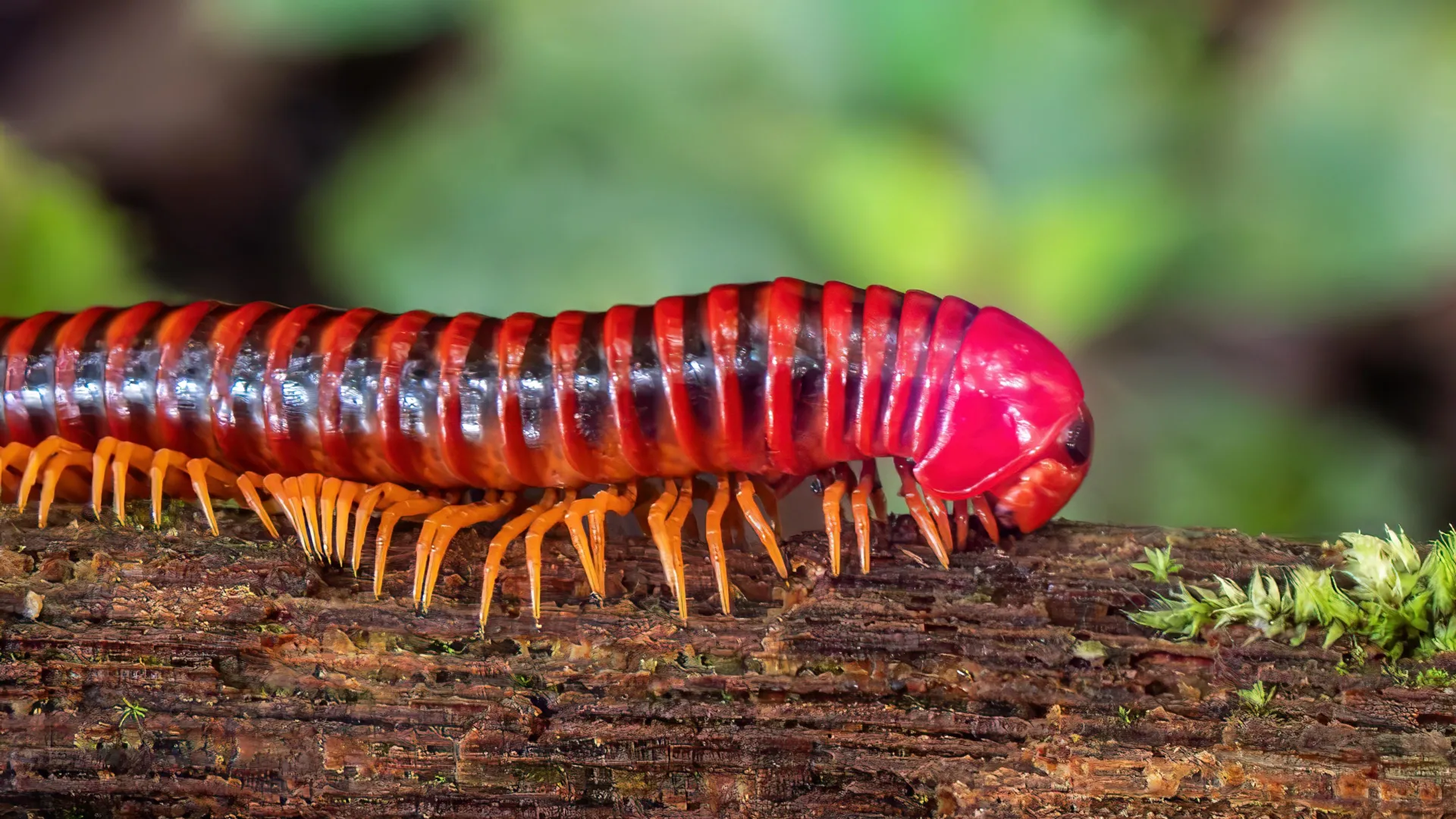
When Luisa "Fernanda" Vasquez-Valverde spotted a tiny white thread no bigger than a noodle on the forest floor of Los Tuxtlas, Mexico, she almost walked past it. That 10-millimeter creature, barely visible to the naked eye, turned out to be exactly what her team had been hunting for—a millipede species that had eluded scientists for over a century. The discovery would help complete one of biology's most elusive puzzles and reveal a story of Earth's earliest landlubbers.
For more than 100 years, scientists knew two mysterious millipede groups existed, but without fresh DNA samples, no one could figure out where they actually belonged in the millipede family tree. These weren't the familiar garden millipedes most people know. One group consists of millipedes less than a centimeter long that live underground; the other survives in only a handful of known locations. "These last two were kind of like our white whales," said Paul Marek, lead investigator and associate professor at Virginia Tech.
To find them, Marek's team traveled not just to Mexico but also to the Canary Islands of Spain, where they collected Hirudicryptus canariensis. It took 10 people over a week to find a single adult specimen. Once they had the samples, researchers sequenced DNA from both groups and compared hundreds of genes across 82 millipede species, incorporating evidence from 29 fossils. The project generated terabytes of genetic data and relied on Virginia Tech's advanced computing resources to reconstruct evolutionary relationships stretching back hundreds of millions of years.
The results were staggering. By combining modern DNA with fossil evidence, the researchers—publishing their findings in Current Biology—traced millipede origins back nearly 460 million years. This single discovery reframes how we understand life's colonization of land. "Millipedes beat vertebrates onto land by more than 80 million years," Marek said. "They really set the stage for later life on land, including humans and vertebrates."
At that distant point in Earth's history, the planet was almost unrecognizable. There were no trees, no leaves, no flowering plants, no seeds. Millipedes were among the earliest pioneers of terrestrial life, quietly decomposing mosses and primordial gunk on the bare surface. They were Earth's first ecosystem engineers, recycling nutrients in some of the planet's earliest land ecosystems long before dinosaurs would ever walk the Earth.
The completed family tree also revealed when millipedes evolved one of their most remarkable adaptations. These creatures are, as Marek describes them, "little chemical factories"—they produce sophisticated chemical defenses that make them unpalatable to predators. The new analysis suggests these chemical weapons first appeared about 260 million years ago, providing the clearest evidence yet for when this capability evolved.
Yet despite their ancient lineage and crucial ecological role, millipedes remain strikingly underappreciated. With more than 14,000 described species worldwide, scientists believe tens of thousands more may still be undiscovered. Today, they continue their ancient work—breaking down dead plant material, recycling nutrients, and supporting healthy ecosystems everywhere from forest floors to the edges of university campuses. It's a quiet legacy stretching back nearly half a billion years, and we're only now fully grasping its magnitude.