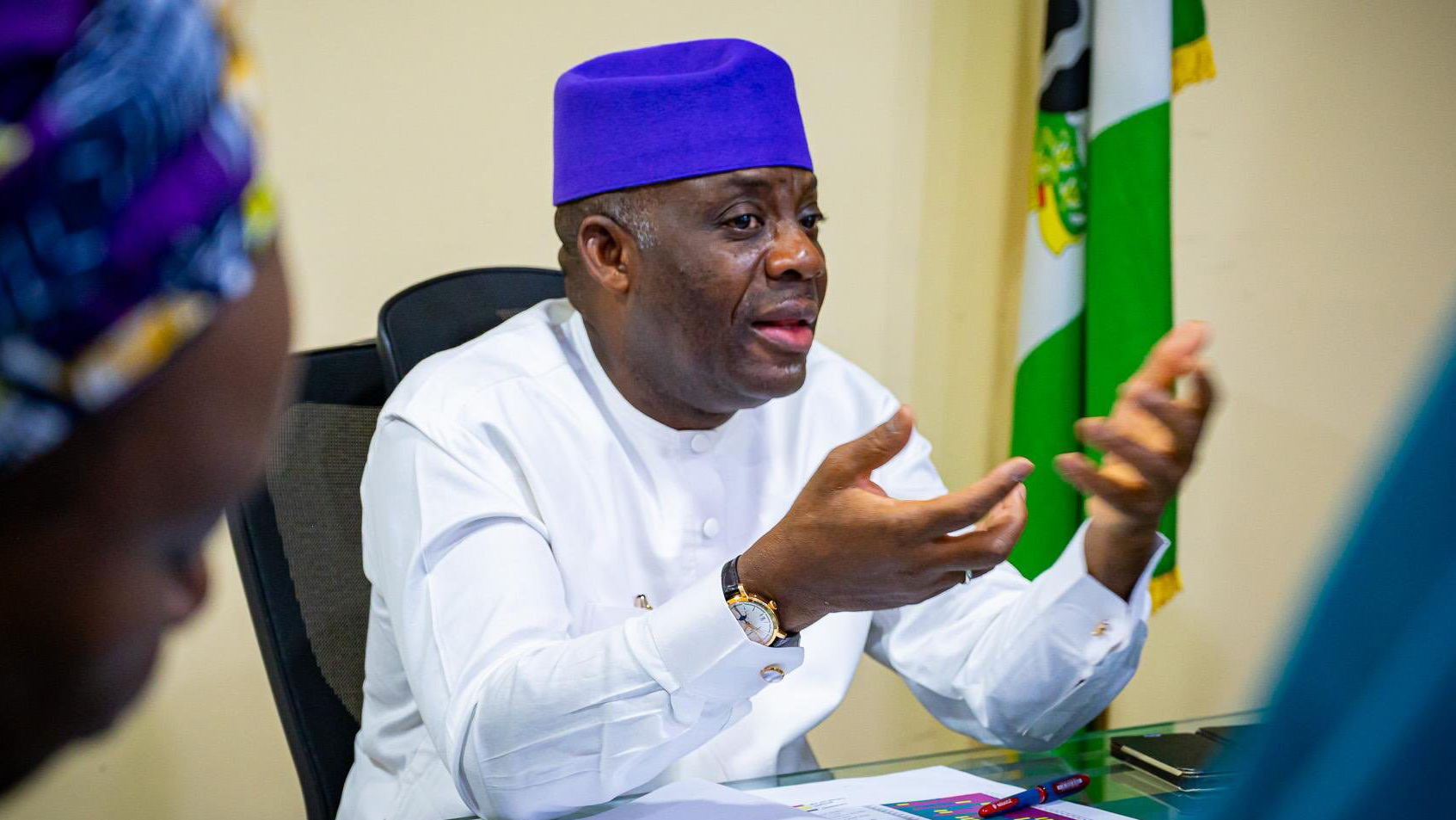
Dr. Tunji Alausa stood before global education leaders in London with concrete evidence that Nigeria's foundational learning crisis doesn't need to be permanent. Nigeria's Minister of Education detailed a transformation already underway across the country—one where structured lesson plans, weekly teacher coaching, and real-time data dashboards are replacing decades of fragmented, unmeasured instruction.
The scale of what's at stake makes this moment critical. Nigeria contends with one of the world's largest out-of-school populations, and learning outcomes among those in school have been stark. But rather than accept this reality, President Bola Tinubu's administration has placed foundational literacy and numeracy at the heart of the Renewed Hope Agenda, and the results emerging from pilot states suggest the approach is working.
The strategy rests on three interconnected pieces. First, Nigeria has unified how foundational literacy gets taught across both formal schools and non-formal education programs—ending the fragmentation that once meant two children learning different things depending on where they studied. Through the Universal Basic Education Commission, the country is scaling the RANA program across Primary One to Three in 15 states, while teaching "at the right level" in Primary Four to Six using structured lesson plans, weekly coaching, and regular assessments. This isn't theoretical reform; it's a system with weekly human feedback built in.
Second, for the millions of children outside formal schooling entirely, Nigeria has created the Accelerated Basic Education Programme, developed by the Nigerian Educational Research and Development Council. ABEP delivers literacy and numeracy outcomes equivalent to formal schooling but compresses them into three years. Crucially, ABEP graduates now have a recognized pathway to junior secondary school, meaning they aren't locked into a parallel education track—they're moving into the mainstream system.
The third pillar is data infrastructure. For the first time, Nigeria can monitor both formal and non-formal education coverage through a single dashboard called the Nigeria Education Data Infrastructure. This shift from measuring school inputs to measuring actual learning outcomes has revealed what works and what doesn't, allowing the government to double down on effective approaches.
The evidence from state-led pilots is remarkable. KwaraLEARN reduced foundational learning deficiencies by half in less than two years. BayelsaPRIME—a data-driven, technology-enabled model—improved literacy by 20 percentage points within 19 weeks. These aren't marginal gains; they're transformation at speed. The government is now scaling these models nationally, with SUBEB officers supervising both formal schools and ABEP centers using the same coaching tools and learning materials, eliminating parallel systems and keeping costs down while maintaining quality.
Financial commitment is being restructured to match ambition. Nigeria is doubling federal funding for basic education by increasing the Universal Basic Education Commission's share of the Consolidated Revenue Fund from two to four percent. Through a Partnership Compact with the Global Partnership for Education, 70 percent of funding is explicitly tied to measurable outcomes in learning, teacher management, and data use—accountability that forces attention to results, not just expenditure.
The Federal Government is finalizing a National Policy on Foundational Literacy and Numeracy to anchor these reforms in law and institutional permanence. Alausa emphasized this point deliberately: sustainable change outlasts political cycles only when it becomes policy infrastructure that survives transitions in leadership.
Nigeria's leaders are making a deliberate wager that learning poverty can be systematically reduced when systems are unified, teachers are coached consistently, outcomes are measured, and progress is visible to all stakeholders. The data from 15 states suggests the bet is paying off.