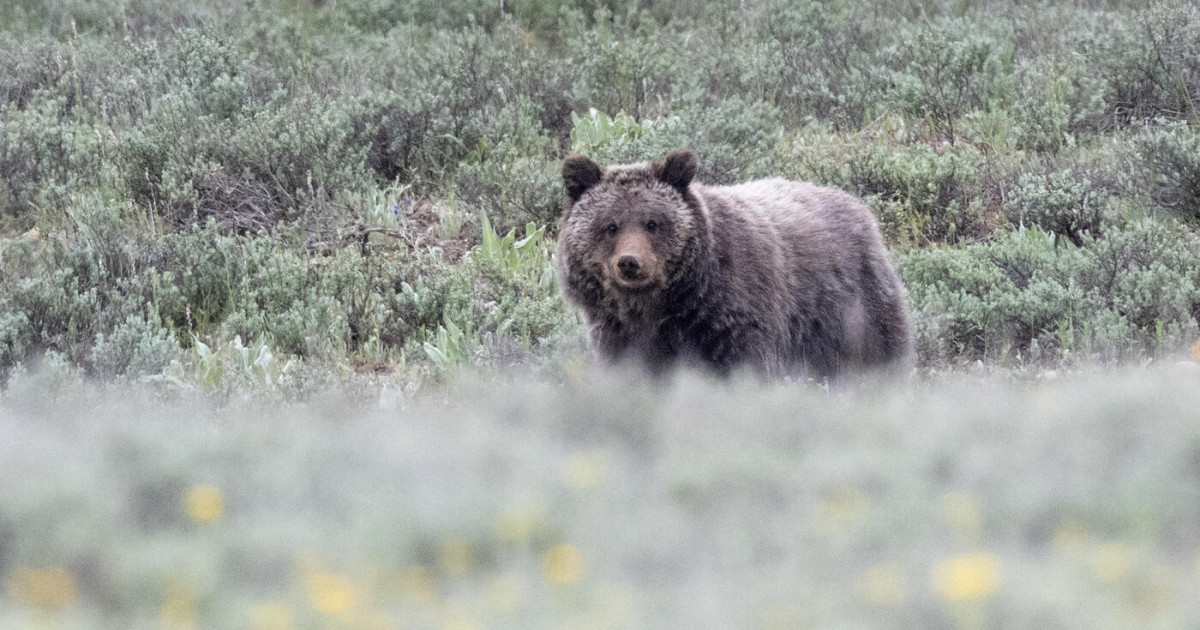
Miracle emerged from her winter den in Grand Teton National Park this May, lean but alive—a single grizzly cub who survived months of hibernation alone in one of the harshest winters the Greater Yellowstone Ecosystem has seen. What makes her survival remarkable isn't just the odds she beat, but what her story reveals about the fragile recovery of a species that nearly vanished from America altogether.
Miracle was born a triplet, one of three cubs her mother Bonita brought into the world. But in 2025, the siblings were separated—a common danger in bear country where human activity and habitat fragmentation put constant pressure on grizzly families. Two of Miracle's brothers did not survive the separation. For months, Miracle herself disappeared. When she reappeared, conservationists briefly spotted her reunited with Bonita before the two entered separate dens for hibernation. Hibernating alone at such a young age is extraordinarily risky for a grizzly cub. The winter of 2025-2026 brought particularly harsh conditions to the Northern Rockies, with little snow to insulate dens from the cold. Many feared Miracle would not make it. But this month, spotted once again in the park, Miracle appears healthy and fit.
Her story arrives at a critical moment. Today, roughly 2,000 grizzly bears remain in the Lower 48 states, clustered in two main ecosystems: the Greater Yellowstone region and the Northern Continental Divide. This is recovery—but fragile recovery. That these bears exist at all in meaningful numbers is due almost entirely to the Endangered Species Act, the landmark 1973 law that halted the killing campaigns that brought grizzlies to the brink of extinction. Yet now, multiple legislative threats are emerging that could strip these bears of that protection.
The House Appropriations Committee recently proposed a federal funding bill that would force the Interior Department to delist grizzly bears in both the Greater Yellowstone and Northern Continental Divide ecosystems and block legal challenges to that decision. A separate bill, the Grizzly Bear State Management Act, targets Greater Yellowstone grizzlies specifically. Meanwhile, the U.S. Fish and Wildlife Service has signaled for months that it may soon move to delist the species on its own. Delisting would essentially hand management to individual states, opening the door to trophy hunting—a practice conservationists and wildlife experts warn could devastate a population still too small and too vulnerable to sustain significant hunting pressure.
The timing is dire. Both 2024 and 2025 saw record-level mortalities in the Greater Yellowstone Ecosystem as bears roam farther searching for food sources that have become scarce. A severe drought across the Northern Rockies last year has left many experts concerned about what food will be available to bears this coming summer and fall. These are not animals thriving on the landscape; they are animals struggling to persist in an increasingly human-dominated world.
Grizzly attacks on humans are exceedingly rare. Thousands of encounters between bears and people occur without incident each year. Coexistence is possible—it requires respect for bears' space, knowledge of how to respond safely to encounters, and political will to maintain the legal protections that have allowed this species its slow, hard-won return. Miracle's survival this winter is cause for celebration. But her future, and that of her entire species, depends on whether America chooses to keep those protections in place.