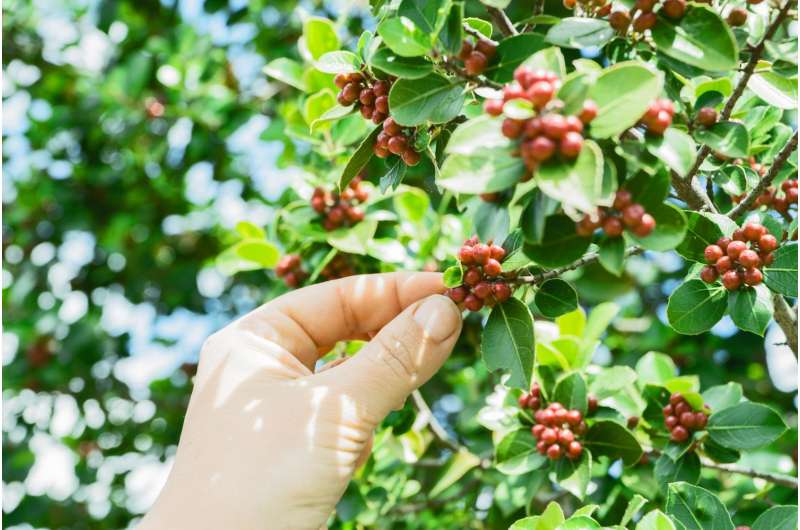
In the misty mountains of the Colombian Andes, where coffee plants grow among scattered trees and fragments of native forest, researchers from SELVA and the Smithsonian's National Zoo and Conservation Biology Institute discovered something that reshapes how we think about protecting birds in one of the world's most vital coffee regions.
The finding is both simple and profound: intact forest matters more than farmers and conservationists realized. A new study published in the Journal of Applied Ecology reveals that the presence of forest across the broader landscape—not just shade trees on individual farms—holds the key to sustaining diverse bird communities in coffee-growing areas.
For decades, conservationists have focused on encouraging "shade-grown coffee," where farmers maintain diverse trees alongside their coffee plants to create habitat corridors. It's a strategy that has helped, but it's incomplete. The research shows that forest cover within a two-kilometer radius around coffee farms positively predicted bird habitat use across all bird groups studied, including species of significant conservation concern. In other words, birds thrived when they could access real forest, not just farms with extra shade.
The numbers tell a sobering story about which birds can survive where. Forest-dependent species—those most vulnerable to habitat loss—required at least 32 percent forest cover in the surrounding landscape just to reach median occupancy levels. Generalist species, more adaptable to human-modified landscapes, could maintain healthy populations in shade-grown coffee farms with at least 10 tree species and 45 percent canopy cover. But this flexibility has limits. As landscape forest cover declined, coffee farms needed increasingly dense and diverse shade canopies to support birds at all.
The research also revealed how bird communities shift with the seasons. Many guilds—groups of species that exploit similar resources—increased their use of forest habitats during December and January, the region's peak breeding period. This pattern underscores a critical point: birds don't use landscapes uniformly throughout the year. They need different resources at different times, which means a landscape that looks adequate in summer might leave them stranded during breeding season.
Different bird groups responded distinctly to farm management practices. Dense, diverse shade coffee attracted fruit-eating birds, insectivores, and nectar-feeders. Intensive sun-grown monocultures with little shade favored seed-eating birds and omnivores—species less threatened by habitat loss. The pattern shows that how we farm directly shapes which species can call these landscapes home.
The authors' conclusion challenges the either-or thinking that has sometimes dominated conservation debates. Forest protection and shade-coffee management aren't competing strategies; they're complementary ones. Protecting and restoring forest cover creates an ecological foundation that allows farm-scale practices to succeed. Without that foundation, even the best-managed shade-coffee farms struggle to support diverse bird communities.
For the eastern Colombian Andes—and for tropical coffee regions worldwide—this means a path forward. Boosting forest cover would improve habitat suitability for nearly all bird groups, strengthening both the biodiversity and the long-term sustainability of coffee landscapes. In landscapes shaped by human hands, nature doesn't need pristine wilderness to thrive. It needs both: forests intact, and farms that work with nature rather than against it.