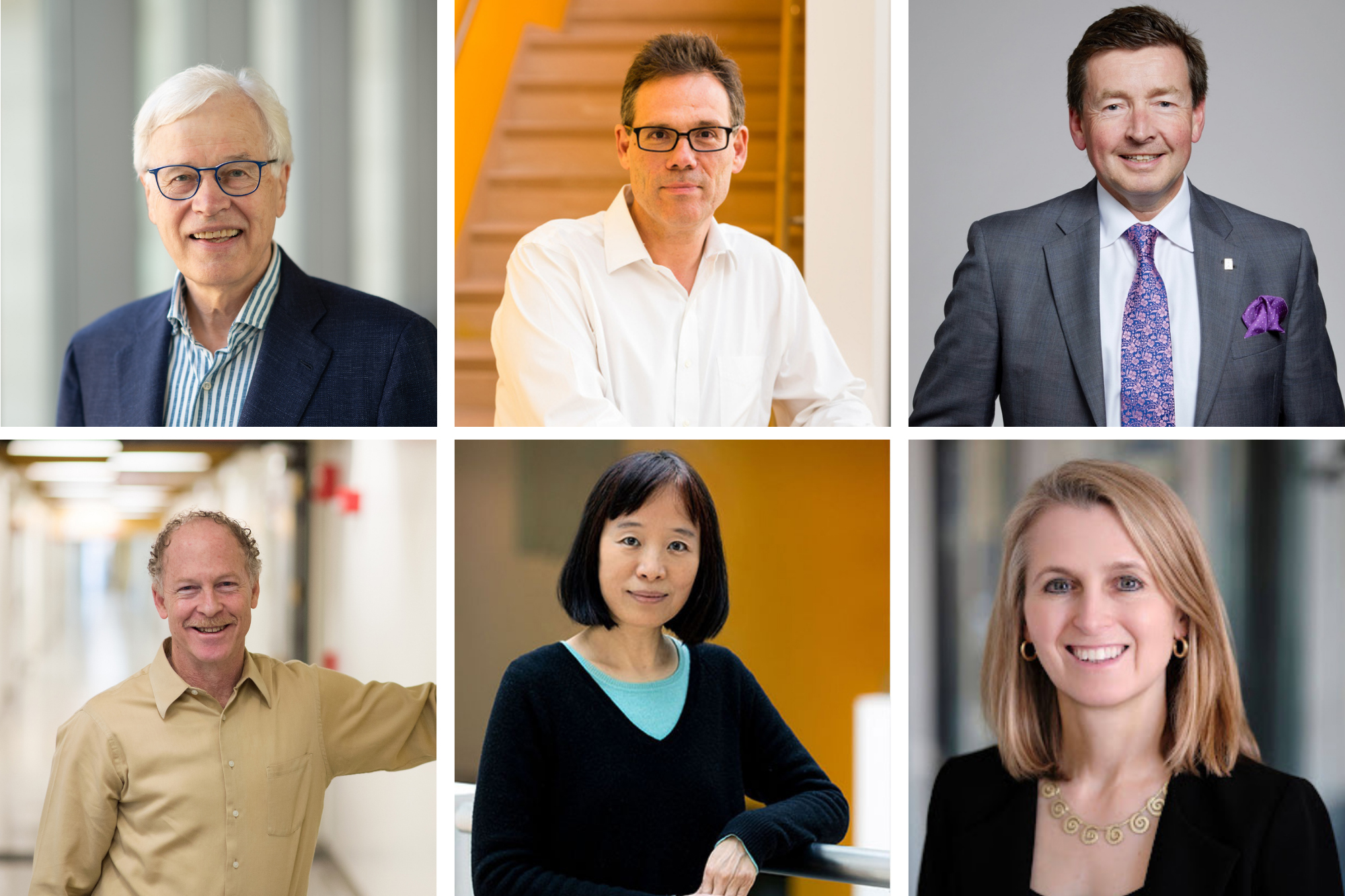
Sixteen MIT affiliates have been elected to the National Academy of Sciences for 2026, a recognition that places them among the world's most distinguished scientists. The election includes six current faculty members and ten alumni whose research spans from the mechanics of how songbirds learn to sing to the mathematical foundations of modern economics.
The National Academy of Sciences, established under a congressional charter signed by President Abraham Lincoln in 1863, represents one of the highest honors a scientist can receive. Membership is awarded for what the institution calls "distinguished and continuing achievements in original research." This year's class of 120 members and 25 international members reflects the breadth of human inquiry — from earth sciences to neuroscience to engineering.
Among the MIT faculty elected were Bengt Holmström, the Paul A. Samuelson Professor of Economics, emeritus, whose foundational work on contract theory and incentives earned him the 2016 Nobel Prize in Economic Sciences. Michale Fee, head of MIT's Department of Brain and Cognitive Sciences, was recognized for research into how the brain learns and generates complex behaviors, work conducted using zebra finches as a model system that has implications for understanding Parkinson's and Huntington's diseases. Gareth McKinley '91, a mechanical engineering professor whose research into non-Newtonian fluid dynamics and complex materials has found applications across industries, was also elected, along with Keith Nelson, Fan Wang, and Catherine Wolfram '96.
The alumni honored span decades and disciplines. Christopher J. Chang (PhD '02) in chemistry; Chuan He (PhD '00), also in chemistry; and Eero Simoncelli (SM '88, PhD '93) in electrical engineering and computer science represent the physical sciences and technology. Pardis C. Sabeti '97, whose work in biology and life sciences has focused on understanding disease dynamics, joins them. The class also includes Cynthia J. Ebinger (SM '86, PhD '88) and Daniel M. Sigman (PhD '97), both in Earth, Atmospheric and Planetary Sciences; Andrew Gelman '85, '86 in mathematics and physics; Richard L. Greene '60 in physics; Robert J. Shiller (SM '68, PhD '72), an economist whose research on financial markets has shaped policy; Salil P. Vadhan (PhD '99) in mathematics; and Richard L. Greene in physics.
What makes this election significant extends beyond individual achievement. The concentration of MIT talent entering the Academy — one of three National Academies that advise the federal government and other organizations on matters of science, engineering, and health policy — underscores the university's role as a catalyst for breakthroughs that shape public understanding and policy. These scientists are not isolated researchers; they are architects of knowledge that influences how governments and institutions understand everything from climate systems to the human brain to economic systems.
The recognition arrives at a moment when the role of scientific expertise in addressing global challenges has never been more urgent. These newly elected members bring with them decades of cumulative research, teaching, and mentorship that extends far beyond their laboratory doors. Their elevation to the Academy ensures their voices will contribute to conversations shaping the future of research, education, and the application of science to the world's most pressing problems.