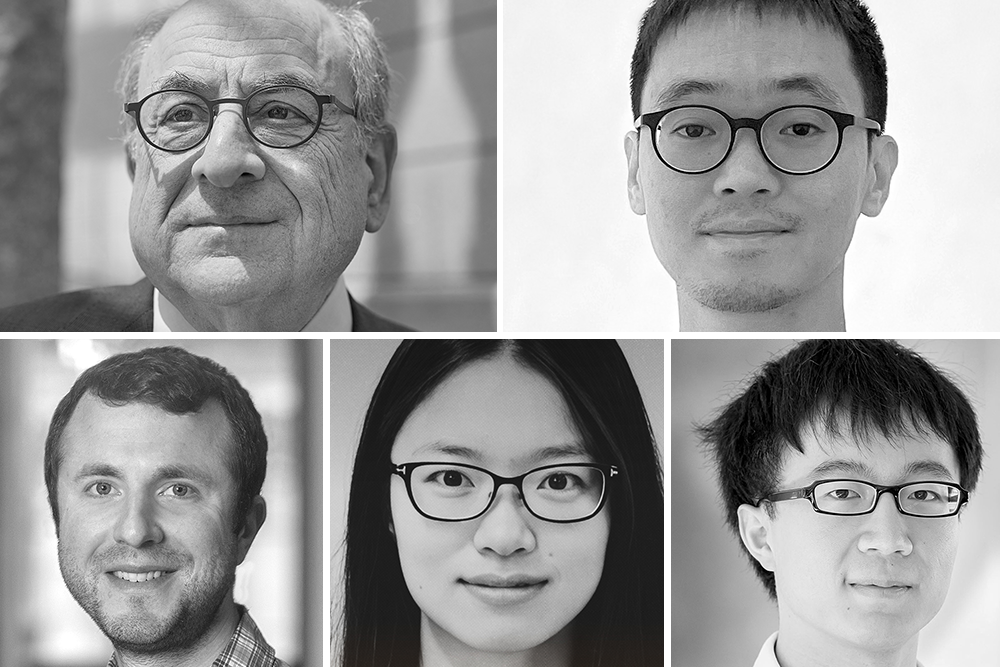
When Stuart H. Orkin '67 and his collaborator Swee Lay Thein identified the master switch controlling fetal hemoglobin, they didn't just advance basic biology—they lit a path toward transforming two once-incurable blood disorders into treatable conditions. The MIT-trained researcher, now a professor of pediatrics at Harvard Medical School, was honored for this breakthrough at the 2026 Breakthrough Prize Foundation gala in Los Angeles on April 18, sharing a Breakthrough Prize in Life Sciences for research that turned sickle cell disease and beta-thalassemia from genetic death sentences into manageable illnesses. Their discovery led directly to Casgevy, the first CRISPR-based medicine ever approved for any human disease—a milestone that signals a sea change in how we approach genetic illness.
This recognition of Orkin and his fellow laureates reflects something broader happening at MIT and its affiliated institutions: a generation of scientists working across disciplines to solve humanity's hardest problems. In the same ceremony, MIT physicist Shu-Heng Shao was recognized alongside researchers from the University of Chicago, UCLA, and NYU for discovering and developing the theory of "generalized symmetries" in quantum field theory—abstract mathematics that may reshape our understanding of fundamental physics itself. Shao, an assistant professor of physics at MIT and researcher in the MIT Center for Theoretical Physics, represents the kind of theorist who asks the questions that unlock new domains of knowledge.
The honors extended further across the MIT community. J. Colin Hill '08, working with colleagues including Dillon Brout, Mathew Madhavacheril, Maria Vincenzi, Daniel Scolnic, and W. L. Kimmy Wu, won a New Horizons in Physics Prize for measuring the expansion and composition of the universe by analyzing data from the cosmic microwave background radiation—the ancient light left over from the Big Bang itself. Hill's contribution to analyzing this primordial signal helps answer one of cosmology's central questions: what is the universe actually made of, and how fast is it growing? Separately, Hong Wang PhD '19 received a New Horizons in Mathematics Prize for resolving or advancing solutions to a family of notoriously difficult problems in harmonic analysis, a branch of mathematics that studies complex functions by breaking them into their fundamental components.
The circle of recognition also extended to Bryan Traynor, a former student in the Harvard-MIT Program in Health Sciences and Technology, who shared a Breakthrough Prize in Life Sciences with Rosa Rademakers for discovering the most common genetic cause of both amyotrophic lateral sclerosis and frontotemporal dementia—two diseases that devastate patients and families with almost no warning.
Founded by Silicon Valley entrepreneurs, the Breakthrough Prizes have become the world's most prestigious recognition for scientists in life sciences, fundamental physics, and mathematics. These prizes honor not just past achievement but a vision of the future: one where genetic diseases become treatable, where the universe's deepest mysteries yield to human ingenuity, and where mathematics and physics illuminate paths that seemed impassable. The laureates honored in Los Angeles embody that possibility.