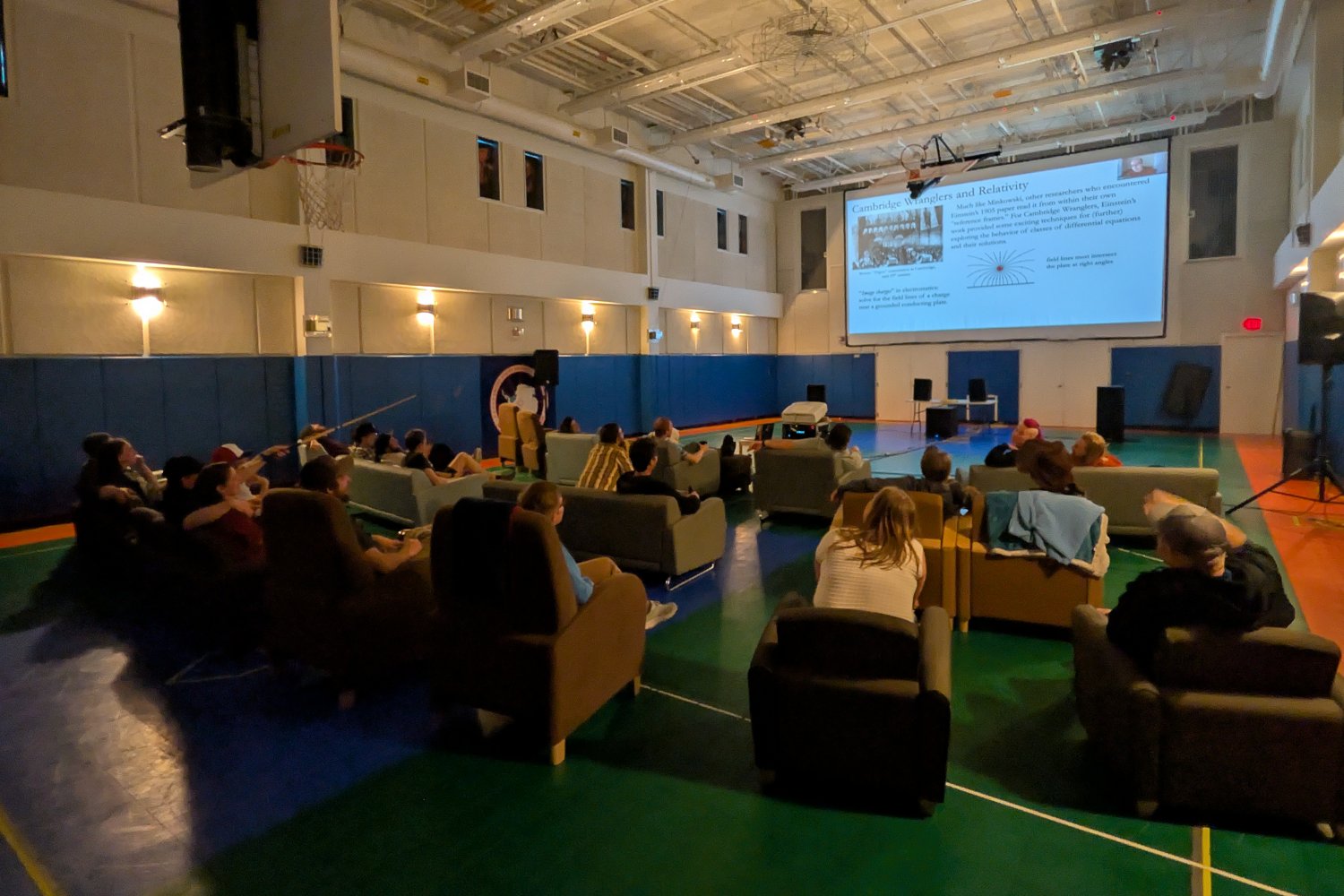
John Della Costa, huddled at the southernmost point on Earth, presses play on a lecture by MIT physicist David Kaiser, his screen glowing in the perpetual Antarctic night. For the past several weeks, Della Costa and a small team of researchers at the South Pole have gathered every Friday for "Fysics Fridays"—a weekly ritual of intellectual curiosity fueled by MIT OpenCourseWare, where they study Einstein, quantum theory, and the origins of the universe, just miles from one of the most sensitive cosmic telescopes ever built. At a latitude of 90 degrees south, where temperatures plunge below -70°C and no flights land for eight months, learning isn’t just a pastime—it’s a lifeline.
The South Pole is one of the most isolated places on Earth, and its winter crew—around 45 people—must endure total darkness and extreme cold with no possibility of evacuation from mid-February to late October. For Della Costa, a researcher on the BICEP (Background Imaging of Cosmic Extragalactic Polarization) project, staying mentally sharp and connected is essential. That’s why he downloaded four MIT courses before arriving in November 2025, including STS.042/8.225: Einstein, Oppenheimer, Feynman: Physics in the 20th Century, taught by Professor David Kaiser, along with foundational physics courses and Alan Guth’s The Early Universe. These aren’t just refreshers—they’re deep dives into the very theories shaping BICEP’s mission: detecting primordial gravitational waves that could confirm cosmic inflation, the explosive expansion of the universe moments after the Big Bang.
Della Costa first discovered MIT OpenCourseWare during the pandemic, while studying astrophysics at San Diego State University. He was drawn to Professor Michael Short’s nuclear engineering course and never stopped exploring. Now, at the South Pole, he’s sharing that passion with his colleagues, turning solitary study into communal discovery. The course materials, originally adapted for remote learning during lockdowns and launched on OpenCourseWare in August 2022, now reach further than anyone imagined—across continents and into one of Earth’s most extreme environments.
For Kaiser, who co-directs a cosmology research group with inflation theory pioneer Alan Guth, the news was humbling. "Hearing that John and his team are spending a part of their time with this course was just the best message to receive," he says. The BICEP project, using an array of radio telescopes at the Pole, studies the cosmic microwave background—the oldest light in the universe, emitted just 380,000 years after the Big Bang. Finding evidence of inflation would reshape our understanding of reality itself.
"Inflation is really important in making sense of our observations of our universe," Della Costa explains. "We have yet to discover the evidence for inflation that definitively proves that it did happen, and BICEP’s main role here at the South Pole is to discover gravitational waves from the very early universe."
In a place where survival depends on teamwork and mental resilience, "Fysics Fridays" has become more than a study group—it’s a ritual of hope, curiosity, and shared purpose. As the lectures play under the aurora-streaked sky, they remind everyone that even at the edge of the world, the human drive to understand the cosmos remains unbroken.