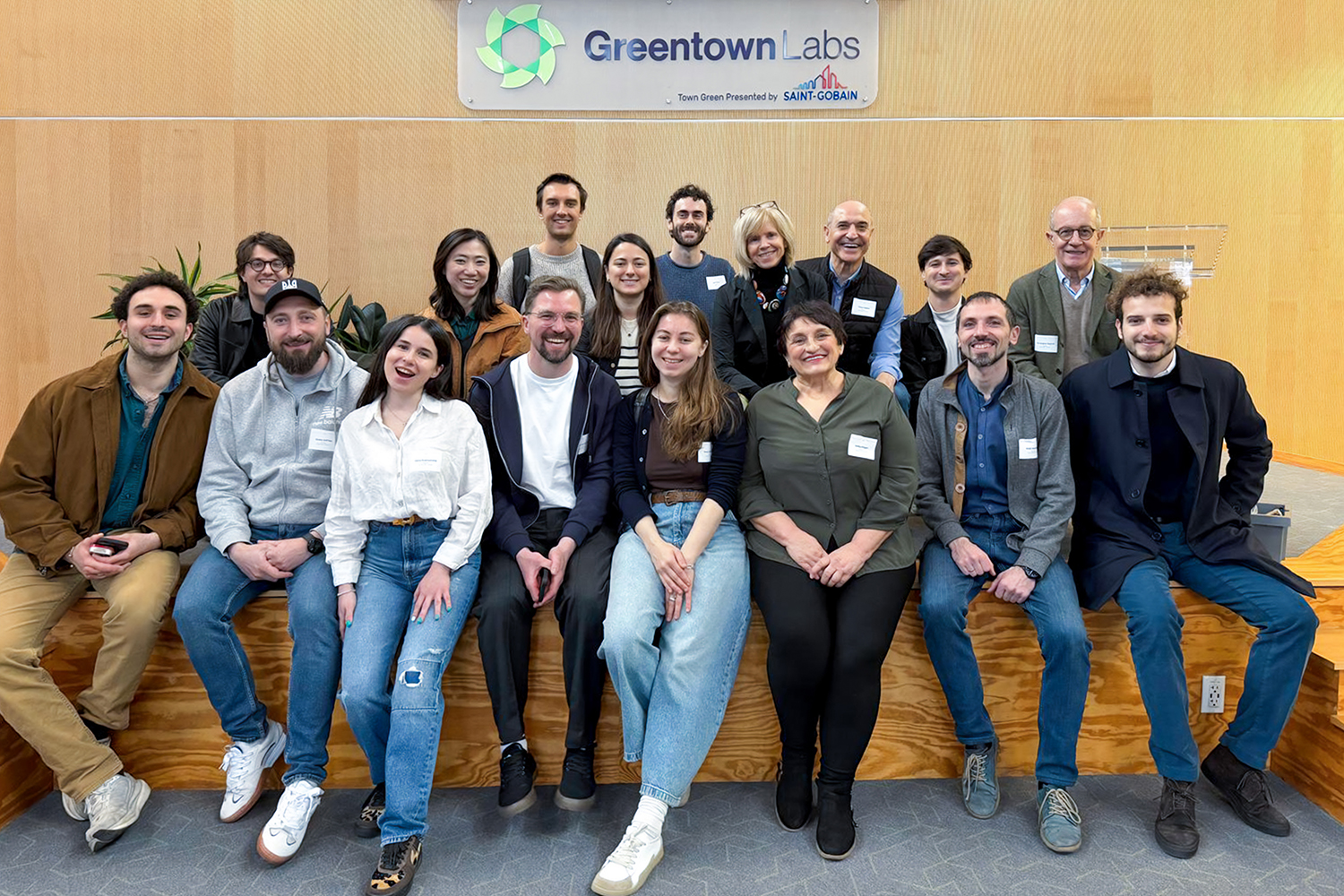
In a sunlit seminar room at MIT, Dmitry Sofyna, CEO and co-founder of WINSTARS.AI, stood before 13 graduate students and articulated a vision that echoes across a nation at war: transform Ukraine from a major player in engineering outsourcing into a hub for creating large-scale tech companies in defense, medicine, and energy. It was a moment of defiant hope, made all the more poignant by the fact that Sofyna and four other city leaders from Vinnytsia, a central Ukrainian city of 400,000 people, had traveled to Cambridge not because conflict had ended, but precisely because it had forced an unconventional path forward.
The MIT Department of Urban Studies and Planning (DUSP) course "Innovating in Ukraine," taught by professor Elisabeth Reynolds, typically sends students abroad to work with partner cities. The ongoing war made that impossible, so with support from a generous alumnus, the program reversed direction—bringing Vinnytsia's delegation to Cambridge instead. What emerged was a semester-long practicum in which 13 graduate students, drawn from MIT's School of Architecture and Planning and Sloan School of Management as well as Harvard's Kennedy School and Graduate School of Design, partnered with Vinnytsia's leaders and the city's technical university to tackle four concrete challenges: building an agro-food cluster to anchor Ukraine's integration into the European Union; designing transportation and logistics networks to position Vinnytsia as a regional economic hub; establishing electronic waste management systems; and retaining creative and entrepreneurial talent in a country hemorrhaging young people to diaspora.
During their week in Cambridge, the visitors witnessed an ecosystem most cities spend decades trying to build: they met with Kairos Shen, Boston's chief city planner, to explore how the built environment fosters innovation. They toured the Cambridge Innovation Center in Kendall Square, Greentown Labs in Somerville, and MassChallenge in Boston—spaces designed to incubate startups and connect entrepreneurs across networks that span continents. For a delegation working to establish Crystal Technology Park, one of Ukraine's largest, the exposure to how Boston's innovation infrastructure actually functions was practical and urgent.
What made the exchange most powerful, though, was not the physical tours but the shared understanding that rebuilding happens during war, not after it. Yanna Chaikovska, director of Vinnytsia's Institute for Urban Development, said it plainly: "We are planning for the future because that is what we must do. Ukraine has faced many challenges in the past and always worked in small and big ways to move forward." There was no melodrama in her words—just the clarification that while others might wait for peace to begin planning, Vinnytsia's leaders were already sketching blueprints.
This collaboration reflects a larger pivot within DUSP itself. Hashim Sarkis, dean of the School of Architecture and Planning, framed it as essential work: "With so much conflict in the world today, SA+P must create new ways to help cities rebuild, whether in Ukraine or elsewhere." The course itself, an outgrowth of the MIT-Ukraine initiative and the Ukraine Community Recovery Academy that DUSP has supported for two years, demonstrates how universities can contribute to real economic development—not through abstract research, but through applied partnership, where students develop actual strategies and Ukrainian leaders carry those insights back to their cities. For Vinnytsia, the work continues. For MIT, the lesson is clear: sometimes the most important work happens not in travel, but in listening closely to those who are already on the ground, already moving forward.