At MIT, engineers have cracked a problem that's plagued spacecraft designers for decades: the need to carry separate fuel systems for different types of maneuvers. Amelia Bruno, a former postdoc in the Department of Aeronautics and Astronautics, and her team have developed a hybrid propulsion system that combines chemical and electric thrusters—powered by a single green monopropellant—that could fundamentally expand what tiny satellites can accomplish in space.
For years, spacecraft have operated with a fundamental constraint. Chemical thrusters deliver powerful bursts of thrust for rapid movements—accelerating, decelerating, or changing position quickly. Electric thrusters excel at fuel efficiency and precise, gradual adjustments over long journeys. But they've always required separate propellants and hardware, adding weight and complexity that small satellites simply can't afford. The MIT breakthrough changes this equation entirely.
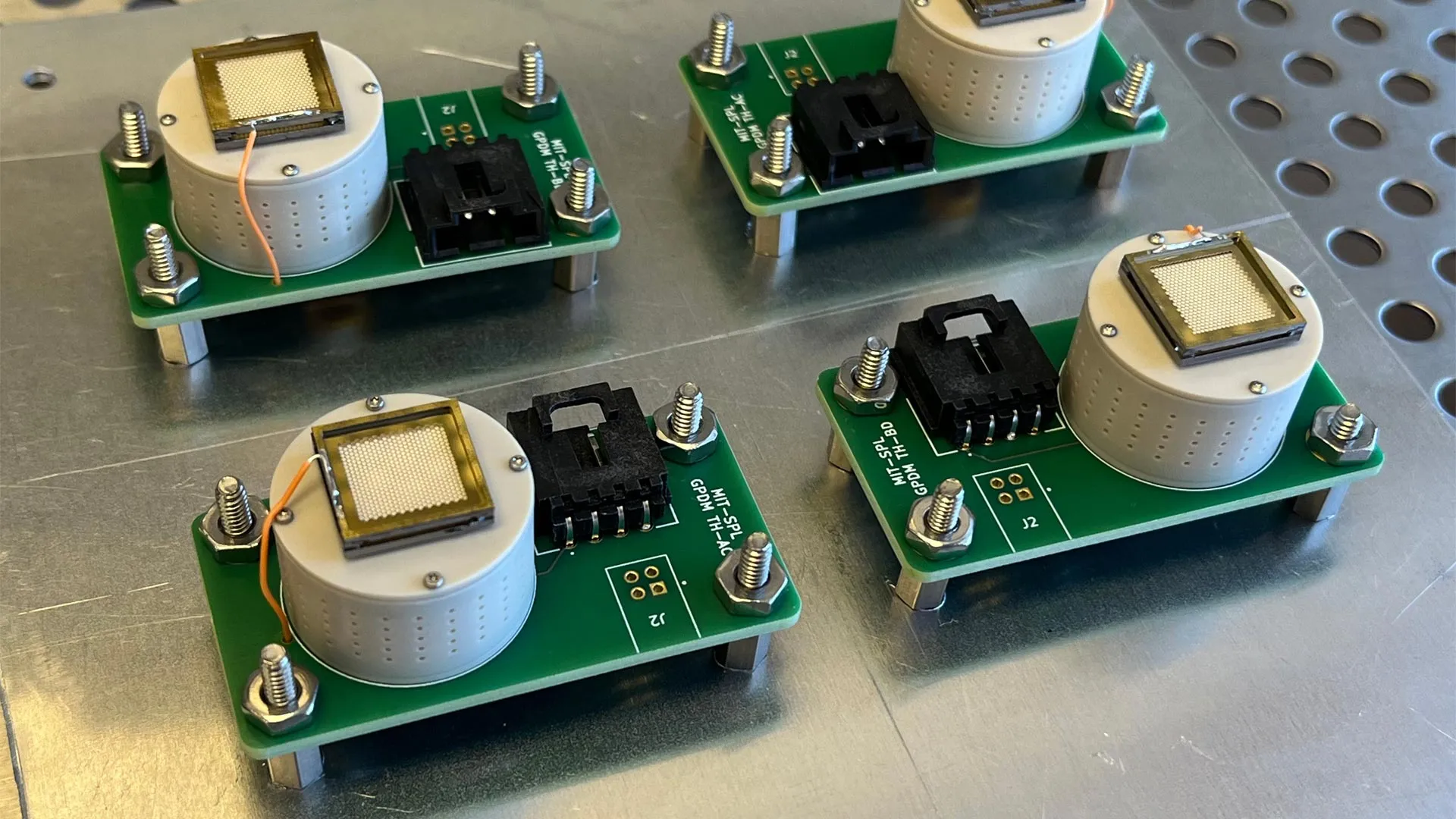
At the heart of the innovation is a specialized ionic liquid fuel called ASCENT—Advanced SpaceCraft Energetic Non-Toxic propellant—originally developed by the U.S. Air Force as a safer alternative to hydrazine, the highly toxic fuel traditionally used in spacecraft propulsion. What made ASCENT remarkable is that it happens to be an ionic liquid, exactly the type of material that MIT's electrospray thruster systems are designed to use. "We said, hey, that's the stuff we typically use. Theoretically, this should work. Let's go figure out how," Bruno recalls. And it did work. Published in the Journal of Propulsion and Power, the study demonstrates that ASCENT can successfully power both traditional chemical thrusters and miniature electrospray thrusters—devices roughly the size of a dime or thumbnail that use electric fields to charge and eject particles, creating thrust.
The practical implications are striking. Paulo Lozano, the Miguel Alemán Velasco Professor of Aeronautics and Astronautics at MIT, envisions a future where small satellites venture far beyond Earth orbit. "We could send CubeSats to Mars, or the asteroid belt, where they could make the journey slowly, using electrospray thrusters," he explains. "You could then use your chemical thrusters to quickly move to look at interesting features. You could have a lot more flexibility to do a lot more things." A briefcase-sized spacecraft equipped with one chemical thruster and four electrospray thrusters—all drawing fuel from a single tank—represents the next frontier. NASA is already partnering with MIT on the Green Propulsion Dual Mode mission, a CubeSat that will be the first attempt to test this dual-mode system in actual space conditions.
What makes this breakthrough particularly elegant is its simplicity. Instead of managing multiple fuel systems and their associated hardware, small satellites gain what Bruno calls "the best of both worlds"—rapid maneuvers when needed, fuel-efficient precision otherwise, all from one compact package. For the small satellite industry, where weight and cost directly determine mission scope, this represents genuine liberation. These miniaturized spacecraft can finally attempt the ambitious journeys and detailed observations that have long been the province of larger, far more expensive missions. If the NASA mission succeeds, the path opens for an entirely new class of exploration: modest platforms undertaking immodest science.