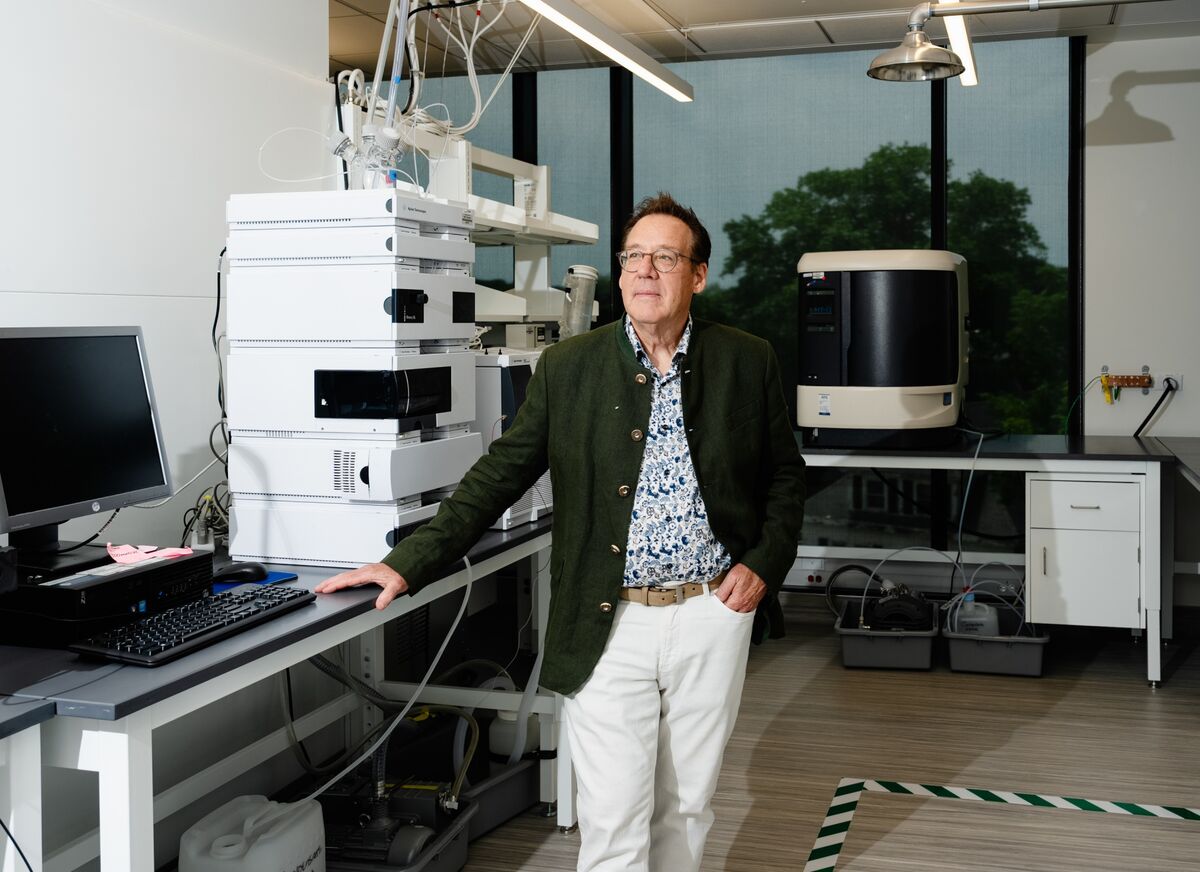
Gregory Verdine was thinking like a chemist in a Harvard University lab when he imagined something audacious: what if you could fight disease-causing proteins by gluing them to something else in the body and smothering them? That "crazy idea," as he describes it, has blossomed into one of the biggest advances in pancreatic cancer treatment in decades—a molecular glue technology that's poised to become the next billion-dollar breakthrough in medicine.
The concept is elegant in its simplicity. Inside our cells, certain proteins misbehave, driving disease. Conventional drugs try to block these proteins or stop them from doing their job. But Verdine's molecular glue approach works differently: it chemically binds disease-causing proteins directly, essentially locking them in place so they can be neutralized. For pancreatic cancer—a notoriously aggressive malignancy with historically grim outcomes—this represents a fundamentally new way to fight back.
What makes this work particularly compelling is that it targets proteins previously considered "undruggable"—molecules that hide deep within cells where traditional therapies cannot reach them. Pancreatic cancer has long been one of the most difficult cancers to treat, with five-year survival rates stubbornly low despite decades of research. The arrival of a technology that can address previously unreachable targets offers genuine hope to patients and oncologists alike.
The momentum is already building. Major pharmaceutical companies and venture capital firms are racing to develop molecular glue therapies, recognizing both the scientific potential and the market opportunity. The fact that this technology could command billion-dollar valuations reflects how transformative researchers believe it could be—not just for pancreatic cancer, but potentially for other cancers and diseases where hidden, untreatable proteins drive disease.
Verdine's leap from laboratory hypothesis to clinical reality illustrates something essential about medical progress: breakthrough treatments often start with someone willing to ask "what if?" His willingness to pursue an unconventional approach—rather than incrementally improving existing drug strategies—has opened an entirely new frontier in how we think about attacking disease at the molecular level.
The implications extend beyond pancreatic cancer. If molecular glue technology proves as effective as early research suggests, it could reshape treatment for multiple cancer types and other diseases driven by protein malfunction. For patients who've exhausted conventional options, for families facing diagnoses that previously meant limited choices, this represents the kind of scientific progress that restores possibility.
Of course, the journey from promising laboratory discovery to widely available treatment still requires rigorous clinical trials, regulatory approval, and years of additional research. But the foundation is solid, and the scientific community's excitement is justified. When one of the hardest cancers to treat encounters a fundamentally new therapeutic approach, that convergence matters. It matters to the researchers continuing Verdine's work. It matters to the companies investing in bringing these therapies to patients. And most importantly, it matters to everyone whose life could be saved or extended by what begins as a crazy idea in a Harvard lab.