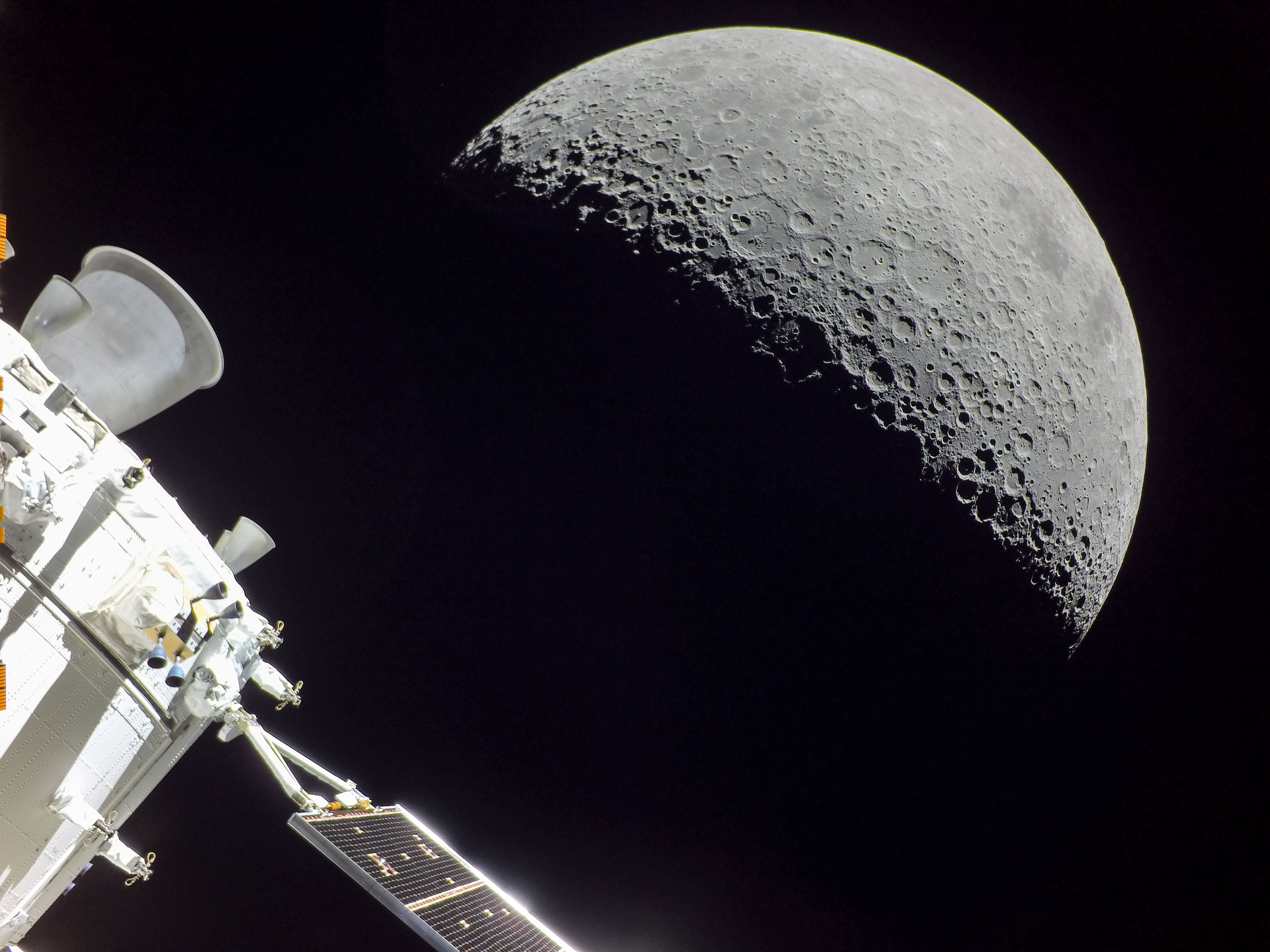
On an April morning in 2026, four astronauts strapped into NASA's Orion spacecraft and flew farther from Earth than any humans in history — 252,756 miles away. Artemis II's nearly ten-day voyage looped around the Moon, giving the crew an unhurried, up-close view of the lunar surface no astronauts had enjoyed in decades. On board were NASA's Reid Wiseman, Victor Glover, and Christina Koch, along with Canadian Space Agency astronaut Jeremy Hansen, the first Canadian ever bound for the Moon.
This was the moment NASA had been building toward for decades. The first uncrewed test of the Space Launch System rocket and Orion capsule back in November 2022 proved the enormous new rocket could work. Artos II proved humans could ride safely in it. Those tests matter because NASA isn't stopping at a flyby. It's chasing something much bigger.
NASA has set its sights on the first lunar landing since the Apollo era, still targeting 2028 — a date that has stayed steady since mid-2025. The plan is carefully choreographed. Artemis III, planned for 2027, will test the crucial handoff between Orion and commercial landing systems built by two private companies, SpaceX and Blue Origin, while still in low Earth orbit. That practice run makes sure the rendezvous and docking maneuvers work before anyone attempts them over the Moon. Then Artemis IV and V would actually set crews down on the lunar surface, with NASA hoping to sustain one mission per year after that.
Why go back at all? Scientists call the Moon a 4.5-billion-year-old time capsule, a frozen record of the early solar system waiting to be studied. NASA speaks of the return in plain terms: scientific discovery, economic benefits, and inspiration for a new generation of explorers. And Orion isn't just a Moon machine — it's designed as the exploration vehicle that could one day carry crews on toward Mars.
The Artemis program is also a lesson in teamwork. By standardizing the rocket's configuration and leaning on commercial partners while keeping the crew in NASA spacecraft, the agency is building a global alliance for deep space. The Moon, in this vision, is a stepping stone rather than a finish line.
The people behind the mission want you in on it too. Through programs like "Join Artemis," students can make, launch, compete, and learn — a standing invitation to find a place in space. The next era of exploration won't just be watched from Earth; it will be built by the kids who grow up inspired by these flights. One small wristwatch. One giant mission forward on the timeline of human curiosity.