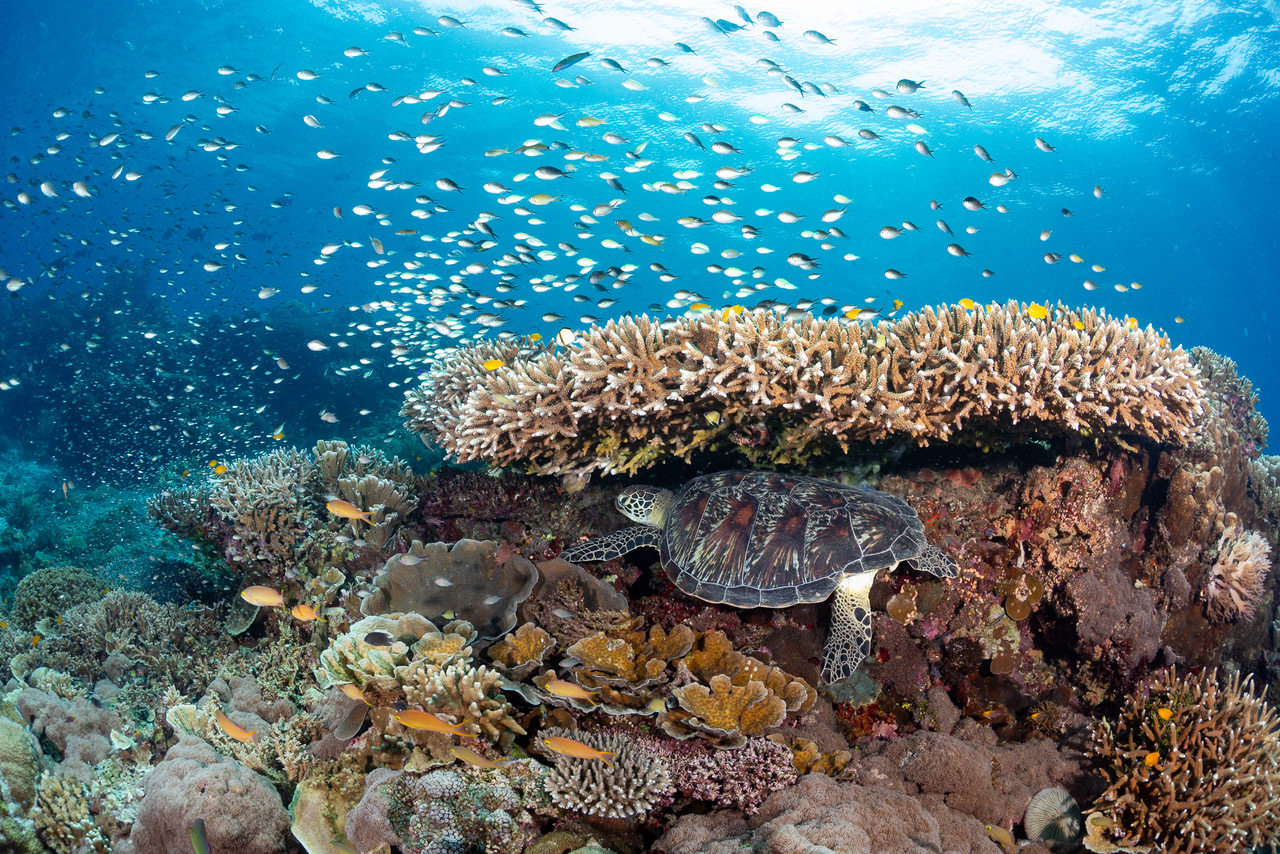
On a quiet reef in Fiji’s Vatu-i-Ra Conservation Park, coral pulses with life—vibrant, resilient, and quietly defying the odds. This is not an isolated miracle. A groundbreaking new study reveals that more than 64,000 square miles of coral reefs across 71 countries and 100 territories show strong potential to survive the escalating climate crisis, offering a rare beacon of hope in the fight to preserve marine biodiversity. For years, coral reefs have been painted as doomed—victims of relentless marine heatwaves and mass bleaching events. But the 50 Reefs+ study, unveiled at the Our Ocean Conference in Mombasa, Kenya, flips the script, showing that resilient reefs are not rare exceptions but widespread, making up roughly one-third of the world’s reef systems.
Led by scientists from the Wildlife Conservation Society and Macquarie University, and powered by satellite imagery and AI from SkyTruth, the study analyzed over 45,000 coral field observations collected between 1960 and 2025, combined with climate, oceanographic, and human-impact data. The result is the most comprehensive global map yet of reefs capable of avoiding, resisting, or recovering from heat stress and cyclones. These are the coral strongholds—ecosystems that, with protection, could seed recovery for damaged reefs elsewhere. The original 50 Reefs initiative in 2018 catalyzed over $100 million in conservation funding; this expanded vision includes 30 additional countries and 54 more jurisdictions, from Belize to the Philippines, from Cuba to the Turks and Caicos Islands.
More than half of these resilient reefs are concentrated in just five nations: Australia, the Bahamas, Cuba, Indonesia, and the Philippines. In the Caribbean, where reefs have long suffered from disease, warming waters, and coastal development, the findings are both encouraging and cautiously received. Alizee Zimmermann, executive director of the Turks and Caicos Reef Fund, welcomed the optimism but urged grounding in local reality: “The narrative that Caribbean reefs are simply ‘dead’ is inaccurate and can be harmful.” Still, she emphasized the need for more localized data to validate the study’s predictions and ensure they translate into real conservation action.
The implications are profound. With the right protections—reduced local stressors, expanded marine reserves, and climate mitigation—these reefs could become anchors of resilience in a warming ocean. As Anne Cohen of the Woods Hole Oceanographic Institution noted, coral reef futures are not binary. This study doesn’t promise salvation, but it does offer a roadmap—one built on science, specificity, and the quiet persistence of life beneath the waves. As global leaders gather to commit to ocean protection, the message is clear: coral reefs are not beyond saving. They are fighting back—and now, so must we.