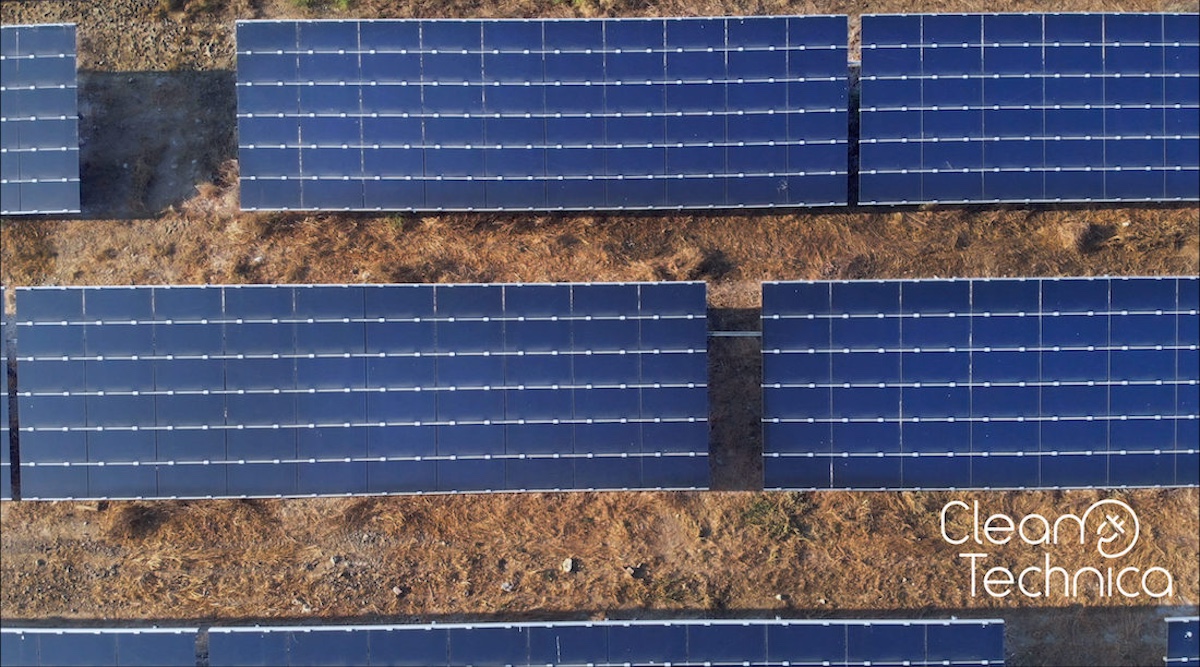
In 2000, Europe had barely any wind and solar farms. Today, it has nearly 750 gigawatts of them — that's almost twice as much as all its methane-burning power plants combined. And for the first time, these clean energy sources are producing more electricity for Europe than fossil fuel plants do.
This marks a turning point for a continent that spent years worried about whether it could secure enough methane to keep the lights on through winter. In 2022, when Russia cut off gas supplies following its invasion of Ukraine, Europe scrambled for alternatives. The answer turned out to be sitting right above them — wind and sunshine, free and abundant.
The numbers tell the story. Over 25 years, European wind and solar capacity grew from under 20 gigawatts to nearly 750 gigawatts. Methane-burning power plants, by contrast, grew from 250 gigawatts to about 400 gigawatts over the same period. Put another way, Europe now has nearly twice as much renewable energy capacity as it has fossil fuel capacity.
Every month, European wind and solar farms now produce between 80 and 110 terawatt-hours of electricity. That's more than methane-fired plants generate in the same period. In 2026, European utilities cut coal and methane burning to multi-year lows as solar and wind output hit record highs.
This isn't just a weather story. A few sunny or windy months can be written off as good luck. But Europe has crossed a threshold where clean energy growth is becoming inevitable — a mathematical consequence of having built so much of it. "Once sufficient renewable capacity is installed, declining fossil generation becomes less a policy aspiration and more of a mathematical consequence," Reuters reported.
The implications reach beyond electricity. Since 2022, Europe has filled gas storage sites each summer as insurance against winter shortages. But if power plants need less methane, the continent may not need to store as much of it. The question is shifting from "Do we have enough gas?" to "How much gas do we actually need?"
"Without energy security, there can be no broader security," said Dan Jørgensen, the European Union's Climate Commissioner, speaking at the Munich Security Conference. "We need to address both dimensions of energy security — reducing dangerous dependencies by accelerating homegrown renewables and diversification, while at the same time strengthening the protection and resilience of our critical infrastructure."
For years, policymakers called methane a "bridge fuel" — something to burn while clean energy scales up. Europe has crossed that bridge. And for a continent that once fretted about winter gas shortages, needing less of the stuff in the first place may prove the most consequential energy development of all.