Manchester City's players are scattered across the world's stage in numbers never seen before—19 of them representing 12 different nations at the 2026 World Cup, a staggering record that underscores how deeply the Premier League champions have embedded themselves in the global football ecosystem. As all 48 squads take shape ahead of the tournament, the data reveals a fascinating map of where talent pools from, who is managing the long careers, and which young stars are about to burst onto the world's biggest stage.
The concentration of players from Europe's elite five leagues—the Premier League, La Liga, Bundesliga, Serie A, and Ligue 1—tells a story of economic power and competitive depth. Spain stands alone as the only nation whose entire squad draws exclusively from this elite circle, a remarkable feat of domestic strength that reflects years of sustained success. England's group stage opponents Panama head into the tournament with the oldest squad, while closer to home, Arsenal has provided 16 players across 10 nations, making them the second-largest club exporter after Manchester City. Even outside the traditional powerhouses, scouts have tracked talent carefully: Switzerland, the Netherlands, and Belgium have assembled squads with considerable representation in top-tier competition despite their smaller populations.
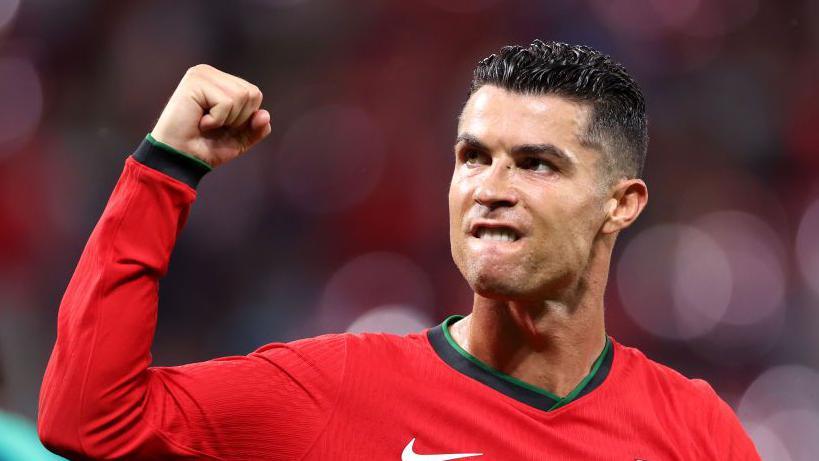
The age spectrum at this World Cup spans generations in ways both celebrated and surprising. Craig Gordon, Scotland's goalkeeper, will be 43 years and 162 days old when the tournament begins, making him by far the most senior player competing. Yet Cristiano Ronaldo, at 41, continues his own defiance of biological expectation by preparing for his sixth World Cup, alongside Luka Modric and Edin Dzeko in the exclusive over-40s outfield club. Brazil's veterans—Danilo, Casemiro, and Neymar, all aged 34—represent another chapter in the book of experienced leadership, as Carlo Ancelotti attempts to deliver the nation's first World Cup since 2002.
On the opposite end of the timeline, youth has arrived with genuine intrigue. Mexico's Gilberto Mora will be the youngest player at the entire tournament at just 17 years and 240 days when competition kicks off, a midfielder who won't turn 18 until October. Czech wonderkid Hugo Sochurek, only 17 when he earned his first cap, celebrates his 18th birthday during the tournament itself. Germany's Lennart Karl, having impressed during a breakout season at Bayern Munich, carries the hopes of another emerging generation. Ivory Coast fields the tournament's youngest overall squad, with forwards Yan Diomande and Bazoumana Toure, aged 19 and 20 respectively, already drawing attention from major clubs. Spain's relative youth—anchored by the teenage talents of Lamine Yamal at 18 and Pau Cubarsi at 19—reflects their Euro 2024 victory and suggests continuity ahead.
The geography of recruitment tells another story. Sunderland, following their promotion last summer, have remarkably placed 11 players on the World Cup stage, matching both Chelsea and Liverpool despite being newcomers to the Premier League. Meanwhile, clubs like Brentford, Everton, and Leeds will watch from afar as they've sent just four players each into the tournament. And in an era of global movement, outliers matter too: England's Ivan Toney plays for Saudi side Al-Ahli, while Germany's Leroy Sane represents Galatasaray in Turkey. France has embraced this drift, including both Theo Hernandez of Al-Hilal and N'Golo Kante of Fenerbahce in their squad. As the tournament approaches, these numbers sketch a portrait of a sport increasingly unbounded by geography, ambition stretching across continents, and talent emerging from unexpected quarters.