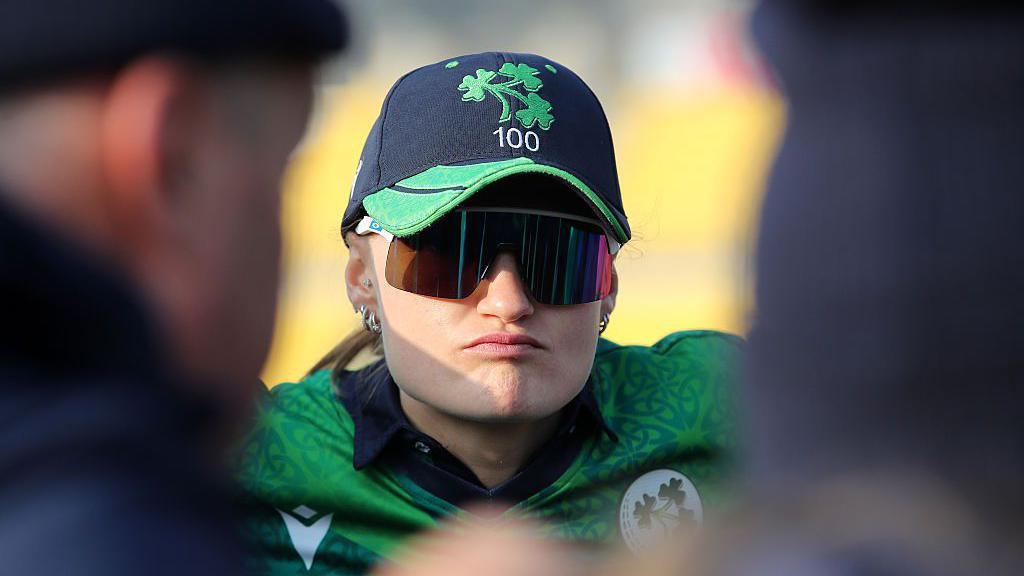
Danni Wyatt-Hodge walked to the crease at Southampton just ten days after giving birth to her daughter, Daisy, carrying both her pads and a quietly fierce determination that has defined her entire cricket career. When she struck a century in England's T20 World Cup opener, she did what few athletes could contemplate: she rocked her bat in her arms like a cradle, a gesture that told the story of her extraordinary fortnight more eloquently than any words could.
For most professional athletes, parenthood and elite sport exist in separate worlds. But Wyatt-Hodge, at 35 years old, has never been content with conventional boundaries. Her daughter was born on May 20th. By May 30th, she was back in training gear. Now, on the grandest stage her sport offers—a World Cup on home soil—she has announced her arrival with a statement: she is not going anywhere.
What makes this moment resonate beyond the shock of its audacity is the context of genuine uncertainty that preceded it. During her parental leave, debate swirled about England's opening batting lineup. Sophia Dunkley's form had faltered. Amy Jones had been promoted. Yet the certainty that never wavered, despite her absence, was Wyatt-Hodge herself. When she returned to play against India last month in Bristol, she was bleary-eyed from sleepless nights but scored 29. Three single-figure scores followed. England did not flinch.
Katherine Sciver-Brunt, watching from the commentary box, understood what was unfolding. "Some people just need a bit of pressure and a bit of 'something' on a game," she reflected. "This is exactly the sort of environment she needs. As a cricketer you can thrive or you can go within yourself, and she thrives with situations like these." It was prescient observation.
The century itself was drenched in symbolism. At the other end of the pitch stood captain Nat Sciver-Brunt, herself a cricketer and mother who had rocked her bat in celebration of a century at last year's 50-over World Cup—against the same opposition. When Wyatt-Hodge reached three figures, the moment belonged to both of them. "It was really nice to have her in the middle to celebrate that hundred – two mummies," Wyatt-Hodge said later, her voice carrying the weight of shared understanding.
The emotional pull of the moment rippled through the team. When she returned to the dressing room, several players had tears in their eyes. Even Sophia Dunkley, the opener whose place she had essentially claimed, met her first at the boundary edge with what could only be genuine warmth. It spoke to a squad building something rare: authentic togetherness.
Back home, Wyatt-Hodge's wife Georgie had watched the entire performance on television, perhaps with Daisy beside her. They had last been together on Sunday. They will be reunited when the team heads to Southampton on Saturday. "I've not seen her for six days and it feels like six months," Wyatt-Hodge said, her voice cracking slightly. "It is all I think about, even in the night."
This is not a simple story of triumph-over-adversity, though that element exists. It is something deeper: a moment when professional excellence and human love collided on a cricket field in front of thousands, and both emerged intact. The phrase "Daddy Hundred" was coined years ago to describe a man's century celebrating fatherhood. This one belongs to motherhood. Few are more deserving of their moment in the sun.