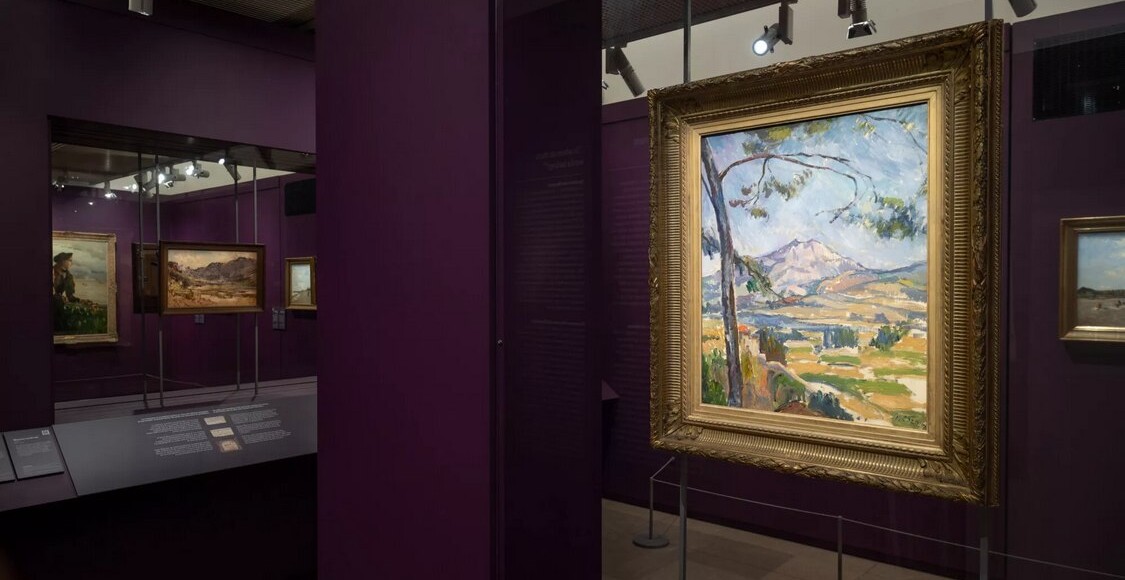
On the third floor of the Musée d'Orsay, a quiet revolution is taking place. In a modest room that the museum hopes to someday empty entirely, 13 paintings and one Rodin sculpture hang in careful arrangement—each work a question mark, each frame a commitment to finding an answer. The gallery, called "To Whom Do These Belong," opened this spring as a permanent space dedicated to the 225 artworks still in the museum's care that were stolen by Nazis during their occupation of Paris in World War II.
The room's existence is both an act of accountability and a call to action. While the south of France operated under the collaborative Vichy regime that aided in carrying out the Holocaust, the Musée d'Orsay has chosen a different path—one of transparency, research, and, when possible, restitution. Over the past three decades, 15 works held at the museum have been returned to their rightful owners. Each reunion represents not just a legal victory, but a small reparation for the violence of displacement and loss.
The numbers behind this effort are staggering. By the end of the war, more than 100,000 cultural items had been looted from France. Some 60,000 works were recovered in Germany and Austria in the conflict's aftermath, and 45,000 were eventually returned to their owners. But 15,000 went without identified claimants—sold by the French state in the early 1950s, with 2,200 selected for custody in museums across the country. The Musée d'Orsay now carries 225 of these works, each one requiring painstaking provenance research to determine whether it belongs in their collection or in the hands of a family who may not yet know to look for it.
Among the 13 works currently on display is Le Souper au Bal by Edgar Degas, acquired in 1919 by Fernand Ochsé, a Jewish collector who was deported and murdered at Auschwitz. The painting traveled through German hands via a Mr. M. Coutot before arriving at the Brame gallery—but whether any of Ochsé's family remain to claim it, or whether they even know it existed, is unknown. Works on display are marked with special purple labels, part of a system that makes their contested status visible to every visitor who passes by.
Antony Easton, a British man of German origin, spoke with CNN about what this kind of acknowledgment means to families still seeking justice. "I think it's great that it's going on display and it's going to be an actual room set aside for art that is stolen," he said, noting that he has spent years compiling evidence to reclaim his own family's stolen inheritance, some of it identified in German collections.
The museum describes the gallery as suspended between past and present—a rotating exhibition that offers visitors a window into the complex, ongoing work of provenance research. That work continues not just within these walls, but across French institutions, where identified works now bear their special labels, signaling both the crime and the commitment to solving it. For the Musée d'Orsay, the dream of an empty room is not a threat to their collection. It is the goal.