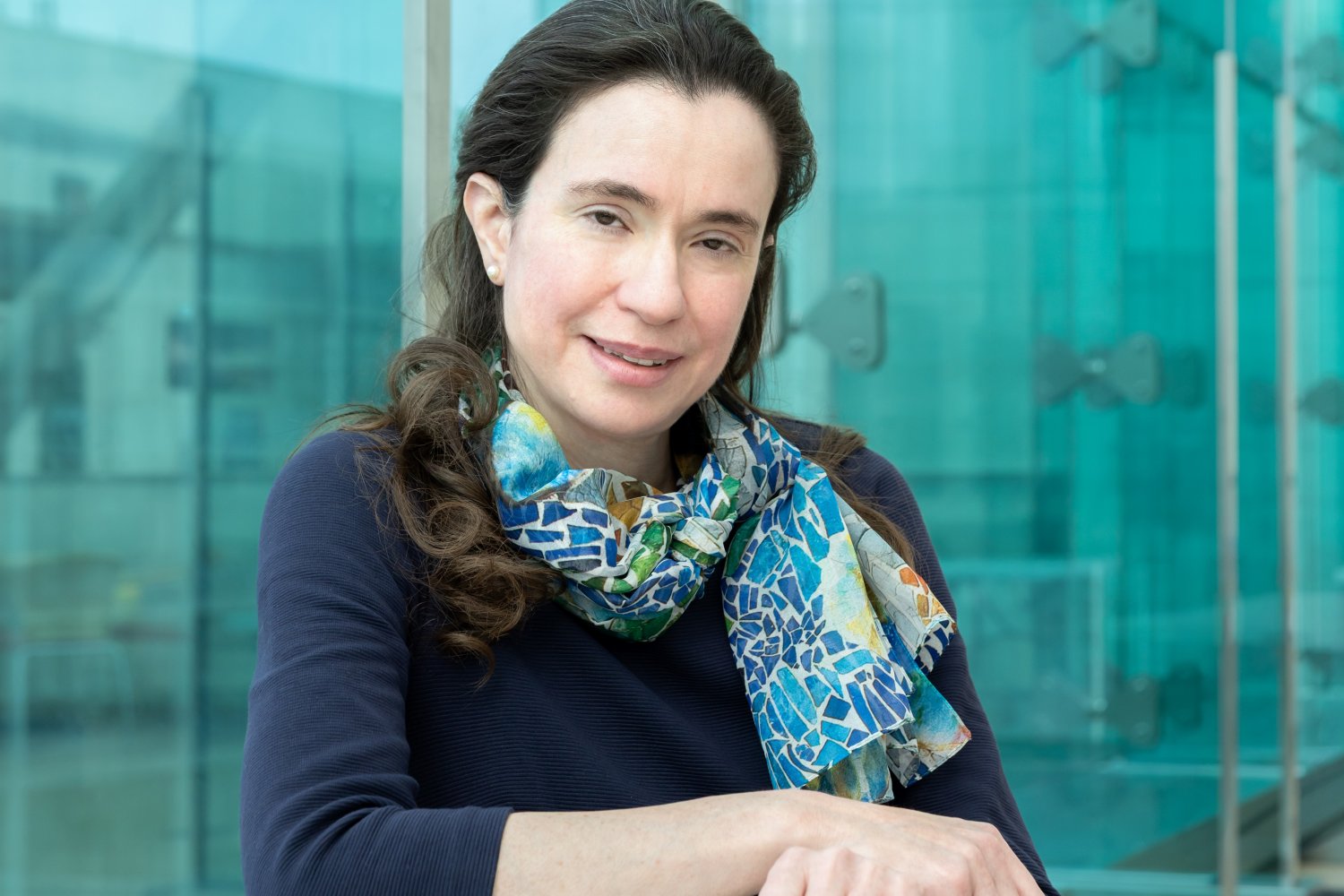
Myriam Heiman, a molecular neurobiologist who has spent her career hunting the molecular culprits behind Huntington's and Parkinson's disease, will lead MIT's Picower Institute for Learning and Memory starting July 1. The John and Dorothy Wilson Professor of Neuroscience is stepping into the role as Picower Professor Li-Huei Tsai, who led the institute for 16 years, steps back to focus on her own research.
The Picower Institute represents one of neuroscience's most ambitious collaborative spaces. Its 16 labs work at every scale simultaneously — from genes and molecules to the intricate networks of brain circuits — to understand how the brain learns, remembers, perceives, and feels. This work matters urgently: by understanding how these fundamental mechanisms work, the institute's scientists hope to unlock insights into developmental disorders, psychiatric illness, and the neurodegenerative diseases that devastate millions of people worldwide.
Heiman's own research exemplifies this ambition. Using cutting-edge techniques including single-cell genomics and a method she helped invent called translating ribosome affinity purification, she traces the molecular changes that lead brain cells to die in diseases like Huntington's and Parkinson's. In 2020, her team published results from an innovative screening of every mouse gene's impact on neuronal survival, identifying hundreds that sustain neurons and discovering a specific gene that promoted their resilience in Huntington's disease. She has also revealed how errant immune responses in neurons and in the brain's blood vessels accelerate disease progression — findings that emerged from a 2022 collaboration with MIT colleague Manolis Kellis that produced one of the field's first cellular atlases of brain vasculature.
The breadth of her discoveries has expanded far beyond her original focus. Recent work published in 2024 with Kellis showed that neurodegenerative and psychiatric disorders including ALS and frontotemporal dementia have striking overlaps at the cellular and molecular level — a finding that opens doors to therapies applicable to multiple diseases. Her latest investigations are illuminating substance use disorders and schizophrenia as well.
Her contributions have earned substantial recognition. In 2021, Heiman became co-recipient of a National Institutes of Health Transformative Research Award, which supports bold, interdisciplinary work designed to "challenge existing paradigms." The following year, she received a prestigious NIH R35 grant to investigate early triggers of disease progression.
Beyond the lab, Heiman has earned recognition for her teaching and mentorship. She received the Department of Brain and Cognitive Sciences award for excellence in graduate mentoring in 2017 and its undergraduate mentoring award in 2020 — a pattern that speaks to her commitment to the next generation of scientists.
Nergis Mavalvala, dean of the MIT School of Science, described Heiman as "an extraordinary scientist, a proven leader within MIT, and a deeply caring and generous mentor." Heiman herself emphasized her commitment to the role: "I am honored to take on this role to support the institute's exceptional scientists and trainees as they pursue discoveries that deepen our understanding of the brain and improve human health." That mission — fundamental understanding translated into human benefit — has guided her career at MIT since 2011, and will now extend across the institute's collaborative community as she leads its next chapter.