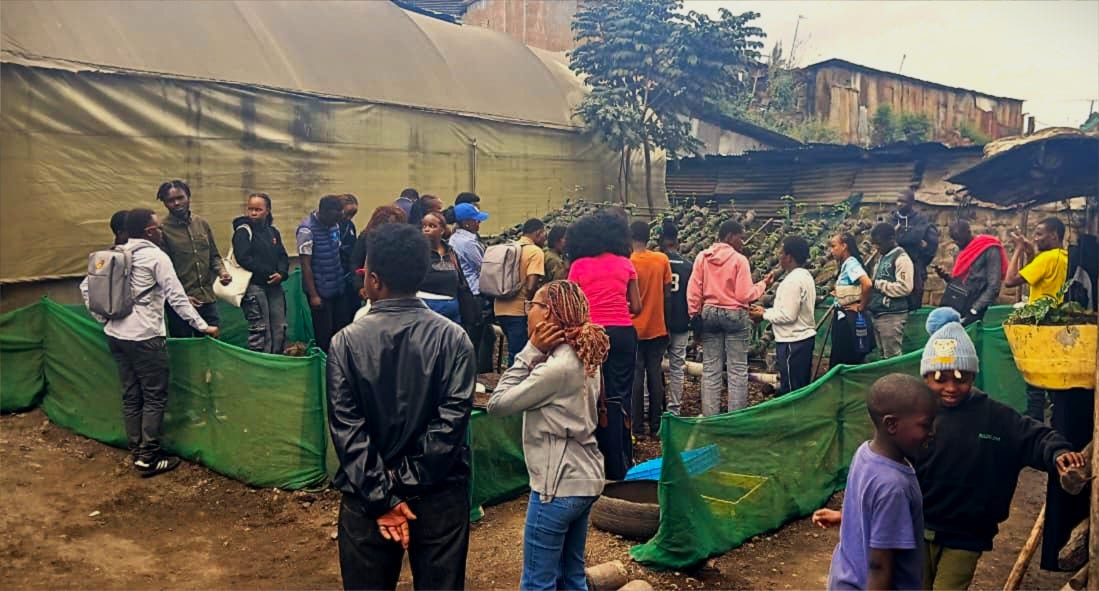
Davis Gichere stands beside a bubbling fish tank in Mathare, Nairobi, where tilapia swim beneath floating rafts of leafy greens. Around him, black soldier fly larvae crunch through food scraps, turning waste into protein-rich animal feed and organic fertiliser. This small plot of land is doing big work — recycling one tonne of organic waste each month, growing vegetables, and training young people in sustainable farming. But Davis knows it could do much more. "We need to upscale," he says, voice steady with conviction. Right now, the project feeds itself but not the wider community. The dream is within reach, but held back by one stubborn barrier: funding.
Across Nairobi, communities are reimagining waste as a resource. In Dandora, a new eco-friendly farm at Wangu Comprehensive Primary and Junior School teaches children how to compost organic scraps into rich soil. Launched by Zoomlion Kenya Waste Services Limited with Nairobi County Woman Representative Esther Passaris, the project turns school and household waste into compost while serving as a hands-on classroom for students and local entrepreneurs. It’s part of a growing movement that links clean cities with food security, youth jobs, and climate resilience.
In Mathare, Davis’s initiative blends hydroponics, aquaponics, and insect farming into one smart system. Fish waste feeds the plants. Flies break down food scraps. Vegetables — including disease-resistant local varieties, lettuce, and even strawberries — grow without soil. The project already creates green jobs for young people, but Davis says they could hire more if they had the resources. They need better machinery, larger composting units, and steady operating funds to pay workers and buy supplies.
The numbers tell a clear story: one tonne of waste processed monthly, zero hectares of land needed for hydroponic crops, and a model that could scale fast with support. These grassroots efforts are not just cleaning up neighbourhoods — they’re building food sovereignty and dignity for young people in informal settlements. Yet, as Davis points out, "finance for green enterprise still remains the biggest challenge in urban slum."
The impact goes beyond waste reduction. These projects are proving that environmental action can start small, with local knowledge and youth leadership. They show how schools can become hubs of sustainability, and how a bucket of food scraps can grow into a plate of fresh vegetables. With more investment, these models could spread across Nairobi and beyond, turning pollution into productivity and joblessness into opportunity.
The future of the city may not come from skyscrapers or highways, but from places like this — where young people are growing food, recycling waste, and building hope, one seed and one scrap at a time.