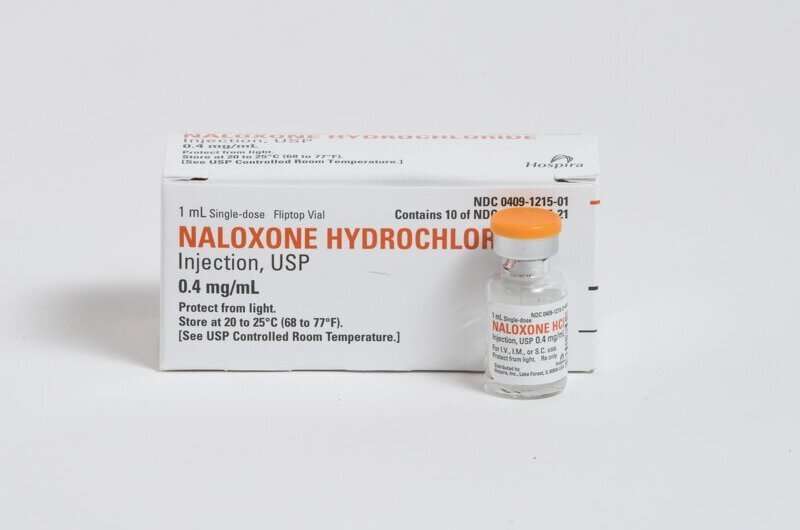
Naloxone, the life-saving medication most people know for reversing opioid overdoses, is now showing unexpected power in a different fight entirely—helping patients survive out-of-hospital cardiac arrest. Researchers at UC Davis Health have uncovered evidence that when emergency responders administer naloxone during resuscitation, survival rates nearly double.
The discovery matters because cardiac arrests triggered by opioid use have become increasingly common as overdose deaths have surged across the United States. Yet until now, naloxone's role in treating cardiac arrest has remained a critical blind spot in emergency medicine—so much so that the American Heart Association identified it as a key evidence gap. A new study published in JAMA Network Open provides the first substantial real-world data suggesting naloxone deserves a place in the resuscitation toolkit.
The research team analyzed data from 3,811 patients with suspected opioid-associated out-of-hospital cardiac arrest treated by emergency medical services between 2021 and 2022, drawing from the California Resuscitation Outcomes Consortium. The numbers tell a striking story. Among patients who received naloxone during resuscitation, 8.1 percent survived to hospital discharge. For those who did not receive it, the survival rate was only 4.4 percent—a nearly doubling of chances. After accounting for differences in patient age, health status, and the complexity of their cases, naloxone was still associated with a 2.8 percent absolute increase in survival.
The benefits extended beyond raw survival. Patients treated with naloxone showed improved neurological outcomes and a higher rate of return of spontaneous circulation, the medical term for a heart that restarts beating on its own. The gains were particularly striking in cases where paramedics suspected the cardiac arrest was directly drug-related—survival improvements approached 8 to 9 percent in those scenarios.
Not every finding was uniformly positive. The study revealed that naloxone's benefits were less pronounced in patients who also required epinephrine, another medication commonly used during resuscitation. This complexity suggests that timing, individual patient condition, and the broader medical situation all play roles in determining whether naloxone will help. It's a reminder that medicine is rarely a simple on-off switch; context matters.
David Dillon, an assistant professor of emergency medicine at UC Davis Health and one of the study's lead authors, emphasized the significance of moving from theory to evidence. "This study provides important real-world evidence that naloxone may offer benefit even after cardiac arrest has occurred," Dillon said. "While these findings are promising, randomized controlled trials are needed to determine whether naloxone directly improves survival in opioid-associated cardiac arrest."
That measured tone—hopeful but appropriately cautious—reflects the research world's next step. Real-world data like this study provides a compelling signal, but the gold standard in medicine is the randomized controlled trial, where patients are randomly assigned to receive treatment or not. That would prove whether naloxone directly saves lives or whether other factors explain the improvement. As opioid-related emergencies continue to reshape American emergency rooms, the answer to that question could reshape how paramedics respond to collapse.