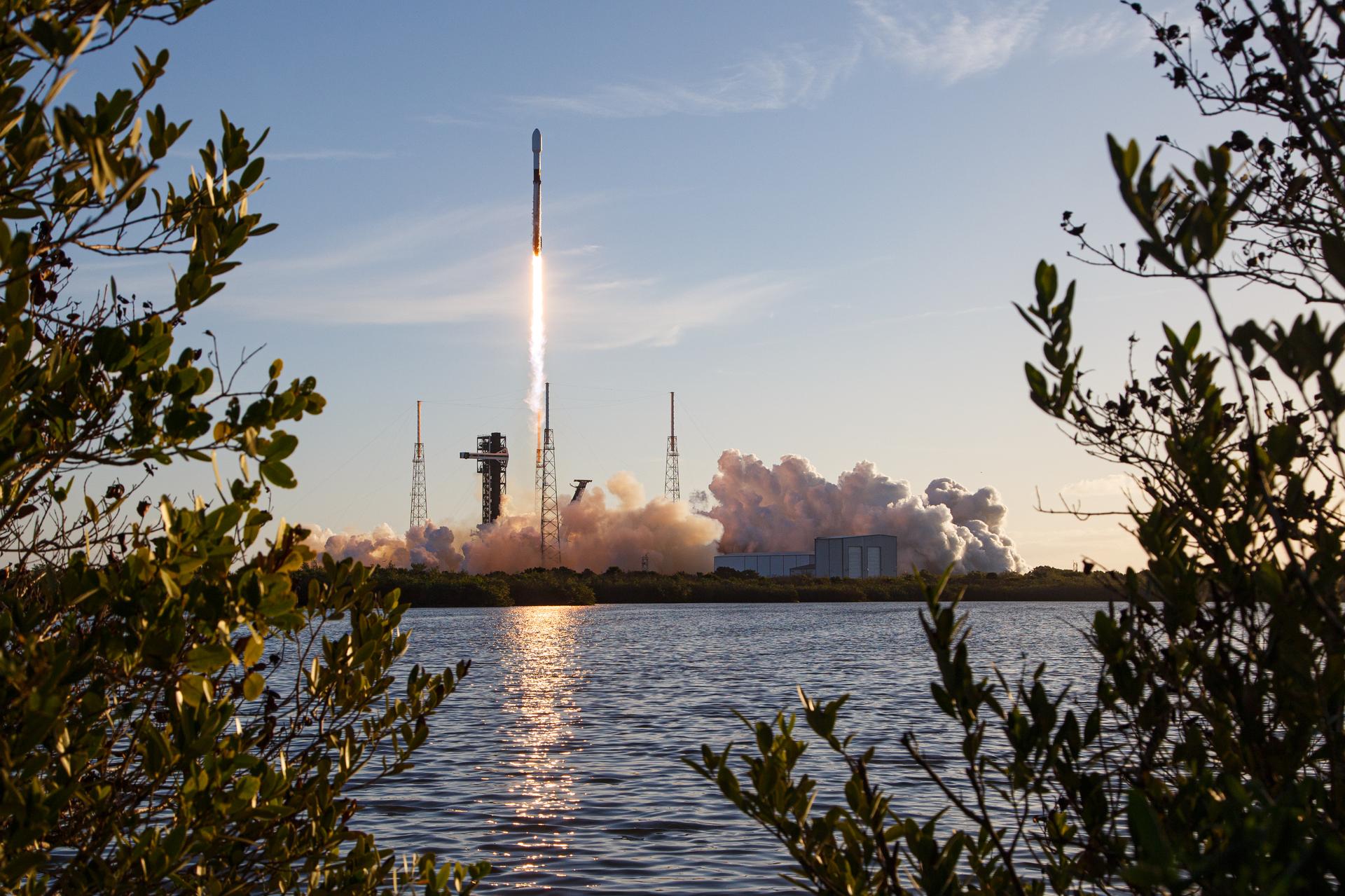
At 10:47 a.m. on Nov. 29, a SpaceX Falcon 9 is scheduled to lift a cargo ship named for Apollo 13 astronaut Jim Lovell from Cape Canaveral, Florida. Inside the Northrop Grumman Cygnus XL will be about 11,000 pounds of supplies, equipment and research headed for the International Space Station.
The flight, called NASA’s Northrop Grumman Commercial Resupply Services 25, or CRS-25, is one of the missions that keeps the station supplied while astronauts work in orbit. It is also carrying experiments that could help researchers improve treatments and prepare for longer journeys in space.
The Cygnus XL is set to launch from Space Launch Complex 40 at Cape Canaveral Space Force Station. NASA’s launch coverage is scheduled to begin at 10:25 a.m. EST on Sunday, Nov. 29, with liftoff targeted for 10:47 a.m. The spacecraft is expected to reach the station on Tuesday, Dec. 1. NASA astronauts Jessica Watkins and Luke Delaney will use the Canadarm2 robotic arm to capture it, with capture scheduled for 2:35 a.m. Ground controllers will then attach the craft to the Earth-facing port of the station’s Unity module so its cargo can be unloaded.
Among the research deliveries are experiments focused on improving drug delivery for cancer and osteoarthritis, predicting how cancer spreads, and developing treatments for muscle loss. Other work will test ways to improve radiation sensing and food production for future long-duration missions. Together, these projects bring practical questions from medicine and daily life into the station’s orbiting laboratory.
Northrop Grumman named the spacecraft the S.S. James “Jim” A. Lovell. Lovell flew four space missions: Gemini VII, Gemini XII, Apollo 8 and Apollo 13, the mission that traveled around the Moon. The name connects a new cargo flight with a career that helped shape human spaceflight.
The Cygnus is scheduled to remain at the station until May 2027. It will then leave with several thousand pounds of disposal items and other unneeded cargo, which will burn up harmlessly as the spacecraft re-enters Earth’s atmosphere.
Before launch, NASA plans a media teleconference at noon on Monday, Nov. 23, streamed on the agency’s YouTube channel. Participants include Gaurang Patel and Jennifer Buchli of NASA’s Low Earth Orbit Program, Dave Schiller of Northrop Grumman, and Jared Metter of SpaceX. The public can follow launch and docking coverage through NASA’s live platforms, and NASA is also offering virtual attendance with launch resources and a digital passport stamp after liftoff. As with any launch target, the date and time remain subject to change; NASA will post updates on its space station blog.