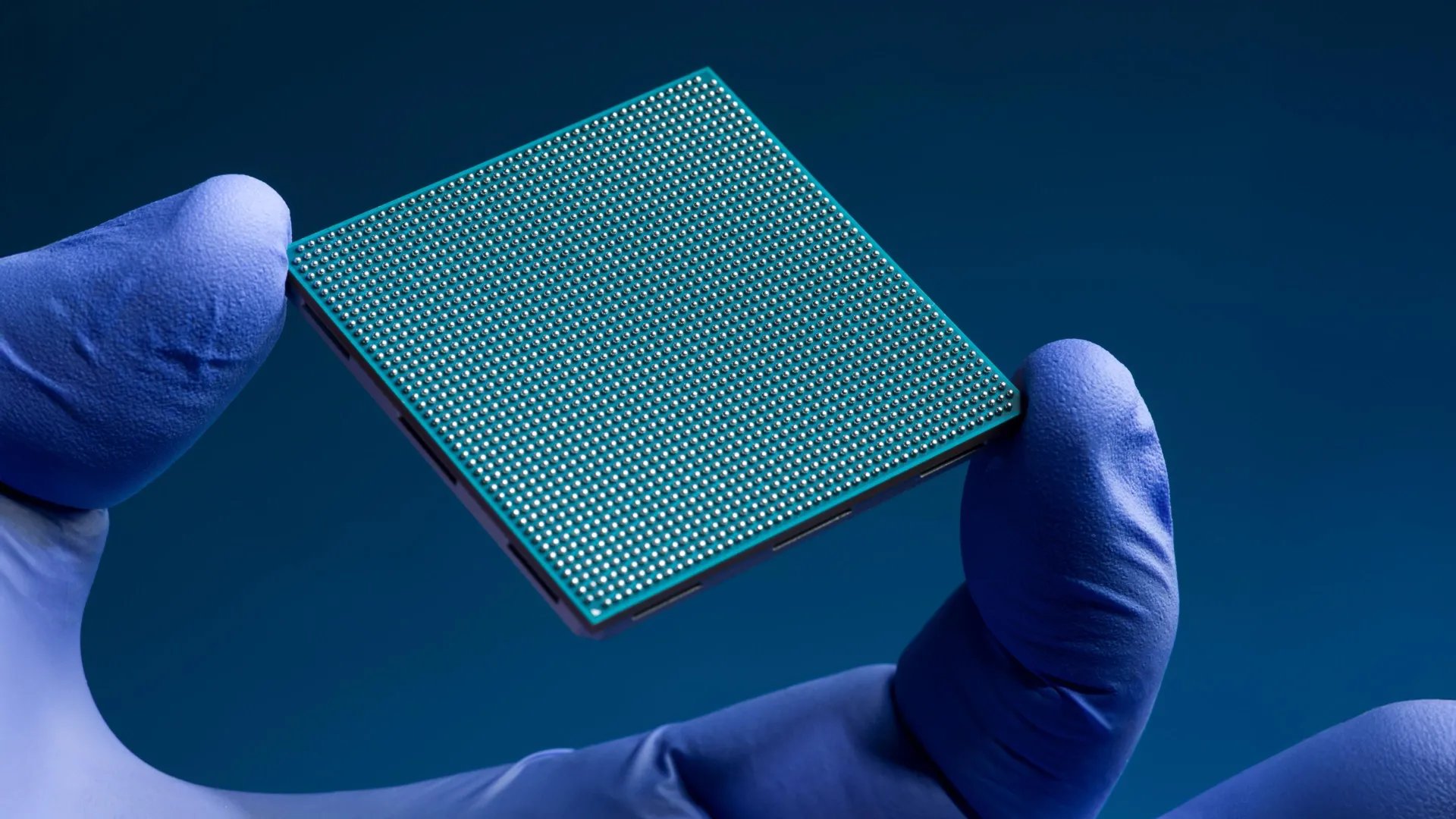
In a nondescript lab at NASA's Jet Propulsion Laboratory in Southern California, engineers are building the brain of spacecraft that will one day think for themselves. At the center of this effort sits a radiation-hardened processor no larger than a smartphone chip, yet capable of delivering roughly 500 times more computing power than the decades-old computers currently flying on NASA missions. This leap forward matters because space exploration is entering an era where spacecraft must make critical decisions on their own, millions of miles from mission control.
For decades, NASA has relied on robust but aging processors to power its spacecraft. These chips are proven survivors, hardened against the brutal conditions of space — intense radiation that batters solar panels and electronics, temperature swings that would shatter ordinary equipment, and cosmic particles that can trigger errors forcing spacecraft into protective "safe mode." But those same qualities that make them durable also limit their capabilities. Modern science demands faster onboard analysis, the ability to process enormous volumes of sensor data from landing sites, and artificial intelligence systems that can respond to unexpected situations in real time when radio signals take minutes to cross the void between worlds.
NASA's High Performance Spaceflight Computing project, developed through a partnership between the Jet Propulsion Laboratory and Chandler, Arizona–based Microchip Technology Inc., is designed to change that calculus entirely. The new system-on-a-chip combines all essential computer components — processors, memory, networking systems, and input/output interfaces — into a single compact unit, following a design philosophy proven in smartphones but reimagined for deep space. Testing began in February and has already exceeded expectations, with the processor functioning flawlessly through rigorous radiation, thermal, and shock tests.
"We are putting these new chips through the wringer by carrying out radiation, thermal, and shock tests while also evaluating their performance through a rigorous functional test campaign," said Jim Butler, the project manager at JPL. The team even used high-fidelity landing scenarios from real NASA missions to simulate the massive computational demands of processing landing-sensor data — work that would normally require power-intensive hardware. To mark the symbolic beginning of this phase, engineers sent an email titled "Hello Universe," evoking the famous introductory messages of early computer programming.
The implications ripple across NASA's future. With this processor certified for spaceflight, the agency plans to integrate it into Earth orbiters, planetary rovers, deep space probes, and crewed habitats bound for the Moon and Mars. An autonomous spacecraft equipped with artificial intelligence could respond instantly to hazards during descent, process the overwhelming volume of scientific data from distant worlds, and transmit discoveries back to Earth far more efficiently than today's missions allow. Eugene Schwanbeck, program element manager at NASA's Langley Research Center, calls it "a triumph of technical achievement and collaboration."
Beyond NASA, Microchip plans to adapt the same radiation-hardened processor for industries facing their own extreme conditions — aviation and automotive manufacturing, where reliability under stress is measured in lives saved. What begins as humanity's reach toward the Moon and Mars may quietly reshape how we engineer robust systems here on Earth.