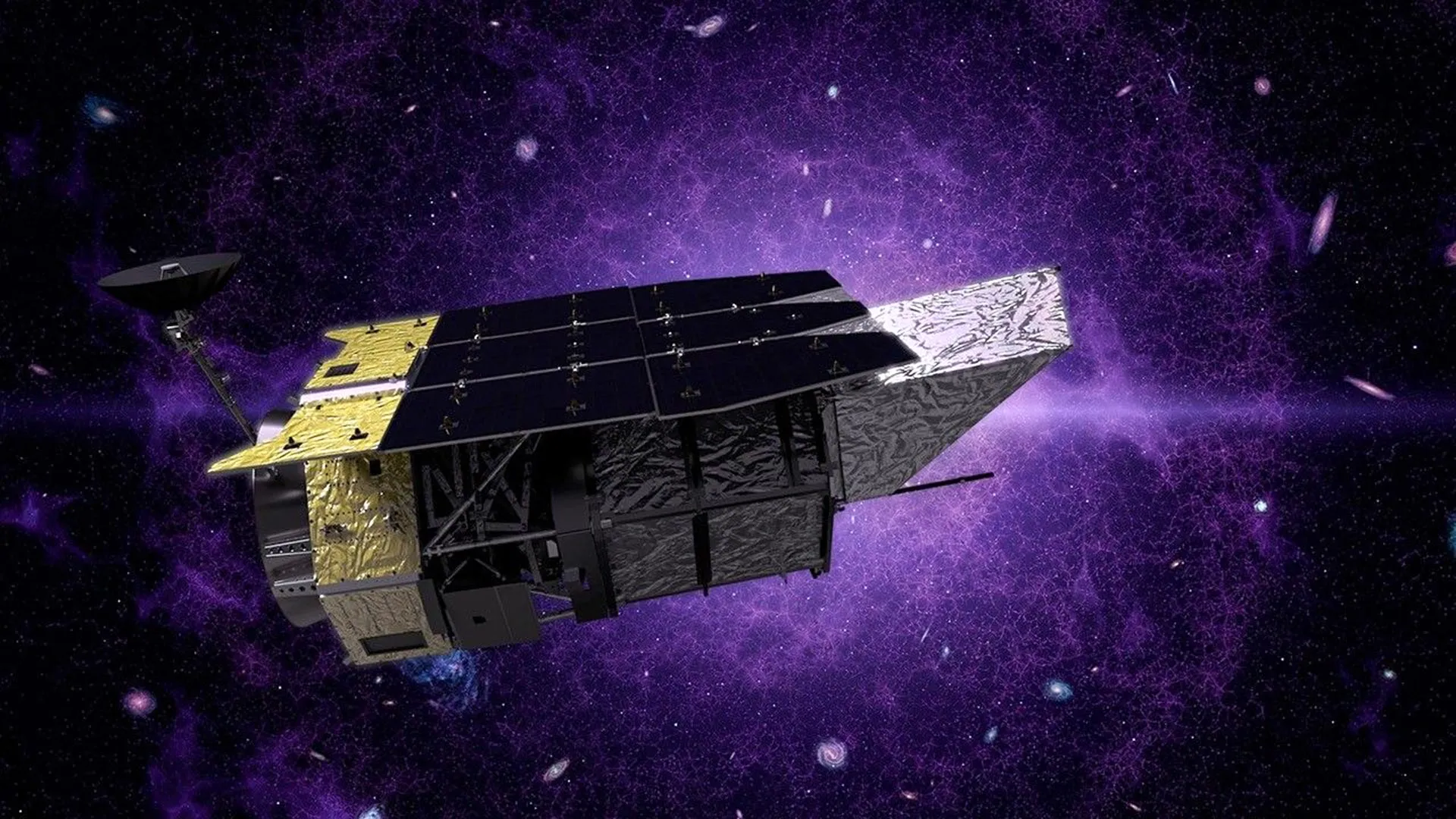
NASA's Nancy Grace Roman Space Telescope is racing toward a September 2026 launch, arriving in orbit months ahead of the agency's original commitment to lift off no later than May 2027. The acceleration signals that this extraordinary instrument — designed to pierce through the deepest corners of the cosmos — is nearly ready to open humanity's eyes to mysteries that have eluded observation for centuries.
Roman represents a rare convergence of ambition and capability. The observatory combines an enormous field of view with powerful infrared imaging, allowing scientists to study vast swaths of the universe in unprecedented detail. NASA Administrator Jared Isaacman, speaking at the agency's Goddard Space Flight Center in Greenbelt, Maryland, framed the accelerated timeline as proof of principle: "Roman's accelerated development is a true success story of what we can achieve when public investment, institutional expertise, and private enterprise come together to take on the near-impossible missions that change the world."
The mission's scope is staggering. During its planned five-year primary mission, Roman will collect roughly 20,000 terabytes of data — an archive so vast that scientists will spend decades mining it for discovery. That information will fuel investigations into approximately 100,000 exoplanets, hundreds of millions of galaxies, and billions of stars. Researchers also expect Roman to detect unusual cosmic events and phenomena that may have never been directly observed before.
While Roman's primary focus will be understanding dark energy, dark matter, and planets orbiting distant stars, the telescope's capabilities mean it will likely revolutionize fields of astronomy that scientists haven't yet fully anticipated. The instrument's dual strength — combining breadth of vision with infrared precision — makes it uniquely suited to answer questions across the full spectrum of astronomical inquiry.
The launch will take place aboard a SpaceX Falcon Heavy rocket from Launch Complex 39A at Kennedy Space Center in Florida, chosen for its power and proven reliability. NASA's Goddard Space Flight Center in Maryland will manage the mission, with critical support from NASA's Jet Propulsion Laboratory in California, Caltech's Infrared Processing and Analysis Center (IPAC), the Space Telescope Science Institute in Baltimore, and researchers from multiple institutions across the globe. This distributed team of scientists and engineers has been working toward this moment for years, and the updated timeline reflects how close they've come to completion.
The acceleration from May 2027 to September 2026 may seem modest in calendar terms, but it signals something deeper: confidence that the work is done, tested, and ready. As mission preparations continue and engineers refine every detail, NASA will announce the exact launch date in the coming months. When Roman finally launches, it will join a legacy of transformative space observatories — but with capabilities that promise to reveal an entire universe of secrets we've never been able to see before. The countdown has begun.