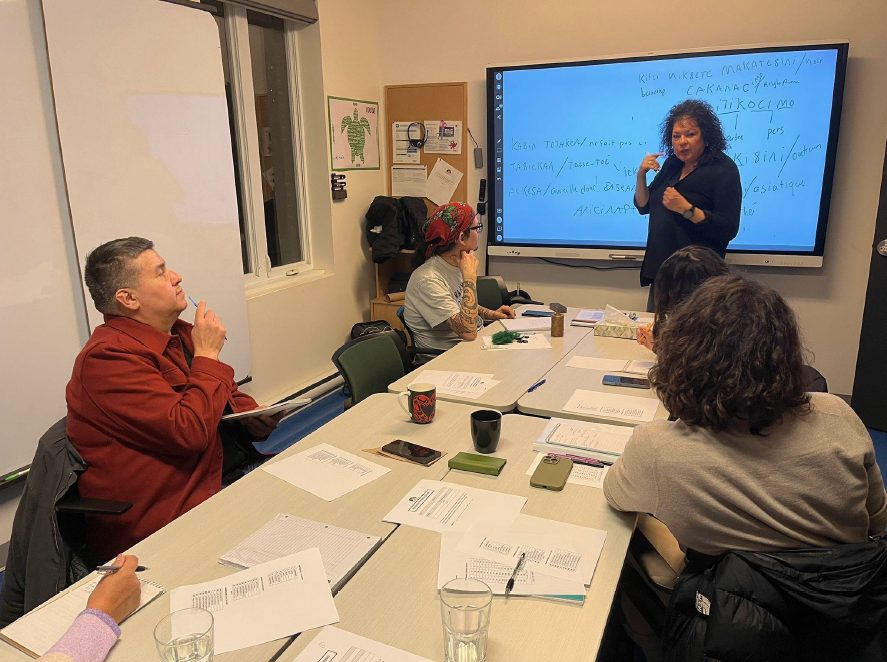
In a bright classroom in Montreal, approximately 100 people each semester are doing something that would have been unimaginable to their grandparents: learning the language their ancestors were forbidden to speak.
Native Montreal's Indigenous Language Program offers free classes in seven Indigenous languages—Abenaki, Anishinaabemowin, Innu, Inuktitut, Eeyou Istchee (James Bay Cree), Kanien'kéha, and Mi'kmaq—reflecting the rich linguistic diversity of the Indigenous peoples who call the greater Montreal area home. Structured across spring, fall, and winter semesters, the program serves children, youth, and adults at beginner and intermediate levels, providing up to 25 hours of instruction per learner each term. That means that in a single year, the program delivers more than 7,000 hours of language instruction to a community that has been systematically denied access to these tongues.
The teaching is led by fluent speakers, instructors, Elders, and Knowledge Keepers who integrate language learning with cultural teachings, storytelling, and land-based knowledge. It's not just about vocabulary and grammar—it's about worldviews, traditions, and the cultural practices inseparable from language itself. The program continuously adapts through ongoing curriculum development and collaboration among educators, ensuring that instruction responds to community needs.
Beyond formal classes, the program sustains year-round engagement through language socials, storytelling gatherings, cultural workshops, and immersive land-based activities. The annual Indigenous Languages Conference brings the community together to celebrate preservation and revitalization efforts in an urban context. Together, these activities create spaces for practical language use, strengthen intergenerational relationships, and encourage sustained participation over time.
For many participants, the program represents something larger than language acquisition: a reconnection to identity, a sense of belonging, and a form of cultural resilience against decades of colonial suppression. By increasing access to Indigenous language learning in an urban setting, Native Montreal contributes to the long-term revitalization of these languages—building community capacity, creating opportunities for daily language use, and reinforcing the transmission of language and culture across generations. In a city far from many participants' home communities, this program offers something rare: a place where Indigenous languages are not relics of the past, but living practices shaping the future.